Get Full Government Meeting Transcripts, Videos, & Alerts Forever!
Get email alerts on the Insurance Consumer Protection topic
No spam. Unsubscribe anytime.
Department of Insurance requests staff additions, highlights PBM oversight and wildfire pressures on homeowners insurance
Summary
The Idaho Department of Insurance requested staff additions, pay adjustments for the state fire marshal staff and capital outlay for firefighting equipment while describing implementation of PBM reforms and wildfire-driven pressures on homeowners insurance.
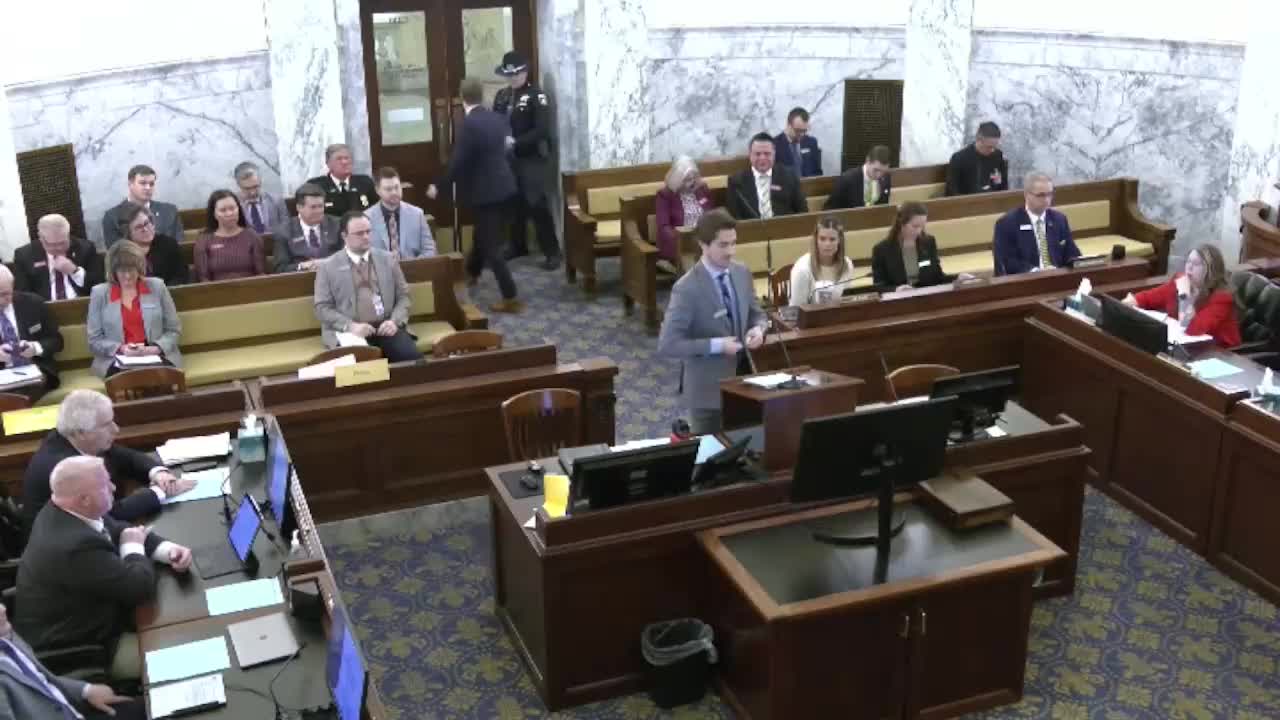
The Idaho Department of Insurance told the Joint Finance-Appropriations Committee on Jan. 21 it is requesting several staffing and capital items for fiscal 2026 while describing implementation work on pharmacy benefit manager oversight and growing wildfire-related stress in the property insurance market.
Budget analyst Noah Peterson said the department sought four enhancements for FY2026: one staff actuary (95% of policy rate at $73/hour), one regulatory compliance specialist (80% of policy at $41.03/hour), a compensation increase for the state fire marshal and his deputies funded from the Arson Fire and Fraud Prevention Fund, and $162,200 in one‑time capital outlay for the state fire marshal division (including $10,000 for turnout gear, $16,200 for cameras and $136,000 for two medium‑duty pickup trucks).
"The insurance regulation division is broken up into three bureaus ... The Company Activities Bureau monitors the financial condition of all insurance entities domiciled in the state of Idaho," Peterson said during the agency overview. He noted the department has 75.5 approved full‑time positions and that premium tax revenue is split among insurance funds, firemen's retirement, the high‑risk reinsurance pool and the general fund.
Director Dean Cameron described work to implement last year's PBM reform. "She's receiving numerous complaints," Cameron said of the staff member assigned to PBM compliance, referring to a new analyst who is collecting complaints and required data from pharmacy benefit managers under the statute implemented by lawmakers. Cameron told the committee most PBMs had submitted required data in the format mandated by the law; a few had not and the department is working with them to secure compliance. The department is also using complaint intake and a pharmacist-friendly submission format to capture issues ranging from dispensing fees to contract and responsiveness disputes.
On broader insurance market pressures, Cameron said wildfire and other catastrophic losses, supply-chain inflation and rising reinsurance costs have tightened the property insurance market nationally and in parts of Idaho. "We started seeing forest fires in California, Oregon, Colorado and it started a tightening of the property insurance market," he said, adding that some carriers have reduced writing business in fire-prone parts of Idaho and that the surplus-lines market has expanded to cover homeowners who cannot obtain admitted coverage.
Cameron described a proposed legislative response that would create a pool similar to the health-insurance reinsurance approach. The proposal would have two goals: subsidize homeowner mitigation measures that harden homes against wildfire (for example, clearing embers from eaves) and provide a mechanism to spread or reduce risk for insurers so carriers can continue to offer coverage in Idaho. "It creates a pool not too dissimilar from the health insurance high risk pool," he said.
Representative Furness asked about the "13 32 waiver" the department used to obtain federal matching funds for its health‑insurance strategy; Cameron described the state's Section 1332 waiver and an associated high‑risk reinsurance pool that the department says helped reduce individual market premiums and expand carrier participation on the exchange. "We instituted that ... and, since then we've had a reduction in individual health insurance rates each year," Cameron said, noting the program identifies specific costly conditions by CPT code and shares risk between insurers and the high‑risk pool.
Committee members requested additional reporting: Senator Cook asked for more detail on PBM complaints and compliance numbers; Cameron said the department will provide a fuller report as the data collection matures. The department also introduced staff who have been supporting operations during a busy wildfire and regulatory period.
No formal budget action or vote occurred at the hearing. Peterson and Cameron indicated they would supply additional detail to the committee on PBM complaints, actuary contracting and justification for the requested positions.
The department reported reversion and expenditure history in the briefing: appropriations and expenditures have ranged around 70–80% use, with personnel accounting for about 69.3% of expenditures and operating about 29.5%. The department also noted a 2024 trailer appropriation to implement House Bill 596, which amended Section 41-349 of Idaho Code to revise definitions and reporting requirements for pharmacy benefit managers.