Get Full Government Meeting Transcripts, Videos, & Alerts Forever!
Get email alerts on the Judiciary Court Operations topic
No spam. Unsubscribe anytime.
Judicial Branch outlines court operations needs, ARPA‑funded tech upgrades and requests for additional judges
Summary
The Judicial Branch presented Court Operations budget details to the committee, explaining ARPA‑funded court‑technology modernization, the remaining reappropriation request, personnel and IT hiring challenges, and a judiciary request for new judges and judicial compensation that would require statutory action.
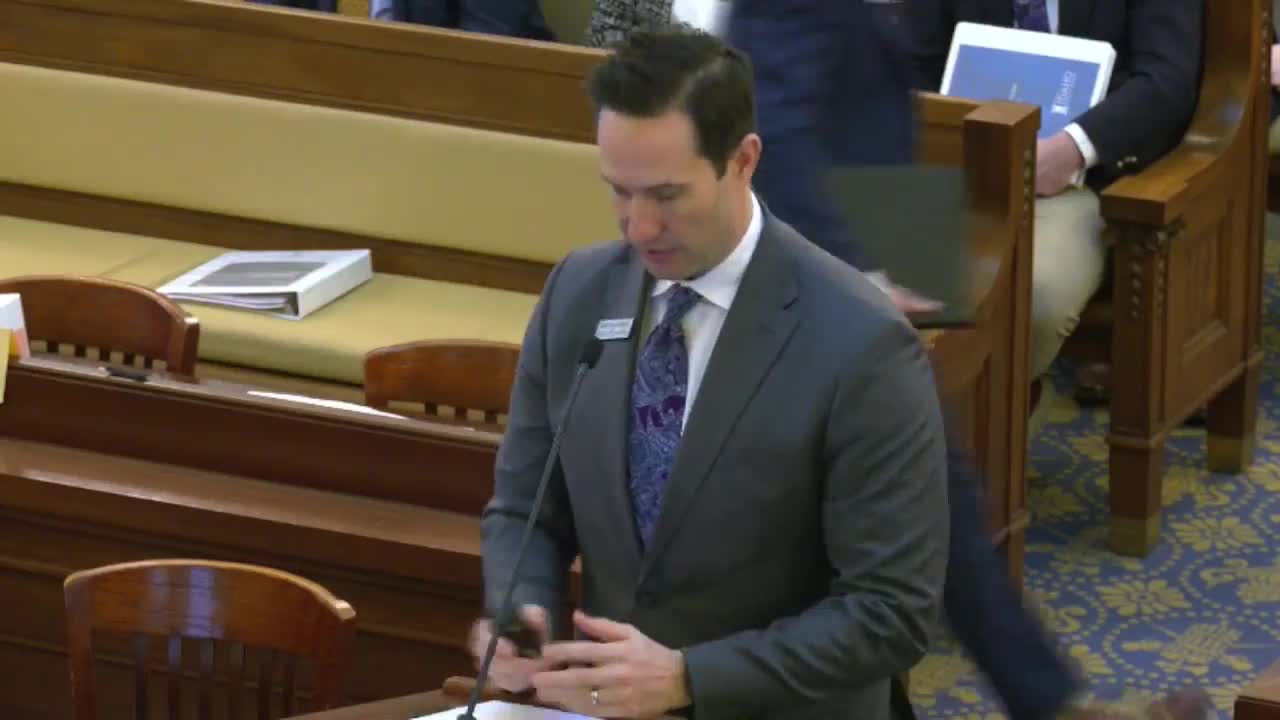
The Judicial Branch appeared before the Joint Finance Preparation Committee on Jan. 23 to review the Court Operations budget, report on a multiyear court‑technology modernization funded in part by ARPA State Fiscal Recovery Fund dollars, and describe judicial resource requests for FY2026 including several judges and court reporters.
Keith Bybee, division manager of budget policy analysis, said the courts are a unified system administered by the Idaho Supreme Court and that Court Operations is organized into seven programs, including Supreme Court, Court of Appeals, district and magistrate courts, the Water Adjudication Division, community‑based substance‑abuse treatment and senior judges. Bybee said the courts’ budget is primarily personnel driven: personnel costs were about 70% of expenditures in FY2024 and the courts have historically spent roughly 90–93% of their appropriations.
Bybee and Administrative Director Sarah Omanson told the committee that the Court Technology Fund (mainly supported by filing fees) showed growth in filings and that the branch had received ARPA State Fiscal Recovery Fund appropriations to modernize court infrastructure. Omanson described a multi‑year security and infrastructure project that began in 2020 to address cybersecurity risks, centralize and better secure court data and move office productivity and case work into a protected, court‑managed environment. Key elements include multi‑factor authentication, Office 365 migration and installing a state court network in courthouses statewide. The courts have obligated the ARPA funds for contracts and expect the project work to continue into late FY2026.
Why it matters: Omanson said the courts hold sensitive personal and case information and that cybersecurity intrusions in other states prompted upgrades. She told committee members the rollout requires change for county clerks and that the courts have tried to give counties options (county‑managed desktops that access court systems via a protected cloud desktop, or state‑provided devices on the state court network). The courts said Office 365 rollout is roughly 80% complete and two‑factor authentication is about to roll out.
The branch requested judicial compensation funding and new judicial positions. Bybee said the governor’s budget included a 5% placeholder for judicial compensation, while the judiciary’s formal request is substantially larger ($10.2 million as presented to the committee). The Judicial Branch also requested additional judicial resources to address caseloads: district judges and court reporters for the First and Seventh Judicial Districts and magistrate judges in the Fifth (Twin Falls) and Seventh (Bonneville/Idaho Falls) districts. Bybee and Omanson said most requests for new judges require statutory action and follow a multi‑step internal judicial prioritization process involving trial court administrators, the administrative conference and the justices.
Omanson described hiring challenges: the courts have been unable to fill several IT and HR positions at the salaries appropriated last year; three of five data analysts left recently for higher pay, and the courts continue recruiting for hard‑to‑fill IT roles. She said the courts had to reallocate some funding internally (for example shifting assistant HR funding to a manager position after unsuccessful recruitments). The administrative director said the judiciary will provide the committee with estimates of the funding needed to close hiring gaps.
On magistrate judges, Omanson urged the committee to consider two magistrates: Twin Falls (last new magistrate there 35 years ago; magistrates in Twin Falls open about 1,773 cases per judge per year) and Bonneville County (district covers 10 counties and loses judicial days to travel; adding a magistrate there would recover judicial time now lost to travel). Omanson said courts are seeing fewer applicants for judgeships than five years ago and fewer candidates with a mix of civil private‑practice experience, which the branch said reduces bench efficiency.
Ending: Committee members asked for follow‑up information on the ARPA expenditures, vendor landscape for case‑management systems and what it would take to hire and retain IT and other positions. The Judicial Branch said it will provide further detail and documentation to the committee.