Get Full Government Meeting Transcripts, Videos, & Alerts Forever!
Get email alerts on the State Budget Industrial Commission topic
No spam. Unsubscribe anytime.
Industrial Commission seeks continued IRIS support, staff and vehicle replacements in 2026 budget request
Summary
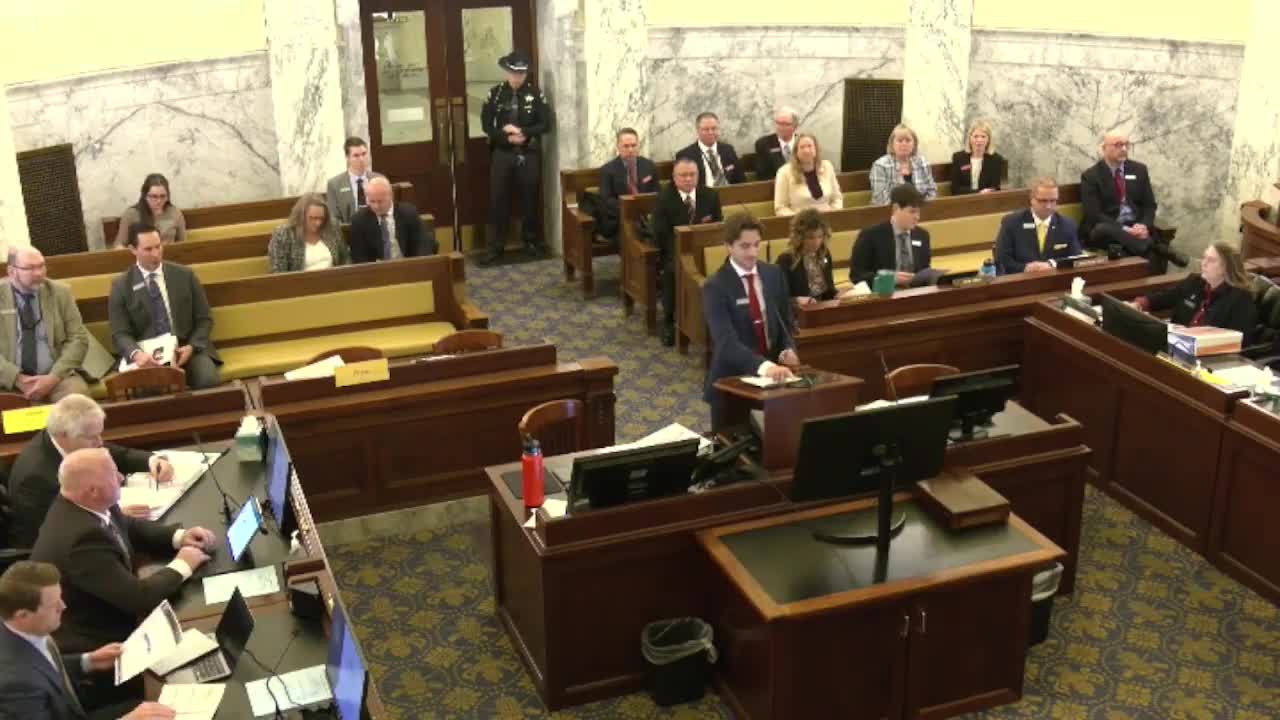
The Industrial Commission presented its fiscal 2026 enhancement requests to the Joint Finance Preparation Committee on Jan. 23, seeking maintenance funding for the IRIS case‑management system, several staff positions funded from vacant FTPs and replacement field vehicles.
The Industrial Commission presented its fiscal 2026 budget request to the Joint Finance Preparation Committee on Jan. 23, asking for a mix of ongoing and one‑time funding to maintain the commission’s IRIS case‑management system, fund several staff positions using existing vacant FTE, and replace high‑mileage field vehicles.
The commission’s budget analyst, Noah Peterson of the Legislative Services Office, told the committee the Industrial Commission has 130.25 total FTPs, with 70.5 in the compensation program, 47.25 in rehabilitation and 12.5 in crime victims compensation; 12 positions were vacant as of August. Peterson said the agency is a dedicated‑fund entity (not supported by the general fund) and relies on four funds: the Industrial Administration Fund, the Peace Officer Temporary Disability Fund, the Crime Victims Compensation Fund and a miscellaneous revenue fund for seminars.
Peterson and Director George Gutierrez said the commission reverted $4,555,000 in FY2024; the largest amount, about $3 million, was trustee and benefit payments, of which roughly $2.4 million came from the crime victims compensation program. Personnel reversions were $644,000 and operating reversions about $835,000. Peterson said those reversion figures inform but do not automatically constrain how the Legislature chooses to fund vacancies or enhancements.
Why it matters: the IRIS modernization project was funded with significant one‑time appropriations beginning in FY2021 (Peterson said the commission received $12,874,000 in one‑time IRIS appropriations between FY2021 and FY2025). Committee members pressed the director and analyst for detail because the agency is now requesting recurring support for IRIS maintenance even though initial development is largely complete.
Director Gutierrez said IRIS reduced paper handling and made records visible electronically but changed staff work flows: some responsibilities that previously fell to referees shifted back to legal associates (legal secretaries) to assess whether electronically received material satisfies statutory requirements before cases go to hearing. Gutierrez said implementing IRIS increased the volume and sources of employer‑compliance data, producing more investigations and more cases that need legal preparation. The commission no longer has a full‑time Deputy Attorney General embedded in the office; it now sends cases to the Attorney General’s civil litigation division, which has multiple attorneys and requires the commission to provide more prepared case packages.
Key budget requests described to the committee (amounts as presented by the analyst/director): - Commissioner pay CEC increase (statutory change required) — placeholder shown as 5% (Peterson noted funding would require an amendment to statute). The governor’s recommendation reflects a 5% increase for commissioners. - IRIS maintenance contract — $288,000 (one‑time operating appropriation) to provide long‑term technical support while the state Office of Information Technology Services (OITS) builds capacity; the request was presented as one‑time because of OITS coverage expectations. - Senior financial technician (crime victims compensation fiscal support) — $66,500 ongoing personnel to shorten payment turnaround; Peterson said at the time of the August budget submission there were roughly 872 outstanding payments and an estimated 12‑week turnaround (target is 30 days). - Rehabilitation field consultant for Twin Falls/Burley — $32,300 ongoing to fund a budgeted position at a higher hourly rate to address areas with about 35% more cases than the five‑year average. - Referee (hearing officer) — $111,600 ongoing to restore a fifth referee; the agency had five referees before a 2020 retirement, and average decision time increased from 90 to 110 days after the vacancy. - Reclassification for five adjudication associates — $25,500 ongoing to move five positions from salary grade H to I (raises of $2 per hour) because IRIS changed the work content. - Technical records specialist (employer compliance/legal preparation) — $62,300 ongoing; the agency says IRIS increased sources and volume of employer data and the legal workload to prepare cases for the AG’s office. - IRIS contingency (one‑time) — $30,000 (the governor did not recommend this contingency line). - Replacement items: four small SUVs (three for rehabilitation, one for compensation) citing mileage from about 82,000 to 98,000 and model years 2006–2011; and IT replacement items (monitors, laptops, docks) totaling $104,200. - The commission requested a $3,500,000 one‑time appropriation in FY2025 (largely IRIS development and contracted software engineering); Peterson reported a supplemental transfer of $47,000 reallocating portions of that appropriation across dedicated funds to ensure statutory usage (transfer mechanics are in the LBB packet).
Committee questions focused on why IRIS increased staffing needs rather than reducing workloads, whether reverted funds could be used to fill positions, details on the IRIS maintenance contract and why some positions remain hard to fill. Gutierrez told the committee the IRIS system changed staff responsibilities and increased the number of identifiable noncompliant employers, producing more cases; the commission must now prepare more complete case packages for multiple deputy attorneys general in the Attorney General’s civil litigation division. Gutierrez said most reversions were trustee and benefit payments that are statutorily limited in use and cannot be reallocated by the commission without legislative action.
On vehicles, the director said the replacements are for field offices where staff (rehabilitation consultants and employer compliance investigators) travel in remote areas and current vehicles have recurring mechanical problems; he said requests for vehicle replacement may recur as the commission retires many long‑kept vehicles.
Ending: Director Gutierrez described the requests as aligned with the commission’s strategic plan and performance metrics and asked for legislative support. Committee members requested additional detail on IRIS costs and contracts and the agency said it would provide written breakdowns and fleet lists to the committee.
Speakers quoted or paraphrased in this article are identified in the speakers list below; quotes are verbatim where attributed.