Get Full Government Meeting Transcripts, Videos, & Alerts Forever!
Get email alerts on the Higher Education topic
No spam. Unsubscribe anytime.
University of Idaho reports improved finances but flags reserve shortfall; Phoenix deal, DEI office changes and WWAMI discussed
Summary
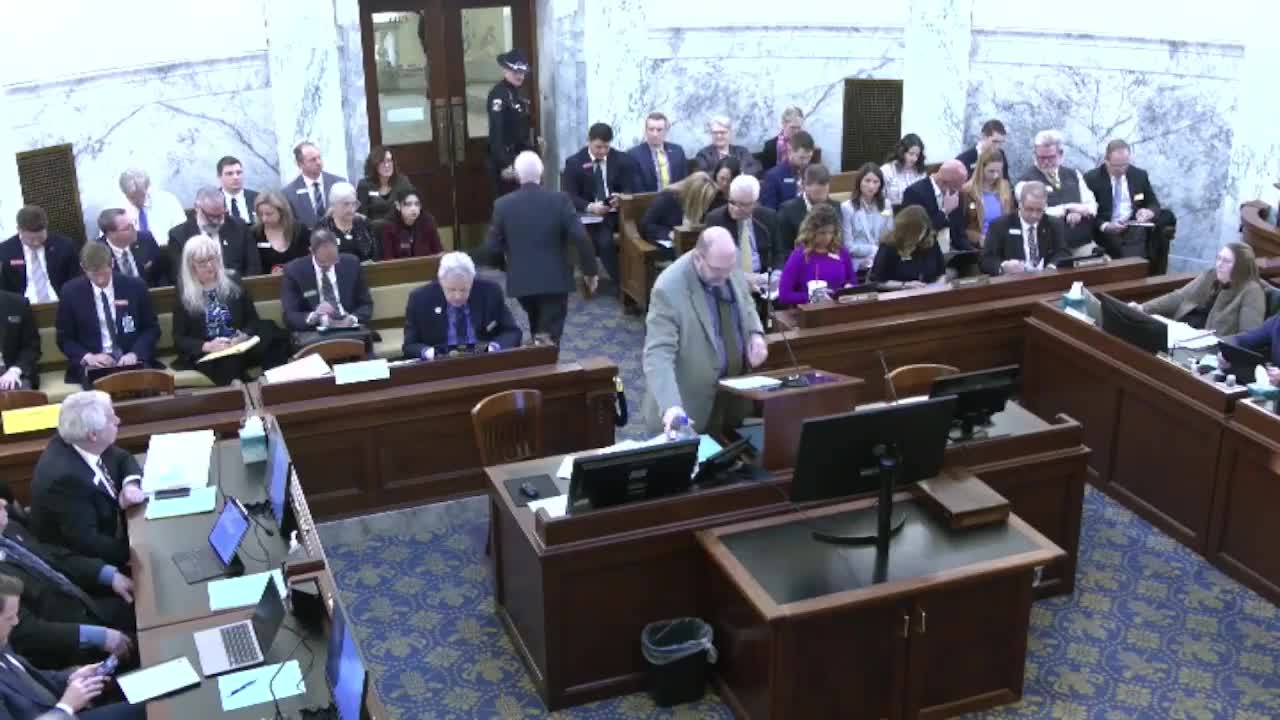
University of Idaho President C. Scott Green told the Joint Finance‑Appropriations Committee on Jan. 27 that the university's finances have improved since large reductions earlier in the decade but that accounting treatment of retiree benefits and restricted reserves leave key reserve measures below State Board benchmarks.
University of Idaho President C. Scott Green told the Joint Finance‑Appropriations Committee on Jan. 27 that the university's finances have improved since large reductions earlier in the decade but that accounting treatment of retiree benefits and restricted reserves keep some measures below the State Board of Education benchmarks.
"I think you remember what it must have been like 6 years ago. We were in pretty severe financial straits," Green said, adding that on arrival he was told the university had been "about 18 months from running out of cash." He said a $26 million base reduction and other measures helped stabilize the institution.
Why it matters: the University of Idaho is the state's land‑grant research university with broad statewide responsibilities, sizeable federal and private research funding flows, and large workforce and extension roles. Its budget and reserve health affect research, graduate programs, medical training and partnerships with Idaho National Laboratory and other state institutions.
Key points from the presentation and committee Q&A:
- Budget and reserves: Budget analyst Kevin Campbell told the committee the University of Idaho has a base budget roughly $196.3 million and enrollment of 12,286 students supported by 1,352 FTP. Campbell and Green said a series of adjustments over recent years — including a $26 million base reduction in FY2021 — helped align expenses with revenues. Green said the university currently has a negative unrestricted net position (about $17 million) but a positive total net position when restricted balances are included; the university reported a total net position of about $319 million in its audited materials.
- OPEB and accounting effects: Green and university officials explained that historical retiree medical benefits (OPEB) required an accounting‑period reduction to unrestricted reserves; the cash to fund those obligations is now reflected in restricted net position, which affects reserve ratios reported to the State Board of Education.
- University of Phoenix transaction timing and fees: Green said the sellers in the potential affiliation extended a deadline to reach agreement with the University of Phoenix sellers to June 10, 2025. The university has received $5 million under the purchase agreement so far to offset expenses and said there is a potential breakup fee of up to $20 million if the sellers choose another buyer; Green said any breakup fee would first offset transaction expenses and the university could deploy residual funds for high‑demand programs if available.
- DEI offices reorganized after State Board resolution: Green told the committee the university preemptively shut down several DEI‑designated offices after the State Board of Education adopted a resolution affecting statewide DEI policy. He listed offices that were dissolved or restructured, including the Office of Equity and Diversity, Office of Multicultural Affairs, the Black/African American Cultural Center, the LGBTQA office and the Women's Center. Green said affected staff were reassigned to other student‑support roles — many to the Dean of Students — and that some positions were not refilled; he highlighted a shift to programs such as the Vandal Success Program and a new first‑generation student support unit.
- WWAMI and medical‑education partnerships: Committee members asked about WWAMI (the University of Washington, Wyoming, Alaska, Montana, Idaho medical education program) and a possible new partnership with the University of Utah School of Medicine. Green said the University of Utah appeared to be the best cultural fit and that any change would require State Board consideration and appropriate approvals; Green emphasized the WWAMI pipeline remains critical to training physicians who remain in Idaho.
- Research, INL and water work: Green described continuing and expanded collaboration with Idaho National Laboratory (INL) on nuclear and energy research, including applied projects such as 3‑D printing reactor parts and integrated energy systems. He also described water‑research work across the state, including the Water Resources Research Institute, Palouse Basin aquifer recharge, and applied studies to support bridges, dams and water quality.
Follow up and committee requests: Committee members asked for details about federal pass‑through grants and subrecipient lists; Green's office agreed to provide more information. Members also requested job descriptions and the duties of roles reallocated after the DEI office closures. No formal votes or policy changes were taken at the hearing.
Quotes on institutional posture: "We have grown enrollment for eight consecutive semesters," Green said, and cited the university's role as a statewide research and workforce driver that generates significant economic output for Idaho. He said the university aims to continue expanding programs in areas of workforce demand if transaction or other one‑time funds become available.