Get Full Government Meeting Transcripts, Videos, & Alerts Forever!
Get email alerts on the Octopus Aquaculture topic
No spam. Unsubscribe anytime.
Scientists, veterinarians and conservationists urge ban on octopus farming in Massachusetts
Summary
More than a dozen researchers, veterinarians, students and conservation groups urged the committee to support H.127 to prohibit aquaculture of octopus for human consumption, citing animal welfare, disease, environmental pollution, feed‑fish demand and escape risks.
A broad coalition of scientists, veterinarians, students, conservationists and coastal fishing advocates urged the Joint Committee on Agriculture to report H.127 favorably and prohibit commercial octopus aquaculture in Massachusetts.
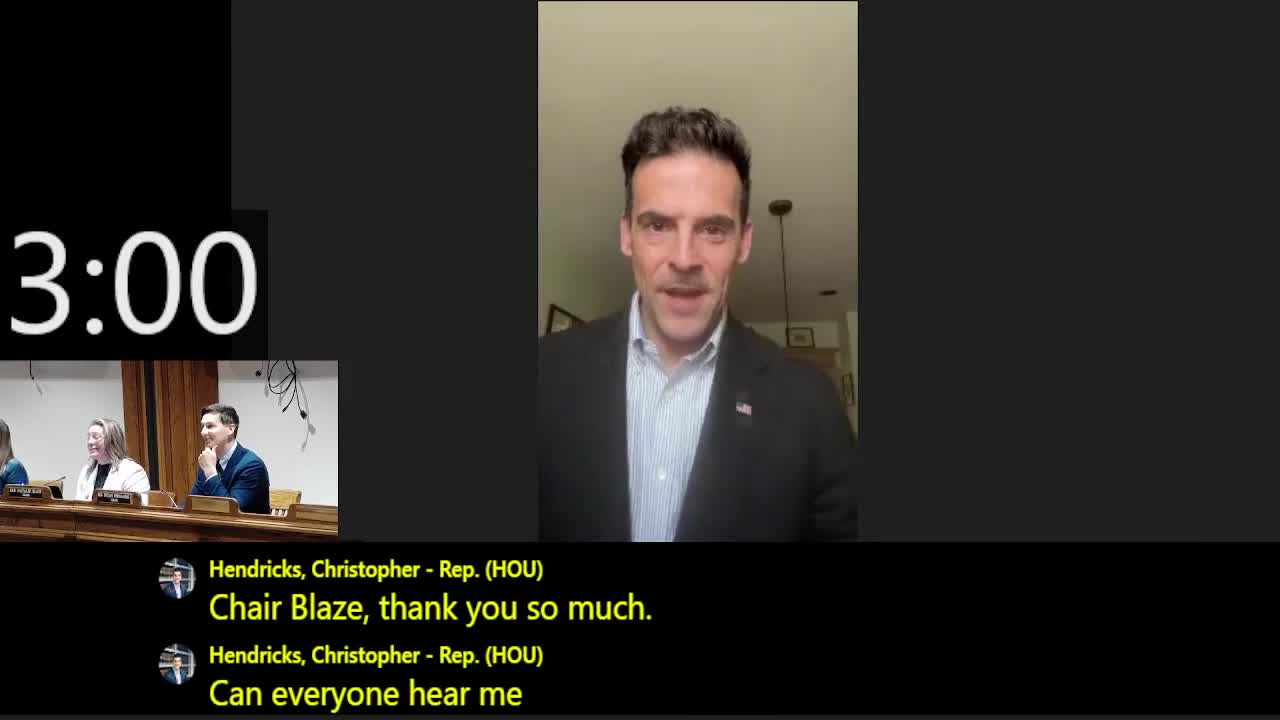
Representative Chris Hendricks, sponsor of the bill, summarized scientific concerns in opening testimony: "Octopus have the most neurologically complex systems known to science," he said, and argued that raising them at commercial scale in confined tanks would be incompatible with their cognitive and behavioral needs.
Researchers and veterinarians provided details about sentience and welfare risks. Christine Webb, researcher and lecturer in human evolutionary biology at Harvard, told the committee octopuses "display problem solving abilities, short and long term memory, play behaviors, even signs of individual personality." Veterinarian Dr. Martha Smith Blackmore testified that expert consensus indicates it is currently impossible to farm octopuses humanely and that confined environments produce behavioral signs of psychological distress.
Speakers also outlined environmental and public‑health concerns. Several witnesses noted octopuses are carnivorous and require large quantities of wild fish or shellfish for feed, increasing pressure on local fisheries; conservation advocate Amanda Fox warned that a single million‑pound octopus operation would require many millions of pounds of feed and could drive increased shellfishing that threatens whale entanglement and fisheries sustainability. Testimony described disease and parasite risks in crowded captive systems and the potential for harmful algal blooms from nutrient runoff.
Youth advocates and students added moral and cultural testimony. Lily Niederhoffer spoke about public sentiment and activism; student Serena Smith and others described animal‑welfare and culinary‑market concerns.
Witnesses pointed to precedent: California and Washington have enacted similar bans, and an experimental facility in Hawaii was ordered closed in 2023. Proponents asked the committee to adopt H.127 to prevent establishment of octopus farms in coastal or inland tank systems in Massachusetts. No formal committee vote was recorded during the hearing.