Get Full Government Meeting Transcripts, Videos, & Alerts Forever!
Get email alerts on the Healthy Soils topic
No spam. Unsubscribe anytime.
Landscape professionals, contractors back bill to require healthy‑soil standards after construction
Summary
Landscape professionals and builders urged the committee to approve legislation establishing healthy soil performance guidelines for post‑construction landscapes, citing widespread practice of removing or degrading topsoil during development and the long‑term consequences for plant health and water retention.
Landscape contractors, certified professionals and industry representatives told the Joint Committee on Agriculture they support H.125/H.142/S.65 to establish healthy‑soil performance guidelines for construction and post‑development landscapes.
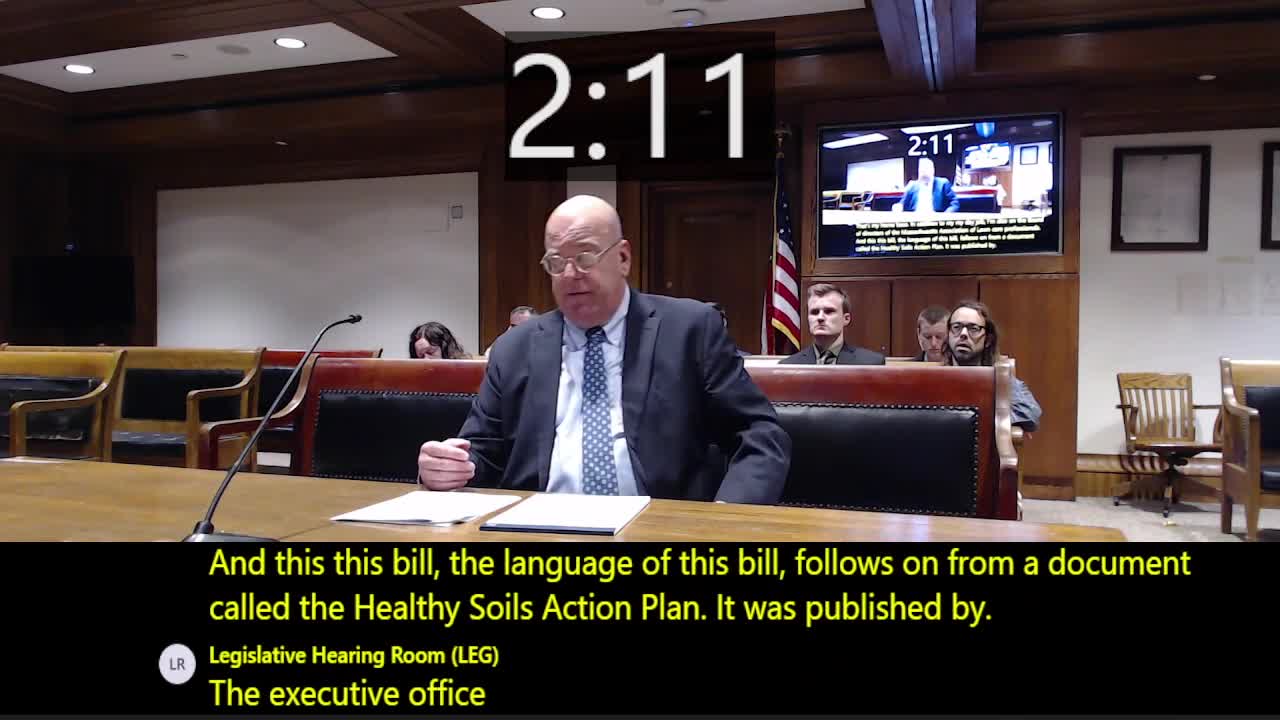
"Nearly in recent construction there would be things like rocks, asphalt, concrete, bricks... there's nothing there that resembles soil," said Bob Mann, senior director of technical and regulatory affairs for the National Association of Landscape Professionals. Mann said developers frequently remove topsoil during building and either sell it or mix it with undesirable subsoils before spreading and seeding.
Joseph Schachowicz, who operates a landscape services company for 50 years, described projects where omitted or poor‑quality topsoil led to plant failures and costly remediation. He recommended statutory standards that ensure builders provide adequate approved topsoil on new properties so homeowners and landscapers can establish lawns, trees and shrubs without large additional expense.
Witnesses discussed soil testing practices and turnaround times; Schachowicz said laboratory analysis (for loam, organic matter and texture) often takes about five days when processed by a commercial lab. Proponents framed the bill as consumer protection and environmental stewardship: healthier soils improve water holding capacity, reduce irrigation needs and support carbon sequestration.
Committee members thanked witnesses for practical detail and noted prior healthy‑soils work at the Executive Office level; no committee vote on these bills was recorded during the hearing.