Get Full Government Meeting Transcripts, Videos, & Alerts Forever!
Get email alerts on the Agricultural Equity topic
No spam. Unsubscribe anytime.
Witnesses urge commission, data collection to address racial and immigrant inequities in Massachusetts agriculture
Summary
Speakers at the Joint Committee on Agriculture hearing urged passage of H.111/S.53 and related bills to create an agricultural equity commission, collect race‑and‑demographic data on farmers, improve land and capital access for BIPOC and immigrant farmers, and add state fisheries representation to the Mass. Food Policy Council.
House Chair Natalie Blaine and Sen. Dylan Fernandez convened the joint hearing to take testimony on H.111/S.53, a resolve promoting equity in agriculture, and several companion bills that would expand representation and supports for underserved farmers.
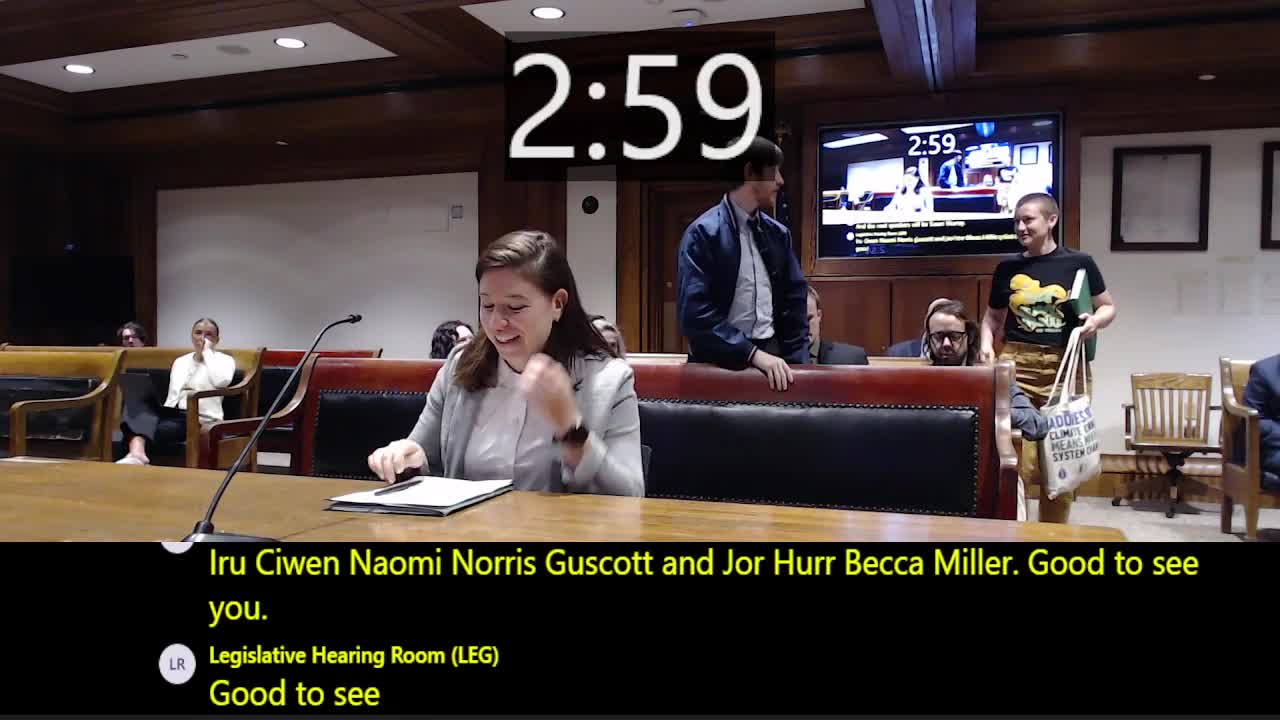
The testimony came from nonprofit leaders, regional partners and farmers who described barriers to land, credit and representation. "People of color make up 32% of the population in Massachusetts yet BIPOC farmers represent less than 3% of the farmers in the state," said Becca Miller, policy director for the Massachusetts Food System Collaborative. Miller also urged adding a Department of Fish and Game designee to the Massachusetts Food Policy Council, supporting H.130/S.52 to broaden fisheries representation.
The proposal before the committee would establish a commission or working group to identify data gaps and recommend policy and investment changes. "We don't have that data," said Susan Murray, executive director of the Southeastern Massachusetts Agricultural Partnership, referring to statistics about BIPOC farmers, loan access and grant distribution. Murray and other testifiers described individual cases in which farmers of color or immigrant farmers faced loan denials, harassment from neighbors or sudden loss of rental land.
Norris Duscott of the Ag Equity Network said the bill would "propose a qualitative and quantitative evaluation of existing programs and successes and [develop] a plan to build upon those efforts," and emphasized using data to guide racially equitable investments. Urban Farming Institute Deputy Executive Director Amber Dickerson said urban farmers face specific barriers: "It's access to the land. It's the resources," she told the committee, urging supports for culturally relevant urban production and for programs that reach communities of color.
Several farmers who testified described the practical needs that follow land access: lease clarity, infrastructure (greenhouses, irrigation, high tunnels) and accessible grant and loan programs. Remote testifier Iru Kayun Niambi said she had secured 3.4 acres in Middleborough but still needed capital to build infrastructure; Jor (Joher) Herr from Lakeville described difficulties scaling production and obtaining equipment. Speakers repeatedly asked the committee to prioritize data collection so policy responses can be targeted and measured.
The coalition of testifiers recommended H.111/S.53 be reported favorably out of committee and urged the legislature to fund the commission's work and follow with enforcement and programmatic supports. No formal committee action on the bills was recorded at the hearing.
Looking ahead, speakers said the commission should produce benchmarks and data collection standards, recommend grant and loan program changes, and identify ways to protect tenure and reduce discriminatory landowner behavior. The proponents offered to supply additional technical testimony and practitioner contacts to the committee.