Get Full Government Meeting Transcripts, Videos, & Alerts Forever!
Get email alerts on the Education Budget topic
No spam. Unsubscribe anytime.
State Department of Education requests staff, assessment and program funding as committee reviews budget
Summary
Legislative analysts and Superintendent Debbie Critchfield outlined the Department of Education's budget requests, including new special education staff, an Indian education coordinator, driver education reimbursements, and funding to transition to a new statewide student assessment platform.
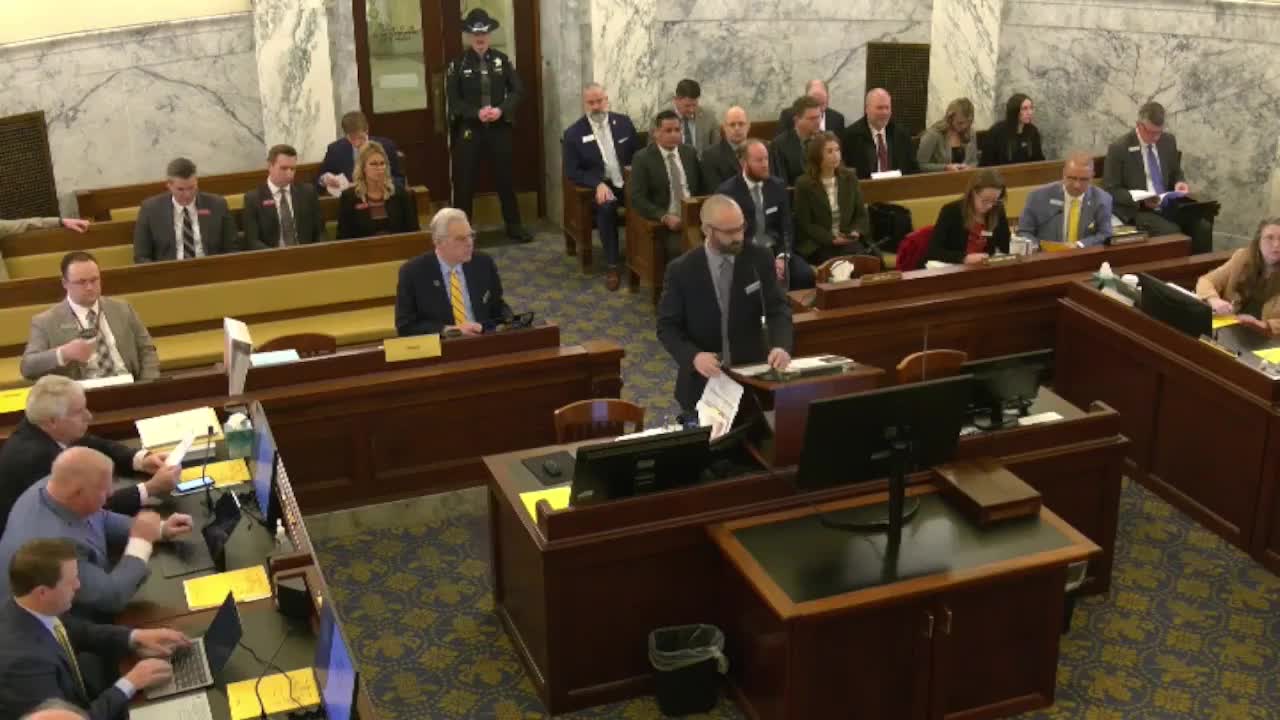
Jared Tetroult, deputy division manager with the Legislative Services Office Budget and Policy Analysis Division, told the Joint Finance-Appropriations Committee that the State Department of Education’s budget covers personnel for programs including assessments, accountability, nutrition, federal programs, school choice, special education and student transportation.
The department’s 126.5 authorized full‑time equivalent positions include 9.5 vacancies at the time of the submission, Tetroult said. He described multiple dedicated funds the department manages and highlighted the driver’s training fund and the career ready student program as examples of large, partially‑obligated balances. “In 2022 this was $3,800,000 as a free fund balance and in 2026 it's currently estimated to be 7,400,000,” Tetroult said of the driver’s training fund.
Why it matters: Lawmakers pressed the department on the mix of one‑time and ongoing funding, how federal COVID/ARPA dollars changed year‑to‑year spending patterns, and on programs that shift cash from appropriation to obligation (contracts and reappropriations) before districts draw the money down.
Superintendent Debbie Critchfield described specific enhancement requests in the department’s 2026 budget submission and answered committee questions about special education demand and several programmatic proposals. On special education workload, Critchfield said the department is seeing more requests for assessment and dispute resolution rising to the state level: “We have an increase in parents that are asking for their students to be tested… we have a 65% increase in requests for mediation, 77% increase in just general complaints and a 1,200% increase in hearings,” she told the committee.
Staffing and special education. The department requested ongoing additions including one dispute resolution specialist (1.0 FTP, $84,400) to support special education communications and timeliness, and a charter‑school special education specialist to support monitoring, reporting and technical assistance under federal law (IDEA and Section 504). Critchfield and the analyst told the committee that one staff member currently covers statewide dispute resolution work and that increased volume has driven the request.
Indian education and charter support. The department requested an Indian Education Coordinator position (1.0 FTP, roughly $114,000) to assist with tribal relations, travel and improving student achievement, and the governor recommended using funds from the public charter school authorizer’s fund to support underperforming charters ($300,000 recommended). Jared Tetroult referenced Idaho Code provisions in explaining the department’s authority to support charter schools and how authorizer fees fund that account.
Student assessments. The department seeks $2.7 million in one‑time federal spending authority to pilot and transition to a new statewide assessment platform for the ISAT (the Idaho Standards Achievement Test), which the department administers to students in grades 3–8 and once in high school. Gideon Tolman, the department’s chief financial officer, told the committee the request is intended to “help transition to a new platform” and that the department would clarify whether base funding would cover ongoing costs.
Child nutrition and other grants. Requests include a four‑year Child Nutrition Technology Grant totaling $746,300 to support the MyIdahoCNP software for compliance and claims tracking, and a Farm to School ARPA grant (about $264,100) to support school garden and food‑education projects.
Career Ready Students program. Critchfield described the Career Ready Students program funding timeline and award activity: 65,000,000 appropriated over recent budget cycles, 152 applications received, 72 grants awarded representing approximately $62,700,000 obligated, and roughly $16,000,000 reimbursed to date. She said awards were held to a reimbursement model to prevent commingling of funds until grantees could document expenses.
Driver education reimbursement and school bus camera fund. The department proposed increasing driver education reimbursement from $150 to $300 per student; Tetroult noted the proposal would require legislation. Tetroult also described the school bus camera fund: there was roughly $35,000 cash on hand and a one‑time supplemental request for that fund; if both the current‑year and ongoing requests were approved, spending would be limited to the cash available and any appropriation in excess of cash would simply not be drawn down.
Audit, vacancies and personnel. Committee members asked about long‑standing audit findings related to payment verification. Critchfield noted the department has hired an auditor to verify student counts and district payments; the position, funded in the current year, has been filled. On vacancies, Critchfield said the department had six open positions at the time of testimony and was actively filling them.
Federal requirements and local control. Members raised concerns about federal money and potential regulation; Critchfield said for the items discussed the federal funds supported the requested activities and she did not expect loss of local control tied to these specific requests.
What’s next: Committee members asked for additional breakdowns and follow‑up reports — for example, which nonpublic schools received COVID/ARPA reimbursements, the status of ESSER/ARPA expenditures, and a grant‑level list of Career Ready Students obligations and project statuses. Tetroult and department staff agreed to provide those details to the committee.
The hearing continued with other agency presentations after the department concluded its remarks.