Get Full Government Meeting Transcripts, Videos, & Alerts Forever!
Get email alerts on the Committee Roundup topic
No spam. Unsubscribe anytime.
Subcommittee reports multiple technical and Boyd-Graves recommendations; several bills passed unanimously
Summary
The civil subcommittee moved multiple bills — many technical or Boyd-Graves Commission recommendations — through committee with unanimous or near-unanimous votes, including measures on real-estate-tax sales, recording fees, malpractice limits for third-party beneficiaries and e-notary recognition.
The Civil Subcommittee considered several additional member and study-commission bills and reported them to the next stage, mostly by unanimous committee votes.
Key actions and committee votes reported during the meeting included:
- A committee substitute to conform an unnamed bill to a senate cognate was reported by vote of 5–0 early in the session.
- House Bill 2362 (Delegate Mundy King) — revising procedures for tax-levy sales of real estate and recommending additional protections for parties with interests in property — was recommended by the Boyd-Graves Commission and reported 7–0.
- A Boyd-Graves recommendation to toll the statute of limitations for wrongful-death suits while related criminal proceedings are pending was reported 7–0; the bill seeks to align wrongful-death statute tolling with existing tolling for personal-injury claims.
- House Bill 1913 (Delegate Reiser) — clarifying uniform recording and fee treatment for deeds and related documents to reduce unpredictable clerk fees — was reported 7–0 after stakeholder review and a small technical amendment.
- House Bill 2174 (Delegate Clark) — technical changes to limit malpractice claims by third-party beneficiaries consistent with prior General Assembly intent — was reported 7–0.
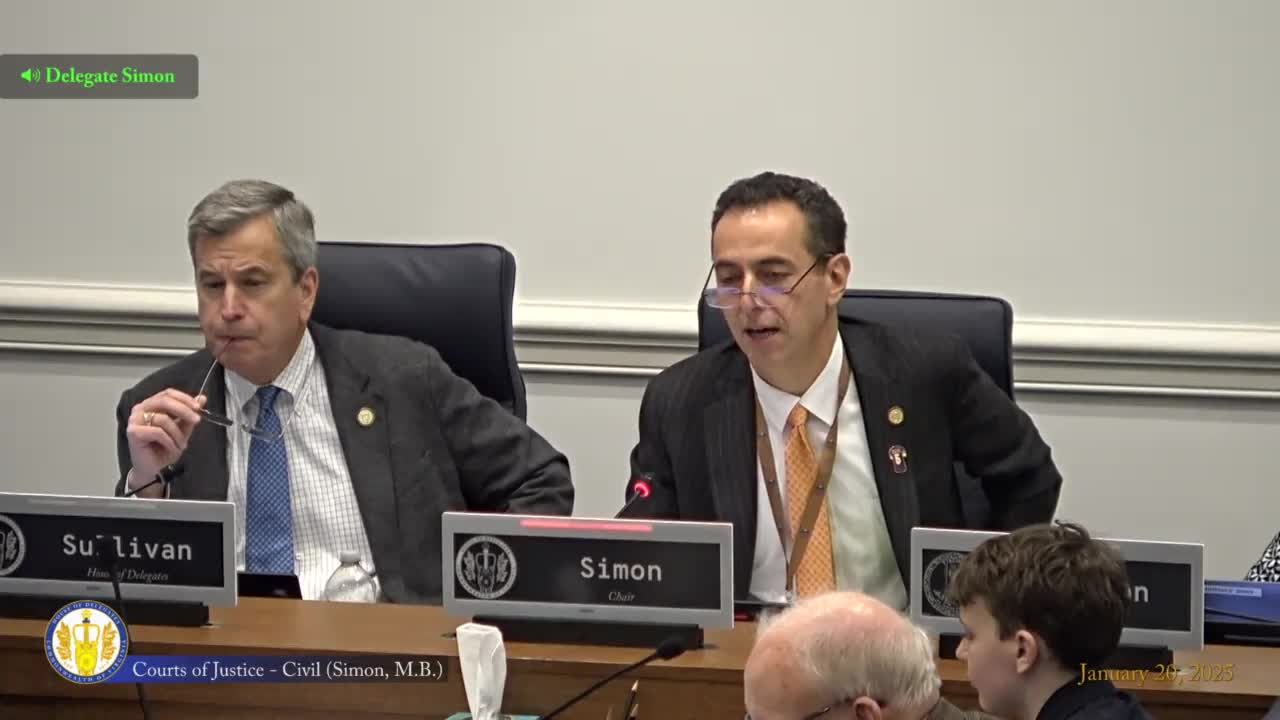
- A technical fix to last year’s e-notary changes (sponsored by Delegate Sullivan) to make clear Virginia will recognize out-of-state e-notarial acts for recording was considered and a substitute adopted; committee recorded the report and closed its business at the end of the hearing.
Clerk-recorded votes in committee were overwhelmingly unanimous for the bills summarized above; the committee chair said patrons had been given opportunities to work with stakeholders and that some bills were taken “by” to allow further negotiations.