Get Full Government Meeting Transcripts, Videos, & Alerts Forever!
Get email alerts on the Libraries Digital Access topic
No spam. Unsubscribe anytime.
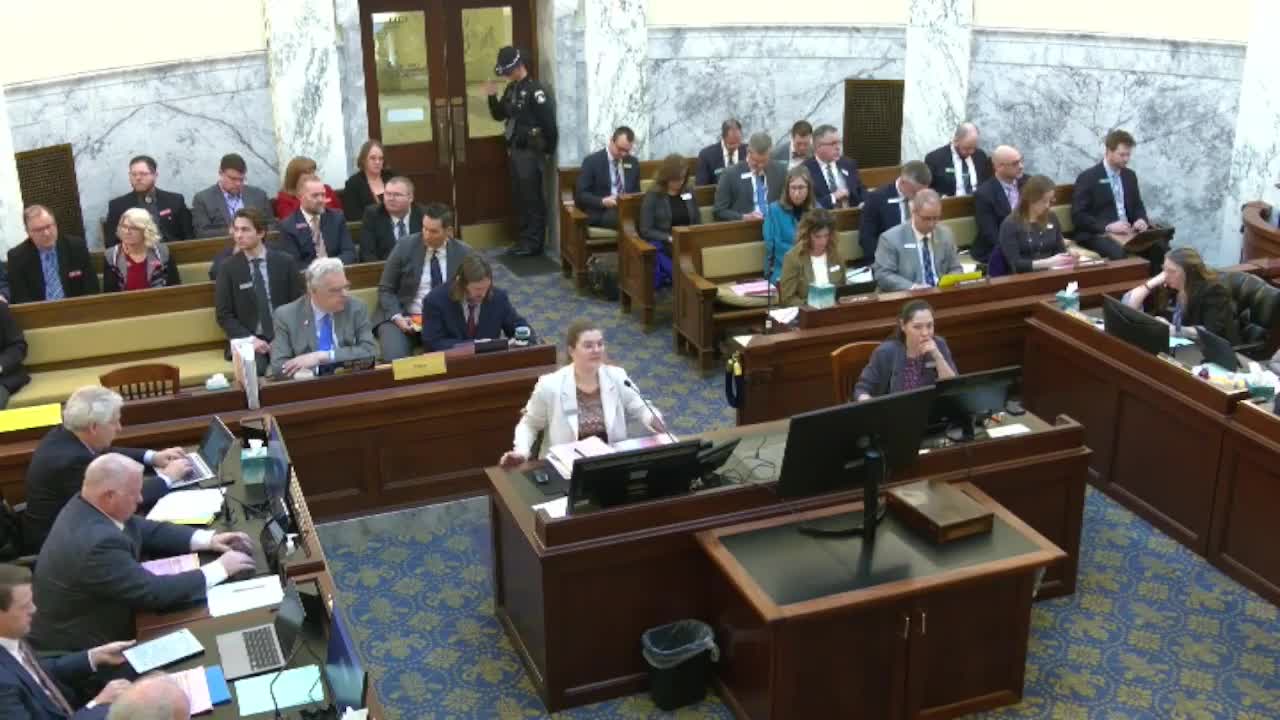
JFAC divided over $2.5M federal Digital Access grant for libraries; substitute and original motions both fail
Summary
Committee members debated a $2.5 million federal Digital Access grant for libraries and a substitute motion to strip the grant; both the substitute and the original funding motion failed to secure the House majority and were not approved.
Committee members clashed March 7 over a proposed $2.5 million federal grant called the Digital Access for All Idahoans program that would be administered through the Idaho Commission for Libraries.
Brooke Dupree, budget and policy analyst with the Legislative Services Office, presented the commission's budget and the $2,500,000 federal enhancement labeled "digital access for all Idahoans." Senator Cook moved the original package (which included $42,400 general fund for broadband reimbursement, $40,000 federal for subgrants, and $2,500,000 federal for the digital‑access grant) totaling $2,582,400. Representative Gallabis seconded earlier procedural steps.
Senator Carlson offered a substitute motion to strip the $2.5 million digital access grant and instead add $42,400 general fund and $40,000 federal funds for a total of $82,400. Carlson explained his motion by saying the $2.5 million funding would support DEI (diversity, equity and inclusion) programs and that the legislature had taken a position against such programs; he urged removing the larger grant. "This is funding, that the 2,500,000 is funding more DEI and the legislature has taken a stand against DEI programs," Carlson said.
Senator Cook argued the grant supports locally planned services at public libraries — digital training for seniors, devices for local libraries, large‑print books and cybersecurity — and warned that rejecting the federal money could lead to reallocations elsewhere. "This money is for digital training for our seniors to realize how to use the computers. It's for large printed books for our seniors. It's for devices for your local libraries," Cook said.
Committee members asked for the source of the federal funding. Committee staff later identified the grant source as the Digital Equity Act.
The substitute motion passed more Senate than House support in roll call counting but failed because the House did not register a majority: combined totals recorded were 11 ayes, 9 nays; the chair announced the substitute failed because it did not carry in the House. The committee then considered the original motion; after further floor confusion and procedural discussion the original funding motion also failed when the House vote split 5–5, leaving the motion without a House majority. Neither the $2.5 million federal grant nor the substitute amendment moved forward during the March 7 meeting.
The debate included multiple members urging caution about labeling local library uses as "DEI" without reviewing local plans and several senators asking staff to provide the federal notice of funding and the underlying statutory authority for the grant; a staff member told the committee the funding is under the Digital Equity Act.