Get Full Government Meeting Transcripts, Videos, & Alerts Forever!
Get email alerts on the Child Welfare topic
No spam. Unsubscribe anytime.
Idaho budget hearing emphasizes prevention, more foster parents to curb costly congregate care
Summary
The Department of Health and Welfare asked the Joint Finance and Appropriations Committee to fund new prevention specialists, clinicians and licensing staff to reduce placements in high-cost congregate care; director and staff framed investments as a front‑end way to lower long‑term costs and limit future supplementals.
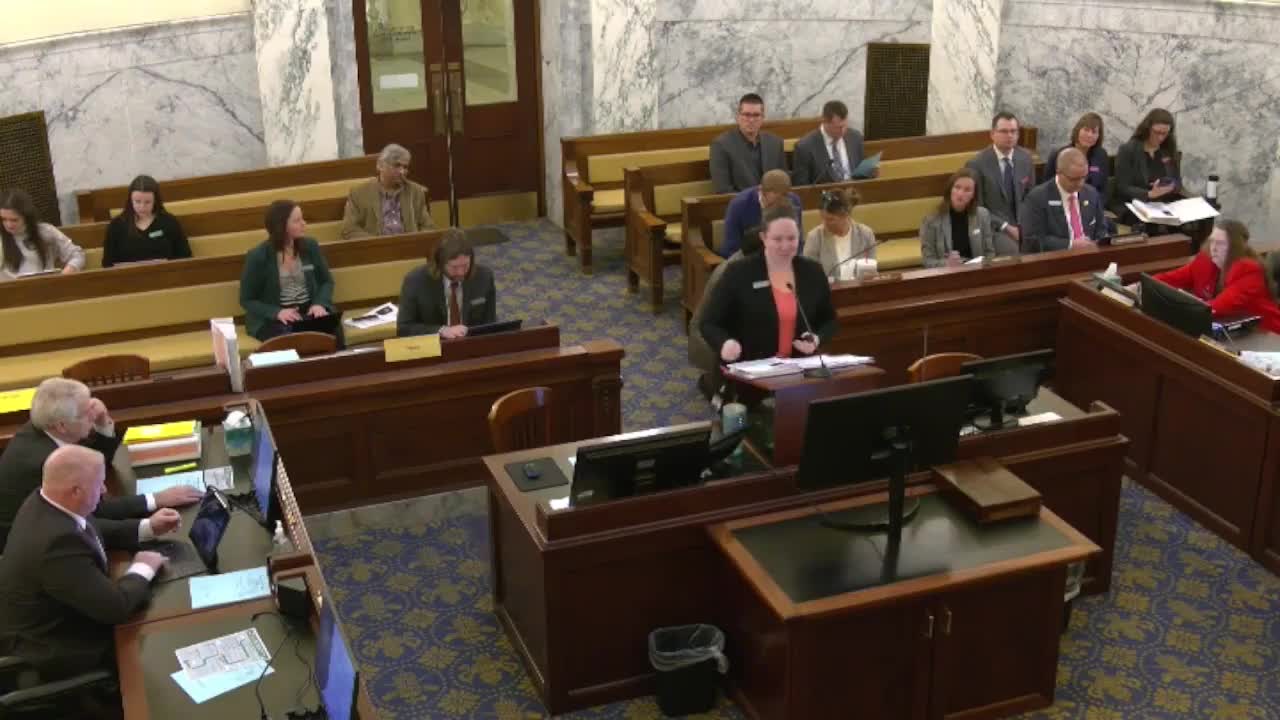
The Department of Health and Welfare told the Senate–House budget panel Thursday it is asking for staff and funding to expand prevention services and recruit foster families in order to reduce use of expensive congregate care for children in state custody.
The request, presented by Alex Williamson of Legislative Services and Director Alex Adams, centers on hiring prevention specialists and clinical and licensing staff, plus a fiscal 2025 supplemental to cover higher-than-expected foster care costs.
Williamson, budget and policy analyst, told the committee the division now titled Youth Safety and Permanency is authorized 434.8 full‑time positions and had 45.8 vacancies as of Feb. 10; about 25 vacancies were in the interview stage and 9 were posted. She said the division expended about $117.8 million in fiscal 2024, with foster care and assistance payments making up roughly 60 percent of that total.
Why it matters: Department leaders said a small number of children occupying congregate settings drives large costs and poorer outcomes, and that shifting children into prevention and foster placements yields better results at lower expense.
"If I keep a kid in their home, in a prevention case, it's a dollar eighty a day. If a child is removed from their home and placed in foster care, it's $16 a day. If I don't have a foster bed available to them, congregate care is $380 a day," Director Alex Adams told the committee. "We need fewer kids in congregate care and the path to fewer kids in congregate care is more foster beds and more prevention cases."
What the department asked for - Prevention specialist team: agency requests 36 new prevention specialist FTP (to raise the statewide total from 14 to 50). Williamson said the combined ongoing and one‑time cost is about $3,048,200, of which $2,929,200 was described as ongoing in the packet. - Youth safety and permanency staff: agency requested 12 positions; the governor recommended 9. Williamson said these staff would include clinicians for needs assessments and placement work; both the request and recommendation include $120,000 for a family‑find tool to locate kinship placements. - Foster program clinical staff: agency requested 15 clinicians; the governor recommended 10. These clinicians would be assigned to the congregate care unit and support foster and biological caregivers; the request also included one‑time funding to update the child‑welfare information system. - Foster program licensing staff: agency requested 14 FTP to speed licensing and kinship fast‑track. At the time of the request, Williamson said there were 19 licensing staff with average caseloads of 59 foster families and the average time to license a prospective parent was about 80 days. - Case management support: the division requested additional case management positions to reduce the average caseload from 32 youth per worker toward 26; Williamson said of 14 requested positions the governor recommended 3. - Fiscal 2025 supplemental: Williamson said the packet includes a $14.1 million supplemental for foster care population forecast adjustments driven mainly by rising congregate care costs and higher needs among youth.
Deputy Director Monty Pro described prevention work as intensive: prevention specialists visit families about once a week, conduct home and family assessments, create court‑reviewed treatment plans and broker services (for example, counseling or substance‑use treatment) to address risk factors. "It's once a week for our prevention workers. It's once a week they go into the home to build up protective factors and reduce the risk factors," Pro said.
Adams and staff framed the package as an investment that will reduce future supplementals. "We are going to pay for this one way or another — it's either on the front end or the back end," Adams said. He pointed to reductions in the projected supplemental over recent months as evidence the department's recruitment and policy changes are working.
Payette Assessment and Care Center The department described a revised approach to the Payette Assessment and Care Center. Adams said the governor's office and the agency agreed not to buy the relatively new facility outright at this time; instead the department would continue to lease and staff it, with a recommended $2.7 million ongoing request to operate the center under lease while evaluating long‑term suitability. Williamson told the committee she believed the state paid for modifications and maintenance to the facility when it was brought into use.
Committee reaction and context Members expressed general support for prevention and foster‑parent recruitment and emphasized the desire to avoid recurring supplementals. Several lawmakers praised faith‑based outreach and other recruitment tools the department has used. Representatives and senators asked for more detail about implementation and staffing timelines; Adams and deputy staff said they expect many positions to be posted immediately upon legislative authorization and to fill them quickly.
The packet and the department's heat map by legislative district are available in committee SharePoint materials.
What's next Committee members will consider the department's requests as part of the Joint Finance and Appropriations Committee's budget setting. No formal committee vote on the requests was recorded in the transcript.