Get Full Government Meeting Transcripts, Videos, & Alerts Forever!
Get email alerts on the Education Funding topic
No spam. Unsubscribe anytime.
House Education chair urges continued investment in rural schools, CTE and teacher pay
Summary
Representative Doug Pickett told the Joint Finance-Appropriations Committee that Idaho has increased K‑12 funding and teacher pay over the past decade but still faces large facility and special-education funding gaps and rising demand for career and technical education.
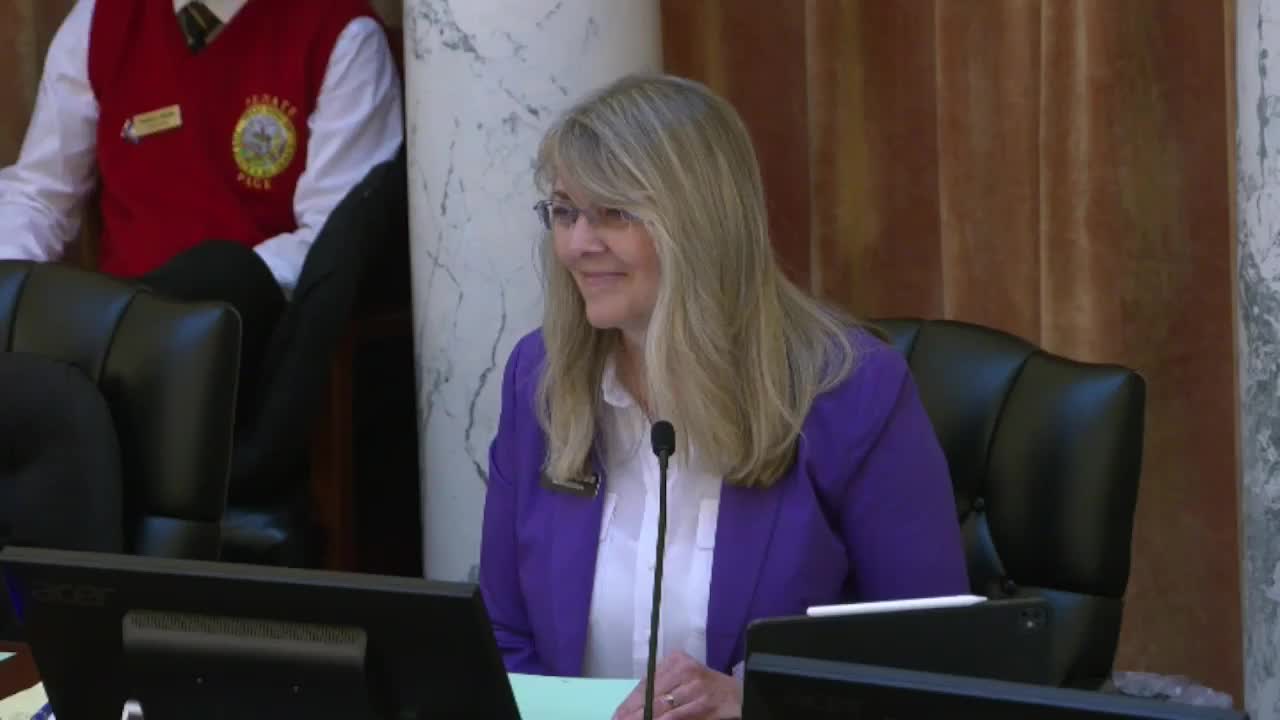
Representative Doug Pickett, House Education chairman, told the Joint Finance‑Appropriations Committee on March 7 that Idaho has substantially increased funding for public education in the last decade and must continue targeted investments to meet new needs.
"Over the past 10 years, the public education K‑12 budget has doubled from $1,400,000,000 to $2,800,000,000," Pickett said, and he noted the state increased average K‑12 teacher pay to nearly $63,000 this school year. He thanked JFAC for committing an additional roughly $83,000,000 for teacher salaries for the current year and for approving an option enabling districts to enroll teachers in the state health insurance plan, a benefit Pickett said is worth about $4,000 per teacher.
Pickett said Idaho must balance classical academic instruction with growing demand for career and technical education (CTE). "CTE programs, particularly in our community colleges, are significantly oversubscribed and are dealing with significant capacity limitations," he said, and added that recruiting qualified CTE instructors is increasingly difficult because of private‑sector competition.
Pickett emphasized the special needs of rural districts, saying that Idaho code defines rural schools as those in areas with fewer than 20 enrolled students per square mile or districts in counties with fewer than 25,000 residents. "In most cases, rural public schools are the backbone of the entire community in which they reside," he said, and argued rural students deserve higher per‑student funding for transportation, special education, facilities and teacher recruitment and retention.
He identified several funding shortfalls cited by stakeholders: a nearly $3,000,000,000 facilities funding gap statewide, an estimated $83,000,000 special‑needs gap, $5,000,000 to retrain teachers in early‑grade phonics, and about $35,000,000 for outcome‑based funding. He also said the Joint Legislative Oversight Committee would hear an Office of Performance Evaluations report on K‑12 characteristics and funding later the same day.
Committee members asked for clarification on community college CTE capacity and endorsed increased support for community college CTE programs. Representative Pickett said he supports the governor's proposed $25,000,000 capacity expansion for community‑college CTE.
Pickett closed by warning against being "reactionary," urging instead proactive, measured funding decisions that preserve core academics while expanding vocational pathways and postsecondary CTE capacity.