Get Full Government Meeting Transcripts, Videos, & Alerts Forever!
Get email alerts on the State Budget Votes topic
No spam. Unsubscribe anytime.
JFAC Friday: Dozens of budget adjustments approved; behavioral health and energy rebate debate draws pushback
Summary
The Joint Finance-Appropriations Committee met Friday and approved multiple budget adjustments across health care, behavioral health, conservation, labor, energy and other programs, while a contested vote on federal home energy rebates produced an unresolved committee tally and procedural disagreement.
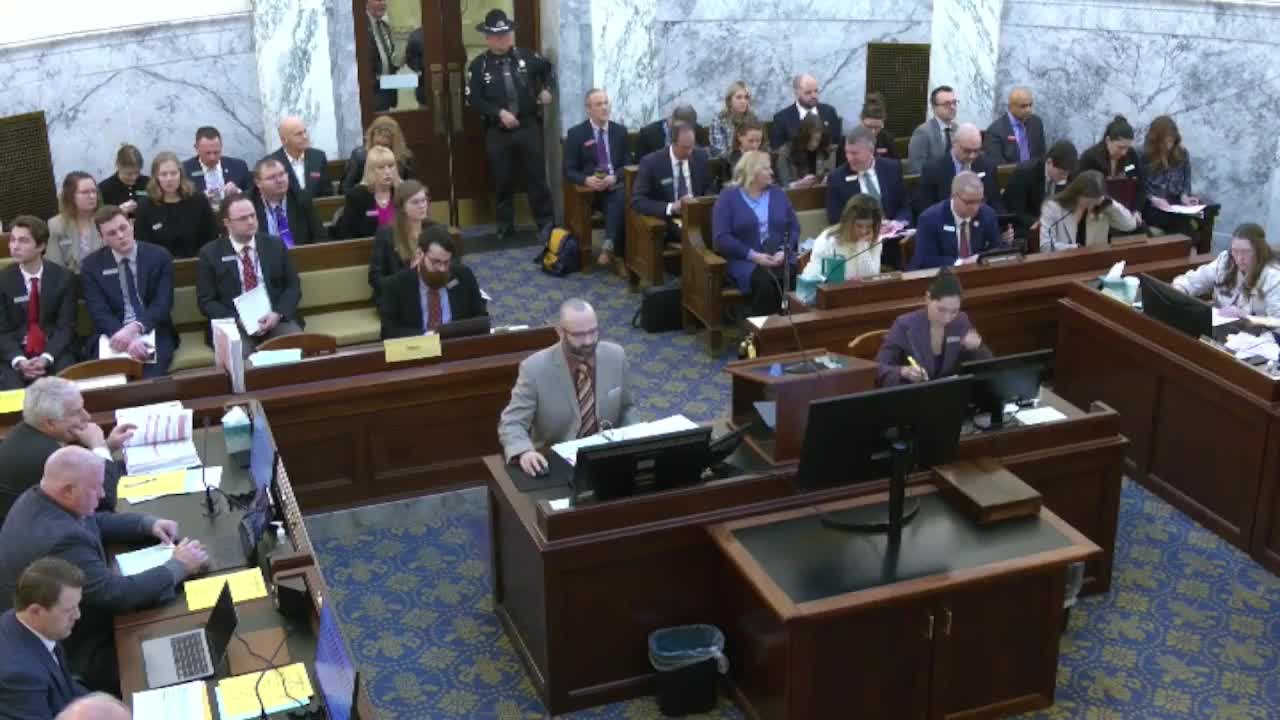
The Joint Finance-Appropriations Committee met Friday morning at the Idaho Statehouse and voted on a long list of budget maintenance, replacement and supplemental items affecting health and welfare, corrections, energy, labor and multiple small agencies.
The committee approved multiple behavioral-health appropriations—both one-time and ongoing—covering Idaho Behavioral Health Plan implementation funds, psychiatric hospitalization forecast adjustments and related transfer-limit exemption language. Committee members also approved funding for the Soil and Water Conservation Commission, Idaho Public Television replacement items, replacement vehicles for the Brand Inspection Division, information-technology hardware for several small agencies and a set of accounting-correction language for the Department of Labor.
The committee’s deliberations included a larger policy-adjacent debate over federal home energy rebates administered by the Office of Energy and Mineral Resources. Members expressed a range of views about accepting federal Inflation Reduction Act funding, with proponents arguing Idaho should take its federal share and opponents worried about federal overreach and long-term inflationary effects. The committee recorded conflicting tallies on that motion during the floor roll calls; committee chairs subsequently directed staff to transmit the matter to the House for consideration amid procedural disagreement.
Votes at a glance (selected motions recorded in committee) - Idaho Public Television (replacement items; network operations center): motion to add $342,400 from the general fund passed (total: 16 ayes, 4 nays). Motion text recorded by the clerk began: “Beginning with fiscal year 2026, JFAC program maintenance budget add 42,400 for replacement items and 300,000 for the network operations center replacement funding…” (mover: Senator Galloway; second: Rep. Galvez). - Soil and Water Conservation Commission: motion to add $1,040,500 (including $1,000,000 for water-quality grants) passed (total: 18 ayes, 2 nays). Motion included reappropriation authority for CREP and WACPA (mover: Vice Chair Miller; second: Sen. Burkey). - Idaho Behavioral Health Plan (FY2025 cooperative welfare federal funds appropriation to implement IBHP contracts): one-time addition of $6,743,800 from Cooperative Welfare Federal Fund — passed (15 ayes, 5 nays). Motion (mover: Rep. Furniss; second: Rep. Furness). - Mental Health Services (FY2026 federal grant increase—IBHP): addition of $261,400 from federal funds — passed (18 ayes, 0 nays recorded at that vote). - Psychiatric hospitalization — community hospitalization supplemental (FY2025): one-time addition of $2,663,500 from Cooperative Welfare general fund for civil-commitment/community hospitalization expenditures — passed (19 ayes, 1 nay). - State Hospital West forecast/fund shift adjustments: motions shifting federal to dedicated funds and adjusting general fund impacts were passed in multiple steps (various votes recorded; motions carried by committee majorities as announced on the floor). - Psychiatric Hospitalization FY2026 population forecast and fund-shift package (net zero budget impact with federal-to-dedicated shifts): motion passed (unanimous roll calls recorded in committee: 20 ayes where recorded). - Substance Abuse Treatment & Prevention (FY2026 dedicated/federal fund alignment; net 0): motion ultimately passed after clerical corrections to the motion language (final tally recorded as 14 ayes, 6 nays on the corrected motion; committee adopted the corrected motion and moved it forward with a due-pass recommendation). - Department of Labor — unemployment insurance operations and IT replacement: an initial motion discussing dedicated-fund use and FTPs failed to carry. Committee members then discussed accounting corrections; the committee later approved a corrective transfer/appropriation to move $4,868,000 between unemployment-related funds to fix accounting errors (final recorded passage: 18 ayes, 0 nays). Committee also approved language directing the Department of Labor to report on positions. - Office of Energy and Mineral Resources — Home Energy Rebates/HEER programs and the governor’s Speed Council: the work group moved a package that would authorize federal grant authority (approximately $24.5 million federal plus dedicated and a $481,100 general fund Speed Council line). Roll calls recorded varied outcomes: the Senate vote on the original motion was 6 ayes/4 nays; the House vote was recorded as 5 ayes/5 nays and thus the clerk announced the motion did not obtain a House majority and “failed.” Committee leadership later described a procedural disagreement and directed the measure be sent to the House for consideration; language related to federal-fund restrictions was accepted to accompany the package. (Transcript records the dispute and multiple roll-call readouts; the committee produced mixed procedural statements on disposition.) - Idaho State Liquor Division: motion to adopt an enhancements/replacement package of $1,521,700 from dedicated funds (temp staff pay, document management, shrink-wrap and website ADA compliance plus replacement items and ITS hardware) — passed (committee result announced: majority affirmative; roll calls produced a final tally reported in the minutes as 14 ayes, 6 nays, as recorded by the clerk). - Idaho Lottery (ITS replacement items): motion to add $176,700 from dedicated funds — passed (committee recorded a majority vote; final tallies announced on the floor). - Brand Inspection Division (replacement vehicles and IT gear): motion to add $289,200 from dedicated funds — passed (committee majority recorded; summary roll-call tallies announced in the minutes). - Commission on Pardons and Parole — IT replacement items: motion to add $12,600 from the general fund — passed unanimously in committee (20 ayes recorded). - Veteran Services technical correction (FY2026): motion to move $852,000 between personnel and operating within miscellaneous revenue and federal grant funds (net zero) — passed unanimously.
What members emphasized - Supporters of federal home energy rebate dollars said Idaho should accept federal allocations the state is entitled to and use them to help households and create local economic activity. Representative McGurkin’s motion and several supporters noted the money is formula-allocated and would otherwise be spent in other states. - Opponents raised concerns about federal program design, potential federal mandates on energy codes, and whether federal funds effectively raise local costs over time. Representative Tanner and colleagues argued that federal inflows can carry strings and questioned long-term impacts. - On behavioral health, several lawmakers asked for follow-up reporting on whether rate increases for direct care workers actually flowed to worker pay and expressed interest in a department report on workforce effects and foster-care spending. Senator Julie VanOrden and other members asked staff to obtain follow-up information from the Department of Health and Welfare.
Process notes and procedural dispute - The meeting record shows a procedural disagreement over how to treat a close committee vote on the Office of Energy and Mineral Resources package. Floor roll calls showed different majorities in the two chambers; committee chairs later instructed staff to forward language and the measure to the House for consideration. The committee also adopted language requiring agencies to report on federal-fund exposure and to limit state match obligations.
Next steps - Items that received “due pass” recommendations will move forward to the full Legislature or the relevant chamber(s) for further action, per the committee’s usual process. The House and Senate will receive bills and language as appropriate; some items (notably the contested energy-rebates package) may receive further debate or amendment in the originating chamber.
Ending note - Committee members and analysts repeatedly noted that many of these are maintenance or replacement requests and that several votes reflected technical or accounting corrections rather than new program starts. Staff flagged a number of instances where language would appear in the enhancement bill(s) as a condition, limitation, or reporting requirement.