Get Full Government Meeting Transcripts, Videos, & Alerts Forever!
Get email alerts on the Vocational Rehabilitation Audit topic
No spam. Unsubscribe anytime.
State auditors flag control failures at Vocational Rehabilitation; agency seeks $2.7 million state match for $10 million federal reallocation
Summary
Legislative auditors on Feb. 24 told the Joint Finance‑Appropriations Committee that Idaho’s Division of Vocational Rehabilitation lacked controls and accurate federal reporting for FY 2024; the agency received a $10 million federal reallocation but must provide the state match and address potential disallowed costs.
Legislative auditors told the Joint Finance‑Appropriations Committee on Feb. 24 that Idaho’s Division of Vocational Rehabilitation (IDVR) failed to maintain sufficient internal controls and accurate federal reporting for fiscal year 2024, prompting the Rehabilitation Services Administration (RSA) to designate the division a high‑risk grantee and impose specific federal conditions.
Brooke Dupree, a budget and policy analyst with the Legislative Services Office, presented spending trends and described a September 2024 ‘‘non‑cognizable’’ adjustment in which the governor recognized a reallocation of roughly $10 million in federal Rehabilitation Services Administration funds to Idaho. Dupree emphasized that the federal reallocation requires state matching dollars; she and audit staff said the federal share is roughly 78.7% and the state share about 21.3% of funds expended under the grant.
What auditors found: April Renfro of the LSO audits division summarized a fiscal monitoring review RSA requested after IDVR notified the federal grantor that it could not secure supplemental state appropriations in time. The audit’s key conclusions included: - The division lacked adequate procedures and control activities to ensure compliance with annual appropriation laws for FY 2024. - The division’s financial management system and processes did not reliably account for obligations and expenditures, creating inaccuracies in federal financial reporting. - A corrective action plan submitted to the federal grantor was insufficiently detailed; RSA designated IDVR as a high‑risk grantee under 2 CFR 200.208 and demanded further corrective steps.
RSA then asked for a fiscal monitoring review and placed specific conditions on IDVR’s federal awards. Auditors said the division’s case management system did not communicate with the state fiscal systems in a way that ensured obligations were charged to the correct federal period, and the agency had accumulated a backlog of invoices and committed obligations that exceeded appropriated amounts in FY 2023–24.
Federal funds, state match and supplemental requests: Dupree and auditors explained the sequence that followed. When RSA reallocated $10 million to Idaho in the late federal grant cycle, the governor accepted that non‑cognizable adjustment so IDVR would not run out of appropriation and default on payments. Because the federal award requires state match, the division subsequently requested a one‑time $2.7 million general‑fund supplemental to provide the state share for that $10 million federal reallocation; the governor recommended that supplemental. The governor also recommended an additional $1.7 million one‑time general‑fund payment that the agency estimates would be needed for client services that RSA may deem unallowable (Dupree said those are services that have already been provided but could be rejected on later federal review).
Contracting and technical assistance: auditors added that the division hired an outside contractor to implement the corrective‑action roadmap. The first professional services contract, signed in August 2024 for $499,999, was later amended in November 2024 to add roughly $1.9 million and extend the contract period through December 2025, bringing the total amended contract to about $2.4 million. Auditors noted the contract and the amendment received one‑time exemptions from competitive procurement at the Division of Purchasing and observed that the contractor’s scope includes business‑process mapping, control system analysis, forensic accounting, federal financial reporting assistance and development of a grants management manual.
Auditors said about $900,000 has been paid so far against that contract, all charged to federal funds; the full contract cost will require state matching dollars if charged to federal awards. Auditors also said RSA did not explicitly require that specific contractor but that federal staff encouraged the state to obtain strong, independent technical assistance and set conditions under which they would continue to provide federal funds.
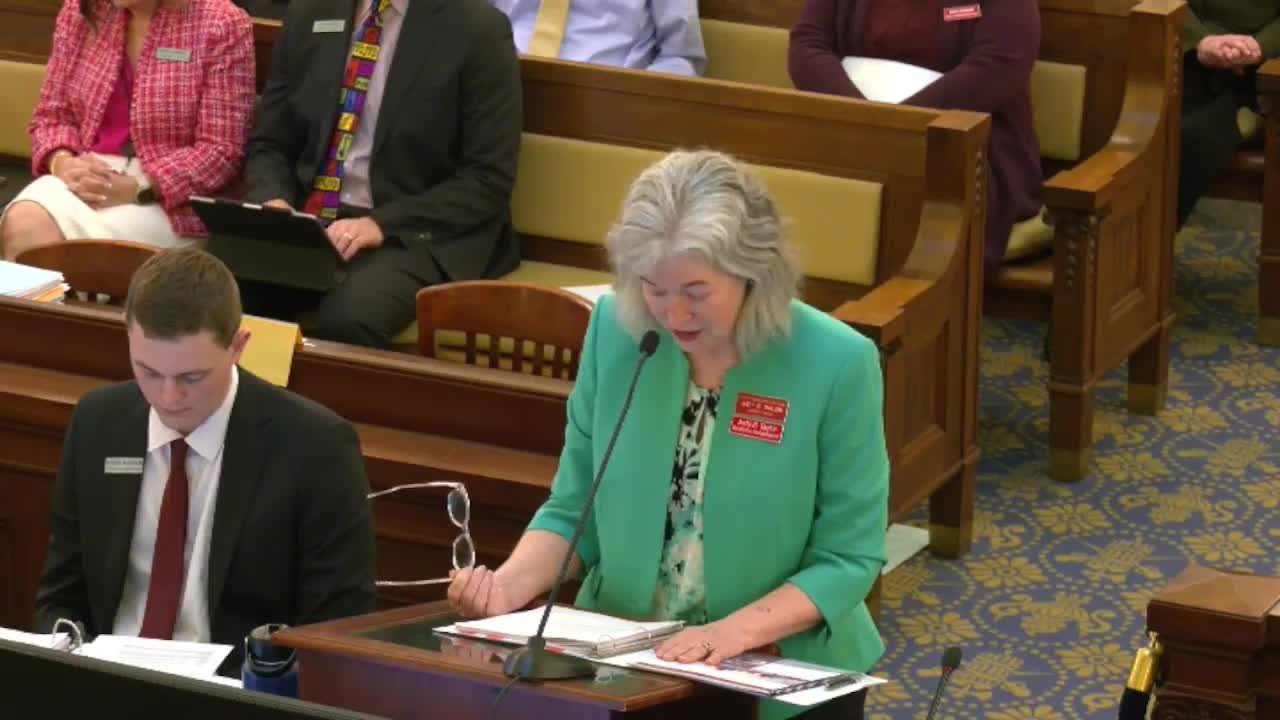
Program impacts and numbers: IDVR interim director Judy Taylor told the committee she became interim director June 15 and outlined operational factors. Taylor and audit staff said: - IDVR reported 2,735 active clients and about 1,950 qualified disabled Idahoans on a waitlist at the time of the hearing. - Dupree said the division is authorized 48 FTP with about 16.5 vacancies; IDVR staff said many vacancies have been held as austerity measures. - The division reported FY 2024 personnel costs of about $11.8 million and trustee and benefit payments of about $11.8 million; overall trustee and benefit payments have been rising as caseloads and per‑client costs have increased.
Pre‑ETS and disallowed costs: auditors and the director discussed concerns with the Pre‑Employment Transition Services (Pre‑ETS) program for students transitioning to employment. Director Taylor said an early draw request for Pre‑ETS reimbursements produced a large disallowance rate (she described reimbursement at roughly 25¢ on the dollar for some early draw requests, implying a roughly 75% disallowance for that submission), and auditors said the forensic review will examine periods going back to 2019 to determine questioned costs and reporting accuracy. Renfro said that some contractor reporting shows roughly a 20% disapproval rate for reviewed plans and authorizations; auditors cautioned the metrics vary by review sample and by the type of documentation examined.
Risks and next steps: auditors warned that RSA could take additional enforcement actions if IDVR does not satisfy corrective actions; those remedies range from additional reporting and prior approvals to recovery of federal funds proportionate to identified harm, reduced future awards, or other sanctions. Renfro said the audits division has added the matter to the state single audit and will continue work; the formal forensic audit will review activity back to 2019 and RSA will determine ultimate allowability and corrective measures.
Agency response and rationale for contractor spending: Taylor and other agency leaders told the committee they engaged the contractor because of the technical complexity of reprogramming a case‑management system, restating prior federal reporting and aligning contracts, provider invoices and supporting client documentation to federal period‑of‑performance rules. Taylor said the contractor brings deep national expertise — she described a team of consultants with combined decades of experience and with prior RSA work — and that RSA encouraged intensive third‑party assistance to stabilize the program and avoid the extraordinary step of a federal fiduciary taking over state grant administration.
Committee requests and unresolved items: lawmakers asked for more detail on several points, including the exact calculation of the state match and why the supplemental was requested at $2.7 million rather than a lower percentage, clarity on the expected size and timeline of questioned costs from the forensic audit, and greater transparency on the contractor procurement and scope. Auditors and staff said more information would be available as forensic audit work, federal reviews and the state single audit progress.