Get Full Government Meeting Transcripts, Videos, & Alerts Forever!
Get email alerts on the Ems Transfer topic
No spam. Unsubscribe anytime.
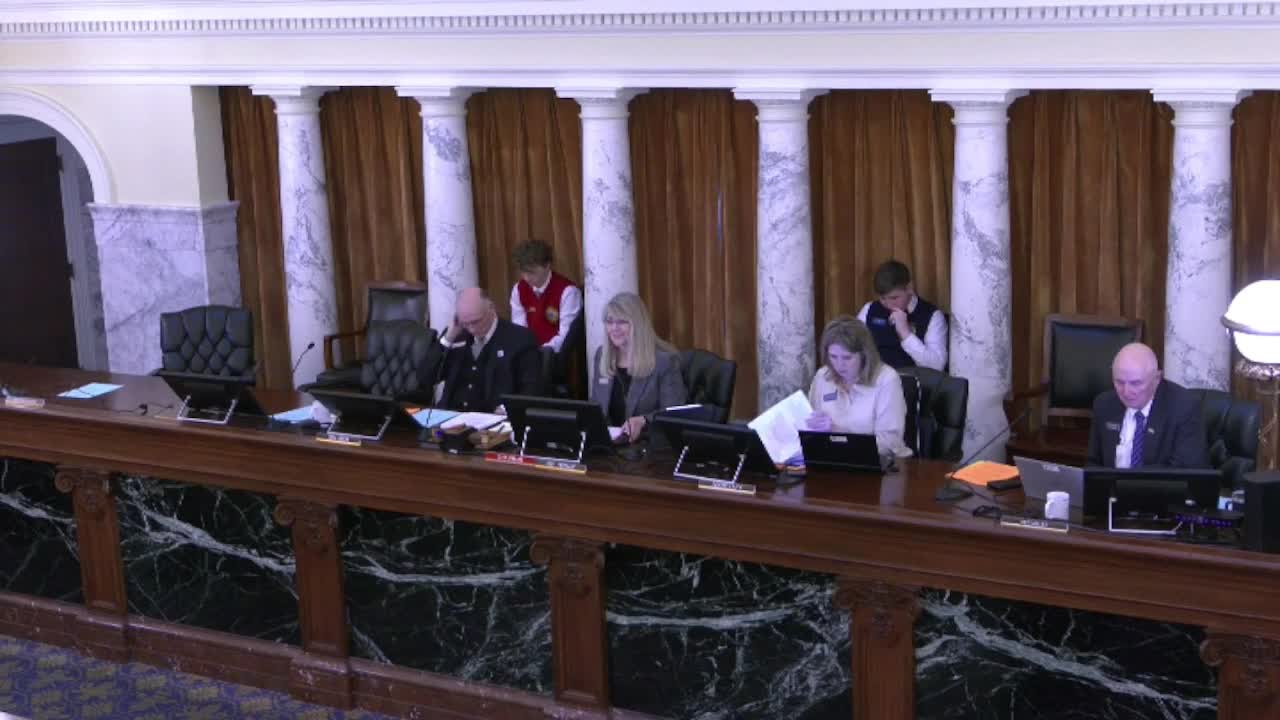
Committee moves emergency medical services program toward transfer to Military Division; procedural votes split
Summary
The committee considered transferring the statewide Emergency Medical Services program from the Department of Health and Welfare to the Idaho Military Division as part of implementation work on House Bill 206; members debated operations, staffing and funding while procedural votes produced mixed results between the two chambers.
Committee members considered a package of adjustments to move the statewide Emergency Medical Services (EMS) program out of the Department of Health and Welfare and into the Idaho Military Division, in alignment with trailer language for House Bill 206.
Legislative Services analysts described the change as a structural transfer tied to the Adjutant General’s Office and the State’s Office of Emergency Management. The Military Division already operates emergency‑management and public‑safety communications programs; proponents said placing EMS there would create a more operational focus and support parity in training and credentialing with neighboring states.
On the Department of Health and Welfare side, the committee considered a motion to reduce DHW’s public‑health appropriation by the funding and FTEs associated with EMS and to transfer preparedness and response resources into the physical health program. That motion did not obtain a Senate committee majority and the sponsors indicated the motion would be sent to the Senate. Later motions to establish the EMS program in the Military Division (including 30.84 FTEs and a total appropriation in the $7.2 million range) were considered; committee roll calls show mixed outcomes across the two chambers and procedural notes that, where a motion did not obtain a Senate majority, the item would be processed differently between House and Senate staff.
Senator Bierke and others said the Military Division was a logical home because the Office of Emergency Management already handles backup dispatch, HazMat and rural EMS support. A subsequent motion to add a part‑time medical director position and $210,000 (including a one‑time dedicated funds sum) for the Military Division’s EMS program was also moved and seconded; committee records show recorded votes and procedural referral to the Senate when a Senate majority was not obtained at the time of the joint meeting.
The committee noted the complexity of handling failed motions differently between the House and Senate in joint session and that some items may be resubmitted or taken up later by the Senate.
Ending: The committee took multiple related actions to implement House Bill 206’s structural transfer of EMS; some appropriation reductions and additions were approved by the House members present while failing to secure the Senate committee’s majority during the joint session and will be processed per inter‑chamber procedures.