Get Full Government Meeting Transcripts, Videos, & Alerts Forever!
Get email alerts on the Public Health Budget topic
No spam. Unsubscribe anytime.
Joint committee advances $25.6 million in public health services enhancements, debates one‑time funding
Summary
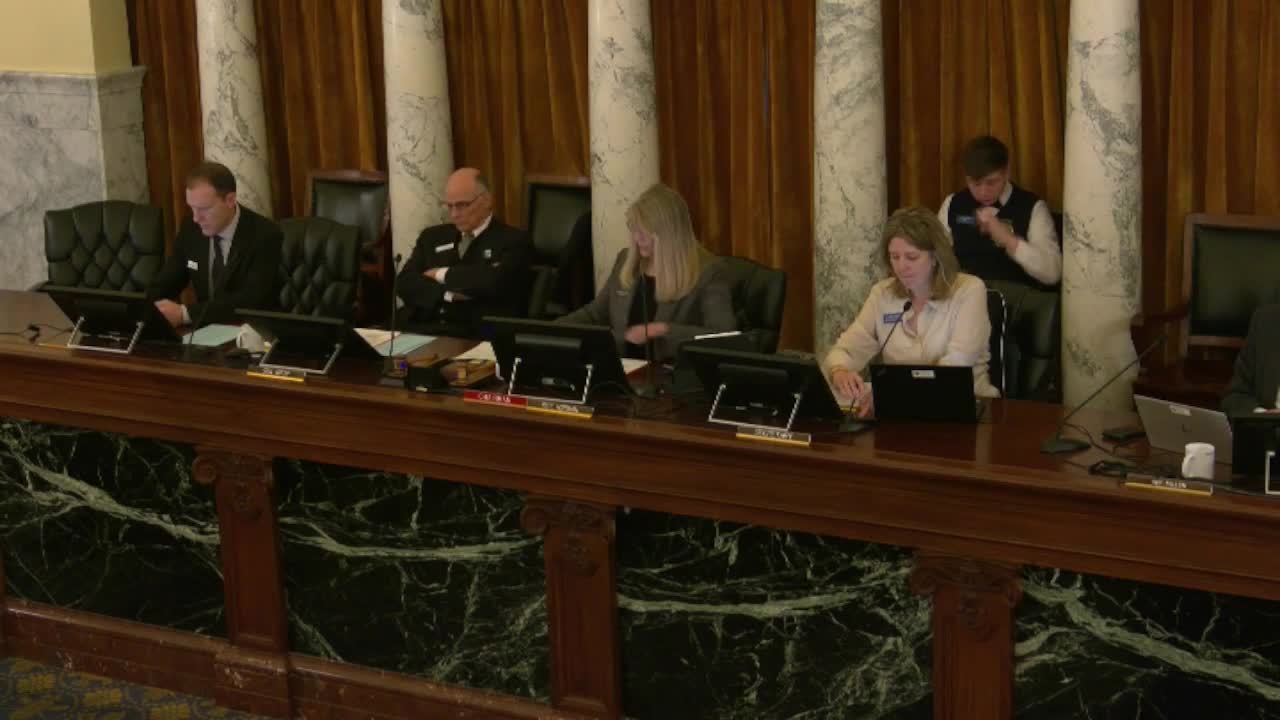
The Joint Finance‑Appropriations Committee on March 12 gave a due‑pass recommendation to a package of enhancements for the Department of Health and Welfare’s Division of Public Health Services that adds positions and a mix of ongoing and one‑time funding for immunizations, home visiting, suicide and overdose prevention and other programs.
The Joint Finance‑Appropriations Committee on March 12 gave a due‑pass recommendation to a package of enhancements for the Department of Health and Welfare’s Division of Public Health Services that adds positions and a mix of ongoing and one‑time funding for immunizations, home visiting, suicide and overdose prevention and other programs.
The package, as moved in substitute motion and carried by the committee, would add 4 full‑time‑equivalent positions and roughly $25.6 million across general, dedicated and federal funds for FY 2026, with a mix of ongoing and one‑time amounts for individual programs. The committee recorded a combined vote of 14 ayes, 4 nays and 2 absent/excused on the substitute motion (Senate 7‑2‑1; House 7‑2‑1), and the motion carried a due‑pass recommendation.
The enhancements include restorations for the office of accreditation and planning, suicide prevention, drug overdose prevention, Alzheimer’s and dementia services, the Fit and Fall Proof program, WIC and other block grants; ARPA‑funded multi‑year program funding; a request for $2.5 million from a dedicated immunization assessment fund to increase free immunizations for children; funding to support home visiting services; and one‑time requests for HIV and hepatitis prevention. The governor’s initiative for a $500,000 ongoing rural physician incentive (loan repayment) was included in the package.
Budget policy analyst Alex Williamson (Legislative Services Office) outlined the requests and their program groupings to the committee and noted that several items are multi‑year ARPA grants rolled into the packet. Representative Furness, who moved the initial motion, described the rural physician repayment program and retention statistics: “It helps pay for loans. It’s up to $25,000 a year over a four‑year period,” and she cited retention rates for participating physicians.
Several members pressed for detail and caution. Senator Wintrow objected to moving large prevention line items to one‑time funding, saying it reduces program predictability and can jeopardize hiring: “When you can’t have a predictable budget, you don’t know how you can hire … it impacts families and it impacts long‑term care in our state.” Representative Tanner and others argued that moving selected items to one‑time funding lets JFAC perform a finer review next year. The committee’s substitute motion adopted the package with certain items designated one‑time to allow further legislative review.
The committee also handled multiple language directions tied to the package. Without moving dollars, the panel adopted language requiring the department to notify legislative health committee chairs before applying for federal grants; to analyze transitioning certain pass‑through clinical service grants from public health districts to federally qualified health centers or other safety‑net providers and to identify any double‑billing between federal grants and Medicaid; and to outline steps for transferring the drug overdose prevention program to the Office of Drug Policy, the Alzheimer’s program to the Commission on Aging and the Fit and Fall Proof program to the Commission on Aging. A cost‑benefit feasibility review of changing the 988 crisis line vendor (including Magellan Health as an option) was brought up and, after an objection, carried by recorded vote (16 ayes, 2 nays, 2 absent/excused). The department was also directed to analyze bringing the cancer data registry in‑house.
Committee discussion repeatedly distinguished reporting or analysis directions from policy changes. Senator Wintrow said she objected to some language she viewed as creeping into policy, but allowed several directed reports to move forward after making her concerns part of the record.
The committee record shows several separate roll calls and procedural votes on the public‑health packet language across the morning; the substitute funding motion is the principal appropriations action that will carry a due‑pass recommendation to the next stage.
Ending: The committee’s due‑pass recommendation advances the public‑health funding package and several directed studies; the motions and language will be forwarded with the committee’s recommendations for further consideration by both chambers and for inclusion in final appropriation language if adopted by the Legislature.