Get Full Government Meeting Transcripts, Videos, & Alerts Forever!
Get email alerts on the Public Health Districts topic
No spam. Unsubscribe anytime.
Committee approves bill tightening health district authority language; sends it to House floor
Summary
The committee approved Senate Bill 1031 to narrow health‑district powers to actions that are necessary, reasonable and supported by scientific evidence. Sponsors said the change adds accountability; supporters called it a needed check after COVID‑era actions by unelected health boards.
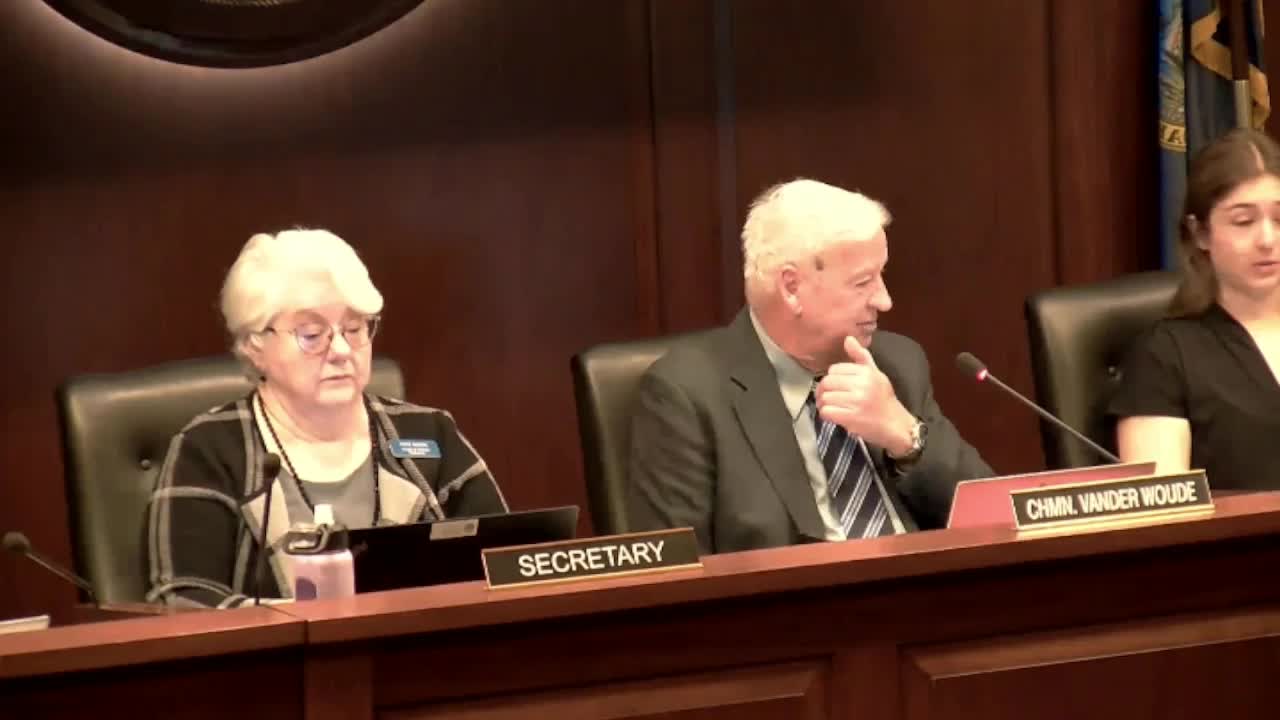
The House Health and Welfare Committee voted unanimously to send Senate Bill 1031 to the House floor with a due‑pass recommendation.
Representative Rob Bieswanger (R-Horseshoe Bend), sponsor, described the measure as a targeted change to existing law that currently allows health districts broad authority “to do all things required for the preservation and protection of public health.” The amended language would require health districts to “undertake only those actions that are necessary and reasonable for preserving and protecting public health and preventative health and so on, and as supported by scientific evidence,” Bieswanger said.
“It at least forces them to justify any action they take, whereas right now they don't have to,” Bieswanger said in committee remarks describing the bill’s origin after the sponsor saw a local health‑district official say the agency discovered it had broad powers in statute.
Public testimony and debate
Several individuals and groups testified in favor. Summer Bushnell, a resident of Post Falls, said she was upset in 2020 when “unelected trustee boards” made decisions and that the bill focuses health districts on core duties. Sarah Clendon, speaking for Health Freedom Idaho, described examples she called overreach during the COVID pandemic and urged the committee to back the bill. Misty Carlefeldt and Leslie Manukin of Health Freedom Idaho and Health Freedom Defense Fund urged the committee to adopt the tighter language, with Manukin noting her organization’s litigation work challenging federal mask mandates.
Committee members asked how the “supported by scientific evidence” standard would operate. Testifiers and the sponsor acknowledged the term is imperfect, but said it creates at least a record for review and a requirement that health districts justify extraordinary actions.
Votes and outcome
The committee approved the bill on a roll call that the secretary recorded as 12 ayes, no nays and three absent; the chair announced the motion passed and the bill will be sent to the House floor with a due‑pass recommendation.
Why it matters
Sponsor statements and public testimony framed the change as a narrow accountability measure rather than an effort to eliminate public health authority. Supporters said the bill would make health districts show the scientific basis for measures such as mandates or restrictions. Opponents did not present organized opposition during the hearing.
Next steps
With the committee’s due‑pass recommendation, Senate Bill 1031 will proceed to the House floor for further consideration.