Get Full Government Meeting Transcripts, Videos, & Alerts Forever!
Get email alerts on the Campaign Finance topic
No spam. Unsubscribe anytime.
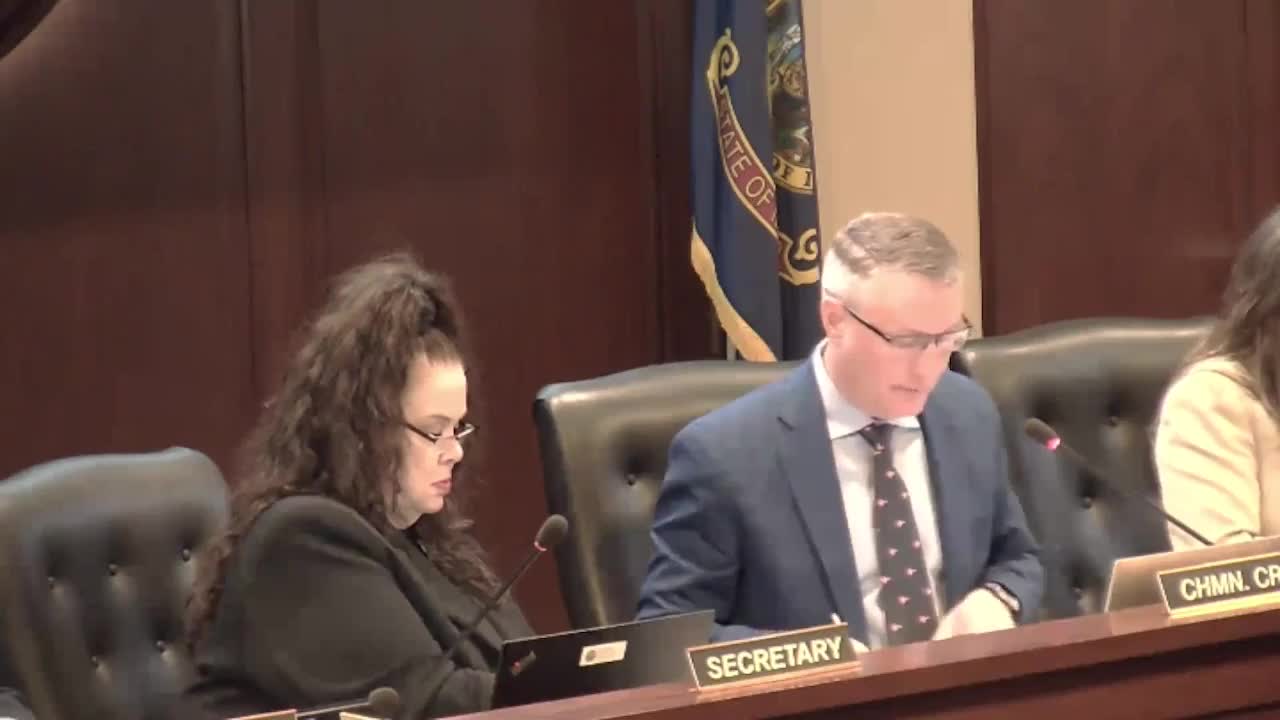
House committee advances broad rewrite of campaign finance rules, lowers emergency contribution trigger
Summary
A House committee on March 21 considered a comprehensive rewrite of Idaho's campaign finance rules, introducing RS 32713C1 and approving an amendment to lower an emergency contribution trigger to $10,000.
A House committee on March 21 considered a comprehensive rewrite of Idaho's campaign finance and lobbying rules and introduced RS 32713C1 after extensive testimony and questions from members.
The proposal, presented by Secretary McGrane of the Secretary of State's office, would separate campaign finance from lobbying, increase reporting frequency, expand 48-hour reporting for certain independent expenditures and electioneering communications, create an online ad library for independent expenditures over $1,000, and revise the fine structure for violations.
The rewrite would require political committees to file monthly reports year-round, add 48-hour reporting for independent expenditures and certain electioneering communications, and require organizations making independent expenditures above $1,000 to upload a digital copy of the ad or material to the Secretary of State's campaign finance site. Secretary McGrane told the committee the goal is to "make it easy to comply" and to let the public "connect the dots" between spending and messaging.
McGrane said the office observed roughly $17 million spent in the last legislative cycle on legislative races, with about $7 million from candidates and $10 million from independent expenditures and related activity. He also described reforms to the fine structure, replacing fixed caps with a formula based on the size of the violation and lowering some late-filing penalties to a maximum specified in the draft.
Committee members focused on a proposed trigger mechanism that would temporarily raise contribution limits for candidates in a race after a threshold of negative independent expenditures is met. In the RS originally discussed, the trigger would allow higher contribution limits (up to $25,000) if negative independent expenditures in a race reached $50,000. Members raised concerns that wealthy donors or coordinated spending could "game" the trigger.
After debate, the committee approved an amended substitute reducing the post-trigger contribution cap from $25,000 to $10,000 (page 13, line 9 of the RS, as discussed on the record). Representatives Achilles and others argued lowering the cap would better level the playing field; Representative Boyle and Speaker Mike Moyle described the need for a mechanism that lets candidates respond to large negative ad buys but acknowledged the concerns lawmakers raised.
The committee took the following formal actions: it held House Bill 3 99 (the companion bill) in committee and introduced RS 32713C1, sending the RS to the second-reading calendar with the amendment lowering the trigger cap to $10,000.
Votes at a glance: the committee voted to hold House Bill 3 99 in committee (motion carried by voice vote). The introduction of RS 32713C1 with the amendment (changing $25,000 to $10,000) passed on a recorded voice vote; representatives Scott, Barbieri and Palmer were noted on the record as voting no on the amended substitute.
The measure remains an RS (request for study/revision) and was sent to the second-reading calendar; committee members signaled they expect additional refinements as the new system is tested.
Ending: The committee did not finalize campaign finance law on March 21; RS 32713C1 was introduced with the $10,000 post-trigger cap and will appear on the second-reading calendar for further consideration.