Get Full Government Meeting Transcripts, Videos, & Alerts Forever!
Get email alerts on the Wildfire Mitigation Utilities topic
No spam. Unsubscribe anytime.
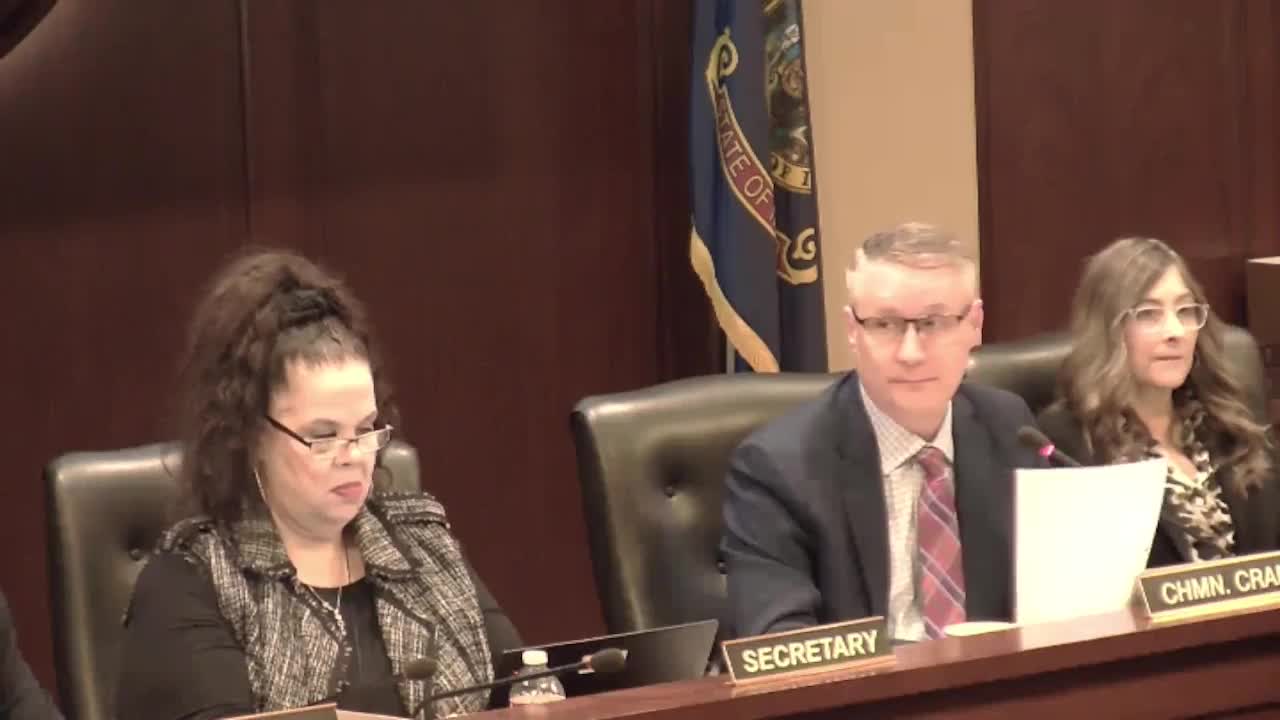
Committee sends wildfire ‘‘standard of care’’ bill to the floor after debate over liability and coverage
Summary
Senate Bill 1183, which would require utility wildfire mitigation plans subject to Public Utilities Commission review and creates a rebuttable presumption tied to those plans, was sent to the House floor with a due-pass recommendation after committee debate and roll-call votes.
The House State Affairs Committee voted 11–3 to send Senate Bill 1183 to the floor with a due-pass recommendation after extended testimony and debate over liability limits and what damages victims could recover.
Representative Judy Boyle (R., District 9) sponsored the measure, describing it as “a proactive bill to try to prevent wildfire” by requiring electric utilities — investor-owned, municipal and consumer-owned cooperatives — to prepare wildfire mitigation plans. Under the bill, utilities that file plans with the Public Utilities Commission (PUC) would be subject to PUC review and the State Forester would participate in that review. The bill adopts a “rebuttable presumption” tied to a commission-approved plan: if a utility can show it complied with the approved mitigation plan, the presumption weighs in the utility’s favor; if plaintiffs can show the utility caused the fire or otherwise rebut the presumption, traditional claims remain available.
Will Hart, executive director of the Idaho Consumer-Owned Utilities Association (ICUA), told the committee, “Wildfires are the biggest existential threat facing the survivability of rural electric utilities in Idaho and to combat that threat we have invested over $62,000,000 over the past 3 years in wildfire mitigation efforts.” Hart said he represents 21 member utilities, of which about 10 are municipal utilities and roughly nine of the remaining electric cooperatives expect to participate in the PUC-submitted mitigation plans.
Witnesses from utilities and trade groups supported the bill’s combination of planning, public review and liability clarity. Jen Visser, director of government affairs for Idaho Power Company, emphasized that any commission docket is a public process and said the bill’s fiscal impacts would be borne by participating utilities, not by the state. Tom Carter, vice president of Rocky Mountain Power, said the bill’s standard-of-care provisions “focus on both reliability and safety” and that the goal “should always be no fires.”
Opponents — including the Idaho Trial Lawyers Association (represented in testimony by lobbyist Lance Giles) — pressed for explicit references to medical damages and the wrongful-death statute, arguing the bill’s “exclusive remedy” language could be read to prioritize property recovery over personal-injury or wrongful-death compensation. Testimony and debate repeatedly returned to whether the bill’s civil‑action language already includes wrongful-death and medical damages (several witnesses and the sponsor asserted it does) or whether the text should be amended to list specific code sections (trial lawyers argued that listing the wrongful-death code would prevent confusion).
Committee counsel and supporters said the bill does not waive negligence or immunity; rather the rebuttable-presumption construct is a common legal device that preserves civil actions if the presumption is successfully rebutted in court. The committee also discussed reporting and enforcement mechanisms: the bill requires utilities to submit mitigation plans, periodic progress reports and documentation of work performed, which PUC staff and the State Forester would review.
On motions: a substitute motion to send the bill to the floor with a due-pass recommendation failed on first ballot; a later roll-call vote on the sponsor’s original motion to send the bill to the floor with a due-pass recommendation passed 11–3. The transcript records a roll-call sequence and an 11–3 tally in favor of the due-pass motion. The committee adjourned after the vote.
Next steps: SB 1183 advances to the House floor for further debate and possible amendment. If enacted, the bill would create a PUC-administered process for wildfire mitigation plan review and tie certain liability protections or presumptions to compliance with approved plans.