Get Full Government Meeting Transcripts, Videos, & Alerts Forever!
Get email alerts on the Education topic
No spam. Unsubscribe anytime.
JFAC approves public-schools program-maintenance budget and consolidates student-support language
Summary
The committee approved the FY2026 public-schools program-maintenance appropriation and adopted language consolidating several student-support programs and definitions; the vote was unanimous.
The Joint Finance and Appropriations Committee on Jan. 17 approved the public-schools program-maintenance budget that will serve as the base for next year’s K‑12 appropriations and agreed language that consolidates student-support programs and standardizes terms used across the bill.
Key numbers: The committee set the public-school support program maintenance totals at $2,651,787,500 from the general fund and a total program amount of $3,166,965,700 (all fund types) as the FY2026 base. The motion to set those totals passed unanimously on a recorded roll call.
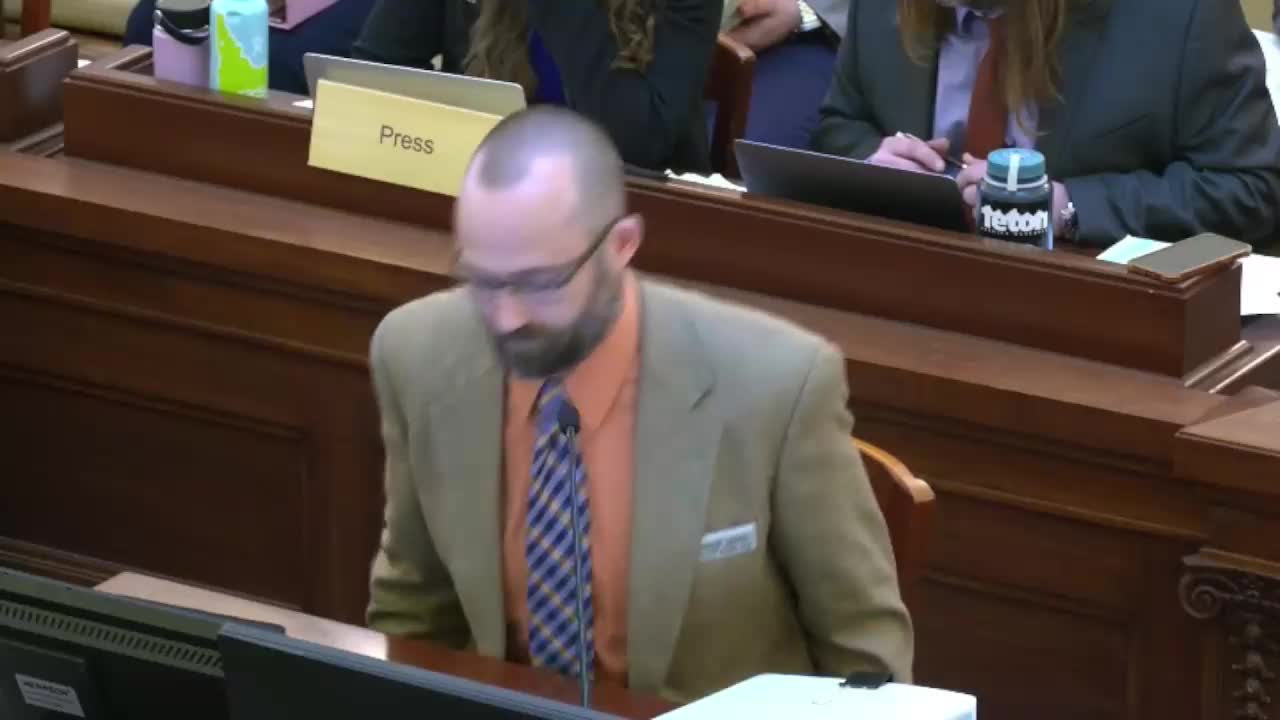
What changed and why: Deputy Division Manager Jared Tetrault and analysts told the committee the maintenance bill is smaller this year in part because the Legislature previously asked to consolidate multiple programs into a new Student Support Division; that consolidation reduces duplication of statutory language and centralizes distribution rules. The maintenance language approved on Jan. 17 includes distribution and expenditure definitions for items such as professional development, discretionary funds, classroom technology, digital-content grants, English-proficiency allocations, advanced-opportunity coursework, and accountability reporting.
The committee adopted a single crosswalk-style definitions section so that the terms “distributed” and “expended” are used consistently across the Student Support, Central Services and other divisions. A staff handout lists which appropriations the definitions apply to (for example: teacher professional-development dollars, the $6,359 instructional supplement formerly tied to the career ladder, classroom-technology allocations, and digital-content grants).
Notable language highlights: - Professional development: The bill directs that a specified dollar amount within the teachers’ appropriation be used for professional development and associated continuous-improvement activities. - Classroom technology and digital content: The maintenance bill identifies classroom-technology dollars and $1.6 million for digital content grants and explains eligible uses and distribution methods. - Discretionary and health‑insurance funds: The bill reiterates statutory requirements that discretionary dollars and health‑benefit dollars be used for their intended purposes; staff noted health-insurance allocations may change later if the committee resolves health‑insurance assumptions. - Reporting: Several items require department reporting to the committee and posting on the Department of Education’s website; examples include program use, the advanced-opportunity program evaluation and year-end reconciliation provisions tied to the Public School Income Fund.
How the committee voted: Representative Miller moved the program-maintenance totals and language; Senator Woodward seconded. The roll call recorded 20 ayes, 0 nays. Members discussed that section numbers in the drafted bill could shift slightly during drafting but that staff will provide a crosswalk when bills are posted.
Next steps: Analysts will incorporate committee language into the drafted maintenance bill, post a crosswalk of section references, and return the bill for a review session before introduction. The committee deferred decisions related to statewide compensation (CEC) and any pending health‑insurance adjustments to a later date when members have consensus.