Get Full Government Meeting Transcripts, Videos, & Alerts Forever!
Get email alerts on the Child Welfare Budget topic
No spam. Unsubscribe anytime.
Committee approves foster-care supplemental and $21.2 million in child-welfare enhancements, ties funding to performance measure
Summary
Lawmakers approved a $14.1 million supplemental to cover fiscal 2025 foster-care trustee and benefit shortages and a fiscal 2026 enhancement package that adds 63 FTEs and performance language tying some positions to a foster-family ratio goal.
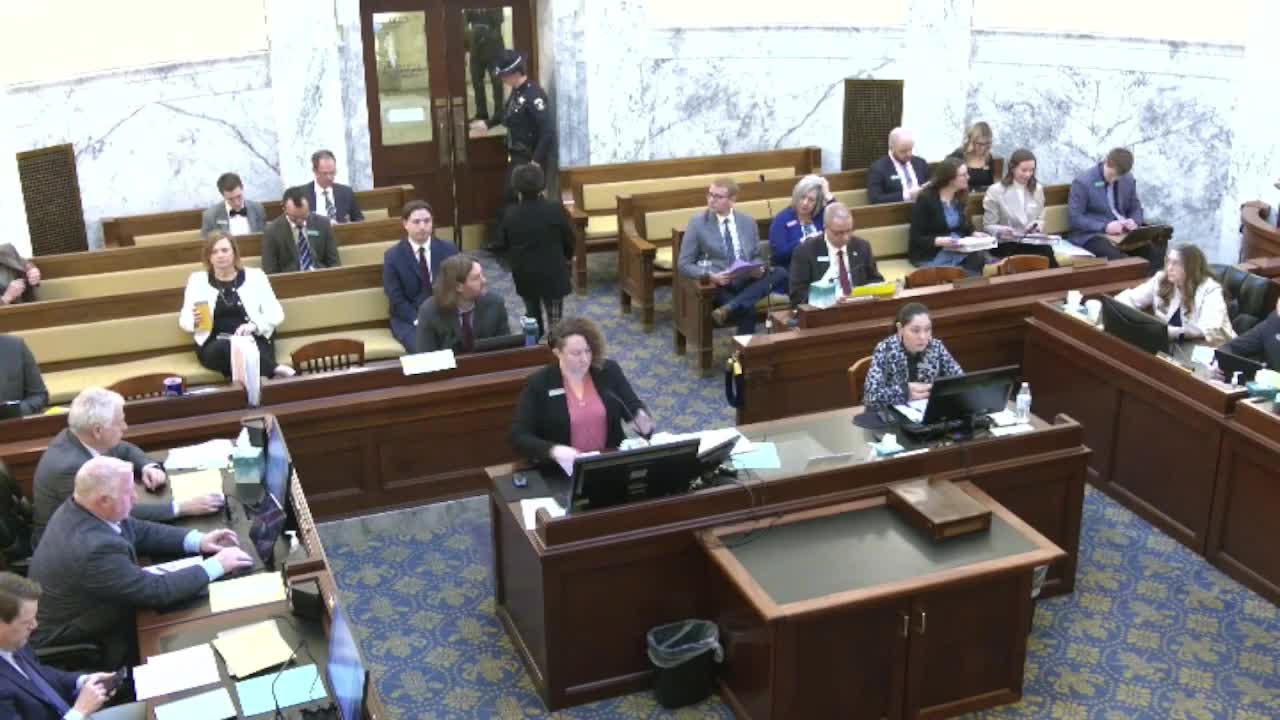
The Joint Finance-Appropriations Committee on Friday approved a $14,126,900 supplemental for the Division of Youth Safety and Permanency to cover forecasted foster-care trustee and benefit payments in fiscal 2025 and later approved a fiscal 2026 package that adds 63 full-time equivalent positions and roughly $21.2 million in combined state and federal funding.
Analyst Alex Williamson briefed the committee that the fiscal 2025 supplemental is intended to cover a shortfall driven by congregate care costs before recent efforts to move youth into less-costly placements take effect. "This first supplemental is related to a population forecast adjustment for the state's foster care population," Williamson said. The supplemental motion provided $8,868,200 from the General Fund and $5,258,700 in federal funds.
Senator Wintrow moved the supplemental; Representative Furness seconded. Senator Wintrow, among others, stressed that prevention efforts could reduce long-term costs but noted the supplemental covers complex and costly cases, often involving developmental or behavioral needs and out-of-state placements.
Later the committee approved fiscal 2026 enhancements for Child Welfare that add 63 FTEs and a mix of general and federal funds. The enhancement package includes a prevention specialist team, additional youth safety and permanency staff, foster-care clinical staff, foster licensing positions and temporary funding for the Payette Assessment and Care Center (PAC). Representative Tanner moved the enhancement motion; Senator Cook seconded. The committee approved the package by recorded vote (18 ayes, 1 nay, 1 absent/excused).
Committee members and staff inserted language that exempts the child-welfare division from departmental transfer limitations for specified fiscal years, allowing the division more flexibility to move funds between expenditure categories under the cited code section. The committee also tied eight of the new foster-licensing staff positions to a performance measure: achieving a one-to-one ratio of foster families to foster children by Jan. 1, 2026, with preliminary status updates to the committee.
Discussion vs. decision - Discussion: Members emphasized prevention and family-based care to reduce reliance on congregate placements that carry much higher daily costs; several members highlighted the need to keep children in-state when appropriate and noted intersections with developmental disability needs. - Direction: The committee required periodic status updates (preliminary report by Sept. 15) and added language tying staffing to an explicit foster-family ratio performance measure. - Formal action: The FY2025 supplemental ($14,126,900 total) passed (18-1-1), the FY2026 enhancement package (63 FTEs; $21,245,700 total) passed (18-1-1), and transfer-limitation exemptions for the division were approved by unanimous consent.
Next steps The motions carry due-pass recommendations and will be forwarded to the full Legislature. Committee chairs asked the department for early status reports to verify progress toward the foster-family ratio and to monitor program outcomes and potential future budget adjustments.