Get Full Government Meeting Transcripts, Videos, & Alerts Forever!
Get email alerts on the Administrative Law topic
No spam. Unsubscribe anytime.
Board of Tax Appeals seeks $29,200 to raise per diem from $300 to $400; legislators question workload and training
Summary
The Board of Tax Appeals requested $29,200 in ongoing general‑fund personnel authority to raise board members’ per diem from $300 to $400 per day (about $37.50/hour to $50/hour using the board’s 80‑day funding model). Legislators asked about prep time, caseload, training and year‑to‑year reversions.
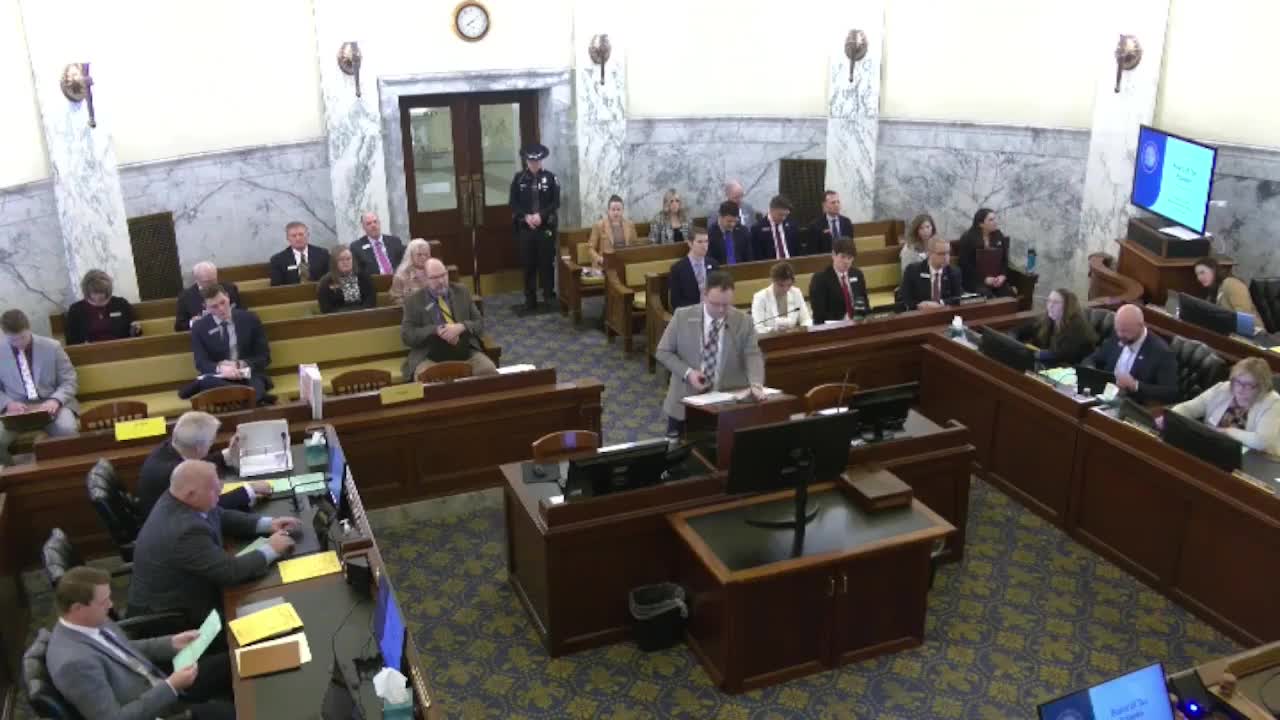
Christopher LaHozet, budget and policy analyst with the Legislative Services Office, presented the Board of Tax Appeals’ FY2026 enhancement request and said the agency requested $29,200 in ongoing personnel costs to raise board member per diem from $300 to $400 per day.
LaHozet described the calculation and legislative change needed: "The board of tax appeals request $29,200 in ongoing personnel costs from the general fund to increase the per diem for board members from $300 to $400... This change will require legislation to amend section 63‑3804 of Idaho Code."
Director Cindy Pollock, who appeared with financial specialist Rachel Whitaker, explained the board’s operating model and caseload to senators who pressed on whether preparation and decision time were included in the per diem calculation. Pollock said the board is funded for and allowed to work 80 days per year and that the board “has come up with a model themselves, internal policy where they when they have a hearing or a board meeting, it's usually a full day's work. When they have prep time or decision making, they break it down hourly.” She described a training pipeline that typically requires about a year before a new board member conducts hearings and noted the agency sends members to an intensive two‑week judicial college in Reno as part of training.
Lawmakers asked for context about workload and finances. Pollock said the board’s typical caseload is about 300 appeals per year (agency-funded level), with occasional years of much higher volume — for example, a Bannock County event that produced 600 appeals in a year. She said a 10‑year average shows appellants receive full or partial relief in roughly 39% of appeals.
Representative Tanner and other members pressed on recent reversions and why the agency would request an increase while reporting reversion of about $80,000 in FY2024. Pollock said the agency is cost‑conscious and often reverts unused funds when cases settle before board time is used; the per‑diem change is intended to raise the rate paid when board members are working, not to change the agency’s approach to reverting unused dollars.
Outcome: the enhancement was presented and discussed; no committee vote was recorded during this hearing.
Why it matters: board members function as quasi‑judicial decision‑makers handling appeals from county assessors and the Idaho State Tax Commission. Changes to compensation, scheduling and staffing affect the board’s ability to hear cases, the time to decision, and the cost to administer the appeals process.