Get Full Government Meeting Transcripts, Videos, & Alerts Forever!
Get email alerts on the Healthcare Conscience topic
No spam. Unsubscribe anytime.
Welfare committee sends Medical Ethics Defense Act (HB 59) to House floor after 13-2 roll call
Summary
The Idaho House Welfare Committee voted 13-2 to send House Bill 59, the "Medical Ethics Defense Act," to the full House with a due-pass recommendation after a morning of testimony and debate.
The Idaho House Welfare Committee voted 13-2 to send House Bill 59, the "Medical Ethics Defense Act," to the full House with a due-pass recommendation after a morning of testimony and debate.
Representative Bruce Scoggs, sponsor of HB 59, told the committee the bill "protects the conscience rights of healthcare professionals and entities" and would shield medical providers from being forced to participate in nonemergency procedures that violate their "sincerely held religious, moral, and ethical beliefs." Scoggs also said the bill provides enforcement mechanisms, including whistleblower protections and a private right of action.
Supporters, including attorneys and several health care workers, urged passage as a way to expand existing, narrower state protections. Catherine Hartley, an attorney with the Pacific Justice Institute, said the bill "provides a much needed expansion of conscience rights not provided in current federal or state law" and argued it would let health care professionals rely on state law rather than shifting federal regulations. Greg Chaffin, senior counsel with Alliance Defending Freedom, described the measure as a limited protection for providers: "This is about allowing doctors to not be forced into doing a procedure that violates their conscience," and he said the bill explicitly excludes emergency care.
Opponents, including a Planned Parenthood advocate and a patient who testified, said the bill is overly broad and could allow staff, pharmacists or insurers to withhold care or even information from patients. Missy Deli Carpeni Tolman of Planned Parenthood Alliance Advocates Idaho said HB 59 "could prevent a patient from obtaining information about their own health status or diagnosis" and warned the proposal could let a receptionist or pharmacist refuse routine services. Nixon Matthews, testifying as a patient, said health care "should be guided by medical and scientific standards, not personal, religious, ethical, moral beliefs," and warned of consequences in rural communities with few providers.
Committee members questioned how the bill would apply in practice. Witnesses and the sponsor described several operative provisions included in the draft: an emergency-care exception that requires providers to render lifesaving care; notice and accommodation procedures so employers may be informed of objections in advance; an "essential functions" carve-out allowing employers not to hire or not to retain staff who cannot perform essential duties; and a standard allowing employers to decline accommodation where it would constitute an "undue hardship." Supporters pointed to an explicit provision enabling injunctive relief, damages and reasonable attorney fees for individuals who successfully assert violations.
Representative Leslie Ekberg spoke against moving the bill forward, recounting a personal experience with a required procedure and expressing concern about patients who find themselves in rare or urgent medical situations. Representative Rubel also cited patient-safety concerns and the difficulty smaller facilities could face if frontline staff decline to provide services. Supporters, including Representative Healy and Representative Kaler, said the measure protects conscience rights and will help retain and recruit health professionals.
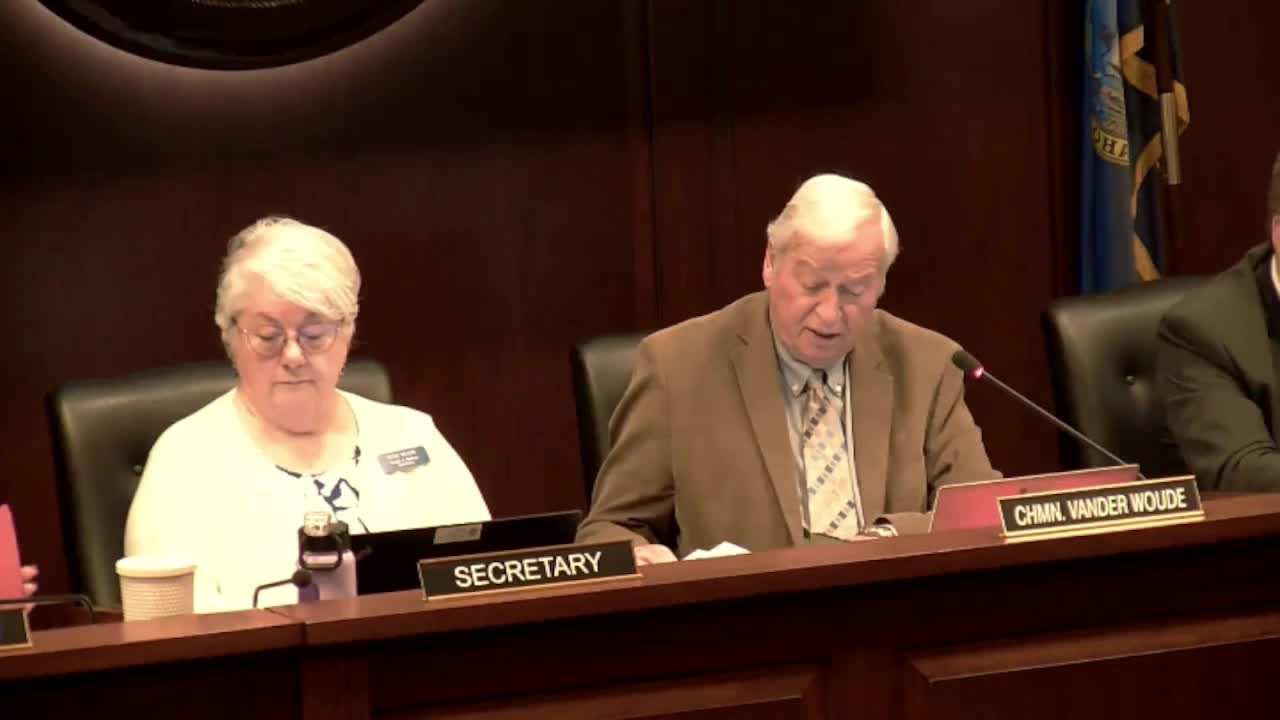
The committee recorded the roll-call motion to send HB 59 to the floor with a due-pass recommendation. Representative Redmond made the motion. The secretary called the roll; votes recorded in committee were: Chairman Van de Wauteau (Aye), Vice Chairman Erickson (Aye), Representative Healy (Yes), Representative Redmond (Yes), Representative Goody (Yes), Representative Beiswinger (Aye), Representative Bergoyne (Yes), Representative Kahler (Yes), Representative Furman (Aye), Representative Levitt (Yes), Representative McCann (Yes), Representative Rasor (Yes), Representative Thompson (Yes), Representative Rubel (No), Representative Egbert (No). The committee stated the tally as 13-2; the motion carried and HB 59 was sent to the House floor with a due-pass recommendation.
Representative Scoggs closed by reiterating that the bill expands conscience protections beyond the current narrow statutes and pointed to testimony from multiple medical professionals in support. The committee adjourned after completing its one-item agenda. The bill will next be scheduled for consideration by the full Idaho House.