Get Full Government Meeting Transcripts, Videos, & Alerts Forever!
Get email alerts on the Higher Education North Idaho College topic
No spam. Unsubscribe anytime.
North Idaho College enrollment rebounds but faces EWA reduction; college seeks nursing, welding capacity
Summary
North Idaho College told JFAC it posted roughly 15% enrollment increases in fall and spring after years of decline, but the EWA formula produces an FY2026 reduction (~$446,800). NIC asked for targeted hires in nursing and welding and asked to be held harmless on EWA while enrollment recovers.
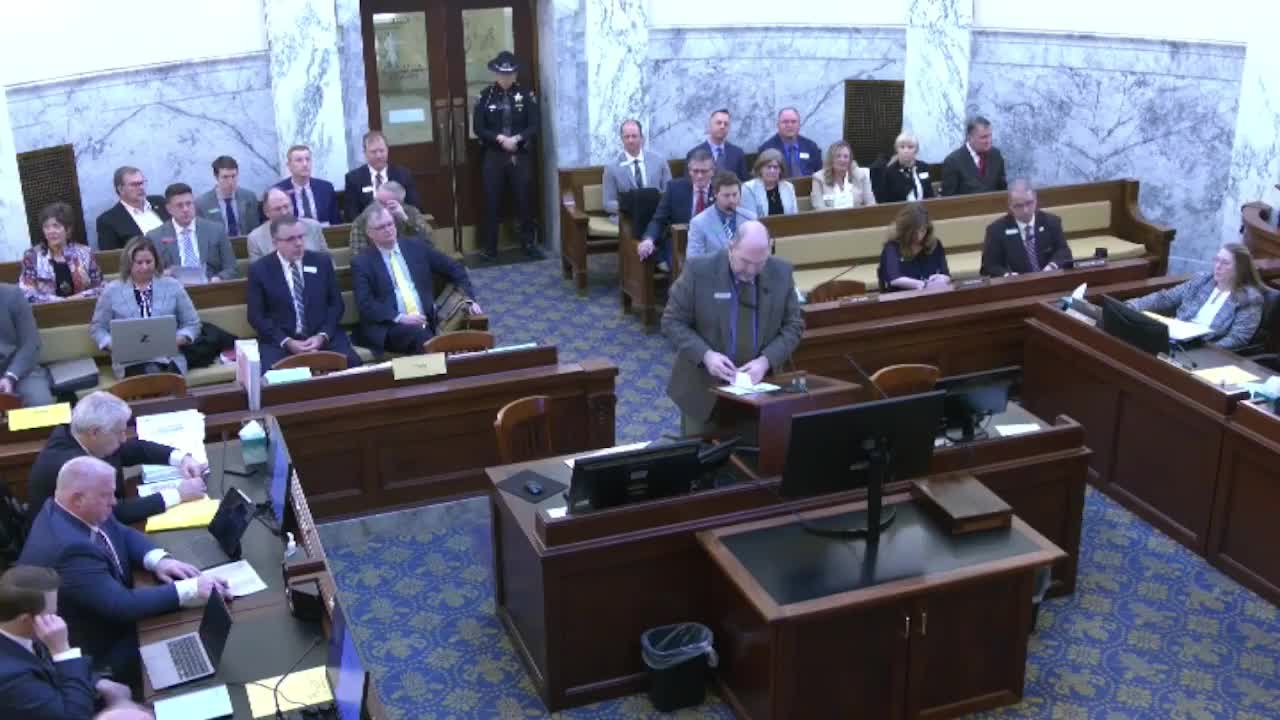
Dr. Nick Swayne, president of North Idaho College, told the Joint Finance-Appropriations Committee that NIC’s recent enrollment turnaround — roughly 15% growth in fall and another 15% in spring — has strained program capacity and that the state’s enrollment workload adjustment formula produced a reduction under current calculations.
Why it matters: NIC said the trailing-average EWA (enrollment workload adjustment) calculation is understating current growth and is producing a significant ongoing reduction ($446,800 in FY2026, per the college's budget book) even as enrollment expands. NIC asked for targeted funding to add faculty in nursing and welding to address large wait lists and workforce needs.
Analyst Kevin Campbell reviewed NIC’s five-year appropriation history and noted that NIC typically spends its full state appropriation; exceptions occurred in fiscal years 2021–22 due to federal COVID/ARPA funds. In 2024 NIC’s state appropriation was reported as $215,100,000 (as presented in the budget book).
President Swayne said the EWA’s trailing-average design penalizes institutions when recent growth has reversed multi-year declines: “The challenge with EWA is that it's a trailing average. And so while your numbers go down, it helps you. But when your numbers turn around, it hurts you because it's still cut you,” he said, adding the college was up about 15.5% in fall and about 15% this spring and reported roughly 571 new students on campus in the spring.
NIC described capacity priorities. Swayne said NIC is seeking five nursing faculty to boost clinical throughput and move the program from accepting 40 to 60 students per semester (a 50% increase) and requested a welding instructor to expand first-year capacity. He explained clinical programs face external accreditation and clinical-supervision ratios (roughly 10:1) that limit enrollment without additional faculty and clinical coordinators.
Swayne also described recruitment and retention pressures tied to local cost of living and competing employers across the state line in Spokane. He said NIC had been under accreditation show-cause in early 2023 but reported that, as of the most recent update, the college is off show cause and on probation; accreditation work and staff turnover have complicated recruitment: “When they see that we're under threat of accreditation or loss of accreditation, they don't want to move into the town,” he said.
On Idaho Launch and capacity, Swayne said that part of NIC’s growth is related to Launch: the college had about 260 launch-eligible students in fall, with roughly 221 matriculating, and that part of the spring enrollment bump continued to reflect the program. He framed NIC’s needs as targeted hires rather than new buildings for most programs, saying facility capacity can handle increases up to about 6,000 enrollments (the college had about 4,500 at the time of testimony).
Ending: Swayne urged the committee to consider changes or hold-harmless provisions for EWA and to fund targeted faculty positions for nursing and welding to relieve wait lists and meet local workforce demand. He emphasized retention and the college's goal to raise graduation and retention metrics as enrollment recovers.