Get Full Government Meeting Transcripts, Videos, & Alerts Forever!
Get email alerts on the Industrial Commission Budget topic
No spam. Unsubscribe anytime.
Industrial Commission requests IRIS maintenance contract, staff and vehicle replacements as caseloads rise
Summary
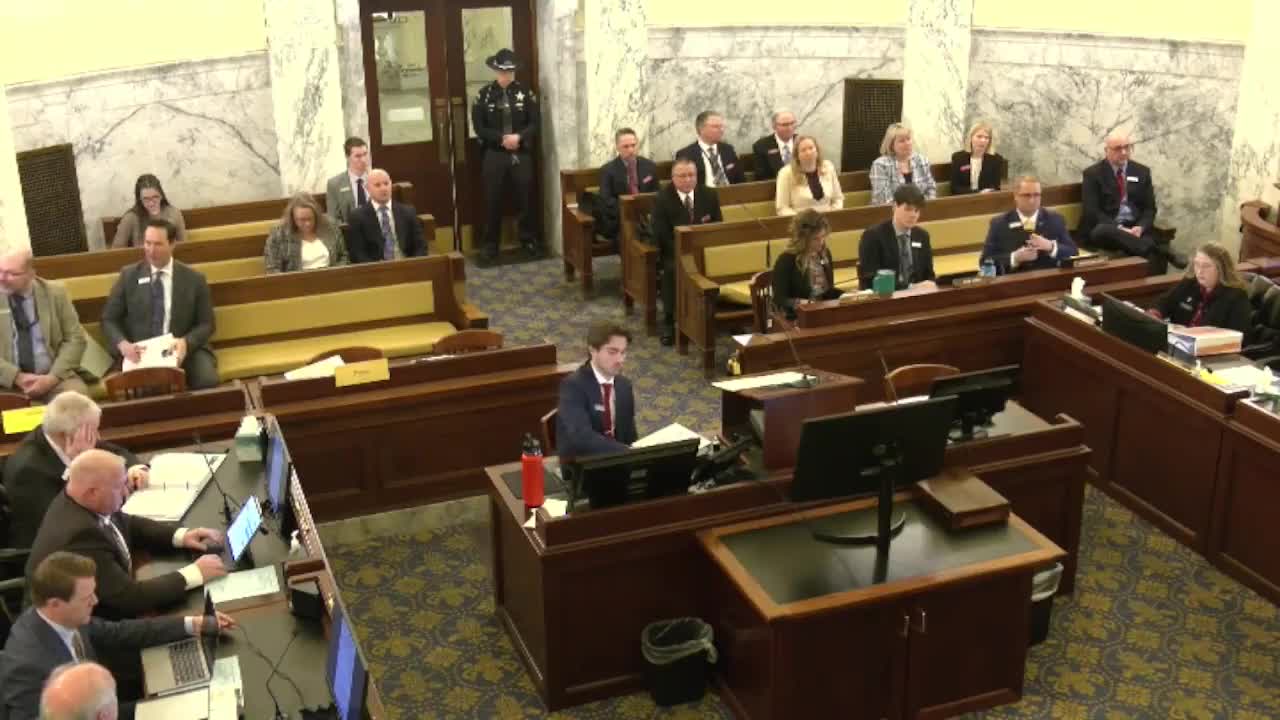
The Joint Finance Preparation Committee on Jan. 23 heard the Industrial Commission present its fiscal 2026 budget requests and explain continuing costs tied to the IRIS case‑management modernization project, staff needs to reduce backlogs and rising caseloads, and replacement vehicles for field staff.
The Joint Finance Preparation Committee on Jan. 23 heard the Industrial Commission present its fiscal 2026 budget requests and explain continuing costs tied to the IRIS case‑management modernization project, staff needs to reduce backlogs and rising caseloads, and replacement vehicles for field staff.
The commission’s director, George Gutierrez, told the committee the IRIS project automated paper‑dependent processes and increased the volume and sources of data the agency must process, which in turn increased workloads for several divisions. “We are now identifying nearly 60% more cases,” Gutierrez said, describing a higher compliance workload in employer investigations that is producing more matters that require legal or adjudicative attention.
That increase underpins a package of enhancement requests submitted by the Industrial Commission. The agency sought ten enhancements for fiscal 2026, totaling $298,200 in ongoing requests and $554,200 in one‑time requests (all from the Industrial Administration Fund) and proposed to use vacant full‑time positions (12 vacancies as of August) rather than adding new FTPs. Major items described in testimony and budget materials include:
- A $288,000 one‑time request for contracted IRIS maintenance support to provide technical support until the Office of Information Technology Services can take over those duties; analysts and the director said OITS is not yet able to provide that support.
- An ongoing senior financial technician (about $66,500) to reduce the crime victims compensation program’s payment turnaround; the program previously carried roughly 800 outstanding payments and had an estimated 12‑week turnaround in August, versus a 30‑day target.
- A referee position (about $111,600 ongoing) to reduce delays in adjudicating workers’ compensation and crime‑victim appeals; the agency said it had five referees before a retirement in 2020 and has since seen average decision times increase from about 90 days to about 110 days.
- A rehabilitation field consultant for Twin Falls and Burley (about $32,300 ongoing) to address a region with roughly 35% more cases than the five‑year state average.
- Reclassification of five adjudication associates (about $25,500) and a technical records specialist (about $62,300) tied to increased data volume under IRIS and changes in how cases are prepared for the Attorney General’s civil litigation division.
- Four replacement sport‑utility vehicles for field staff; the agency said the fleet includes models from 2006–2011 with mileages between roughly 82,000 and 98,000 miles and recurring mechanical failures in some vehicles.
Budget analyst Noah Peterson told the committee the commission has received one‑time appropriations totaling $12,874,000 for IRIS between FY2021 and FY2025 and that the commission reverted $4,555,000 to the state in the prior fiscal year. Peterson said the largest single reversion was $3,000,000 in trustee and benefit payments, with $2,400,000 of that from the crime victims compensation fund. He also noted reversion totals of $644,000 in personnel costs, $835,000 in operating costs and $55,000 in capital outlay in the previous year.
Representative Petzke and other legislators asked whether recurring reversions could be shifted to fund current staffing requests. Peterson said the committee could decide that but deferred operational specifics to the director. Gutierrez said the majority of the reversion was from trustee and benefit line items (payments to victims and peace officers) and that the commission lacks unilateral authority to reallocate trustee/benefit appropriations to other uses without statutory or legislative action.
Senator Cook and other members questioned why automation through IRIS increased staffing needs in adjudication and technical records rather than reducing them. Gutierrez explained that IRIS increased the volume and timeliness of electronically received records, moving earlier “gathering” work previously done by referees back to legal associates and requiring additional legal‑preparation work before cases can proceed to hearings or to attorneys in the Attorney General’s civil litigation division. In short, IRIS reduced manual paper tasks but expanded the number of cases and the data workload, creating new bottlenecks in legal preparation and adjudication.
On the IRIS maintenance contract, Peterson and Gutierrez said the $288,000 request is for contracted support and is currently structured as a one‑time appropriation because the Office of Information Technology Services has not yet taken on responsibility for that support. Gutierrez told the committee the agency will provide a more detailed breakdown of IRIS expenditures and the contract scope on request.
The agency said staffing additions are intended to prevent backsliding on recent performance: fiscal staff had reduced a backlog of roughly 800 outstanding crime‑victim payments down to current levels, but doing so required reassigning staff and delayed other payments. The financial technician request was framed as a way to preserve timely vendor and provider payments.
On vehicle requests, Gutierrez said the field offices (rehabilitation consultants and employer compliance investigators) rely on reliable vehicles to reach remote employers and injured workers; several fleet vehicles have recurring mechanical faults and are potential safety risks, he testified.
Peterson said the governor’s recommendation differed from the agency request in a few places: the governor included a 5% CEC increase to commissioner pay (a $22,400 figure shown in the budget materials) and did not recommend the $30,000 contingency fund the agency requested for IRIS.
No formal committee actions or votes were recorded at the hearing. The director and analysts offered to provide additional documentation and a written breakdown of IRIS costs, contract scope and fleet details in response to committee questions.
Why this matters: the commission administers workers’ compensation adjudication, rehabilitation services and a crime victim compensation fund that pays benefits to innocent victims; funding and staffing changes affect payment timeliness, adjudication delays and field‑level enforcement of employer compliance.
The committee took no immediate fiscal action at the hearing and asked for supplemental material, including a line‑item breakdown of IRIS development and maintenance spending and a fleet inventory for the requested vehicle replacements.