Get Full Government Meeting Transcripts, Videos, & Alerts Forever!
Get email alerts on the Blood Donation Vaccine Disclosure topic
No spam. Unsubscribe anytime.
Idaho committee sends bill to floor to let patients request disclosure of mRNA vaccination status for donated blood
Summary
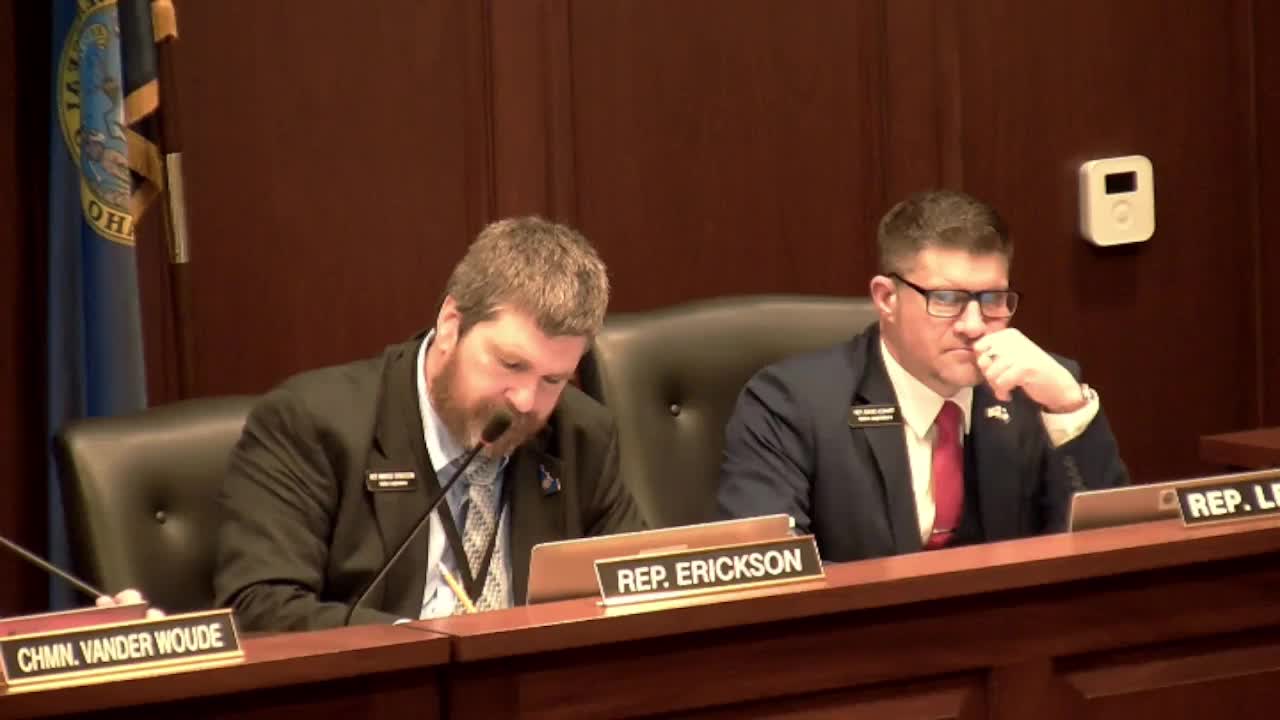
The House Health and Welfare Committee voted to send House Bill 131 to the floor after testimony from patients, blood-bank representatives and hospitals about whether a state disclosure requirement would be feasible or risk shrinking the blood supply.
BOISE — The House Health and Welfare Committee on Wednesday voted 9-5 to send House Bill 131 to the House floor with a “do pass” recommendation. Representative Bruce (R-23) introduced the measure, which would require a disclosure at the time of donation and permit nonemergency patients to request blood labeled as coming from donors who reported receiving an mRNA COVID-19 vaccine.
Supporters said the bill creates an option for patients who prefer to choose blood associated with a known vaccination history. Representative Bruce, District 23, said the measure “is more for disclosure for the patient's rights” and stressed it would apply only to nonemergency situations.
The committee heard competing testimony. Morgan Lutkin, a Boise-area resident, said she sought physician-directed donations for her husband and supports labeling because it would have made it easier to obtain blood that matched the family’s choices. “I do believe this could have been circumvented with the availability of a labeling system such as what this bill is suggesting,” Lutkin said.
Medical and blood-collection witnesses urged rejection. Dr. Cole Elliott, medical director for the American Red Cross in Idaho, said the measure would “overly complicate blood supply management and could lead to adverse patient outcomes.” Nicole Cyraker Erwin, CEO of the American Red Cross of Idaho, Montana and East Oregon, warned the committee there is no validated test to determine whether a donated unit contains vaccine-derived mRNA or spike protein and said routine interstate transfers of blood would make compliance impractical. “Blood is routinely transferred across state lines,” she said, and state-specific labeling requirements could force providers to suspend operations in Idaho, she warned.
Representatives of Vitalant and the Idaho Hospital Association echoed those concerns. Nick Garrigan, vice president of communications for Vitalant, said federal Food and Drug Administration labeling and testing rules govern blood as a pharmaceutical and that the donor health history questionnaire is designed to determine donor eligibility, not to match patient preferences. Tony Lawson of the Idaho Hospital Association said hospitals already struggle with supply and that additional labeling rules risk reducing the available inventory.
Proponents cited a recent small study and other research raising questions for some patients about persistence of vaccine-related proteins; committee discussion noted the evidence is limited and under debate. Representative Bruce cited a recent Yale report that supporters said found detectable spike protein in one person 709 days after vaccination; other witnesses emphasized the study is preliminary and not validated.
On procedure, Representative Koehler moved to send the bill to the floor with a do-pass recommendation. The committee then conducted a roll-call vote; the secretary recorded the result as nine in favor and five against.
The bill as presented excludes emergency transfusions from the disclosure requirement and does not require blood banks to test donations for mRNA or spike protein. Supporters said the measure preserves patient choice in nonemergency settings; opponents said it would increase costs, create operational burdens, and likely reduce the state’s available blood through labeling constraints and donor reluctance.
The bill now moves to the full House for further consideration.