Get Full Government Meeting Transcripts, Videos, & Alerts Forever!
Get email alerts on the Health Workforce Dental Education topic
No spam. Unsubscribe anytime.
Idaho Dental Education Program requests one additional seat, citing workforce shortfalls
Summary
The Idaho Dental Education Program asked the Joint Finance‑Appropriations Committee for $54,000 ongoing to finance an additional dental training seat, arguing Idaho lacks dentists in rural areas and the program helps graduates return to practice in state.
At a Joint Finance‑Appropriations Committee hearing, the Idaho Dental Education Program requested $54,000 in ongoing general fund support to add one dental training seat as part of a longer‑term plan to expand to 36 seats.
Kevin Campbell, Budget and Policy Analyst with the Legislative Services Office, summarized IDEP’s structure: students complete the first year at Idaho State University and then finish dental training at Creighton University School of Dentistry in Omaha under a contractual arrangement; seats are reserved for Idaho residents and students receive discounted tuition under the program. Campbell said IDEP has 3.25 full‑time equivalent positions and no vacancies.
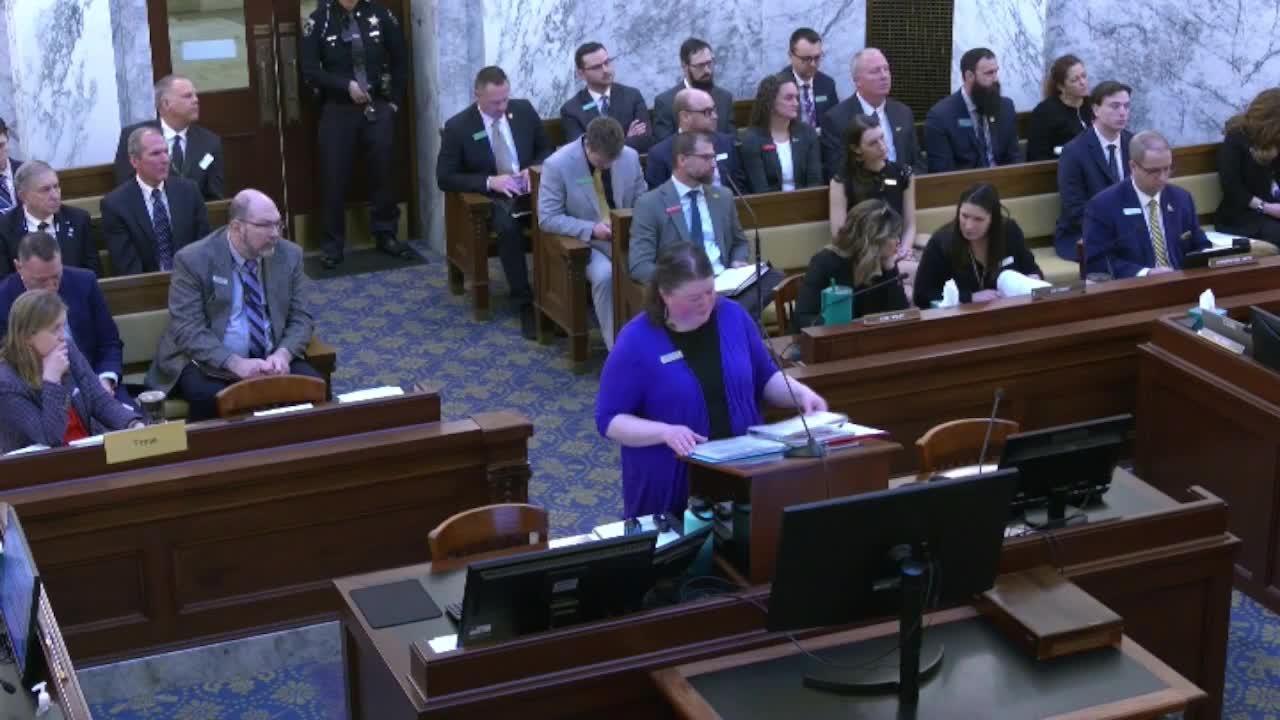
Jeff Wybarger, director of the Idaho Dental Education Program and an IDEP alumnus, told the committee the state remains behind in dentist supply, particularly in smaller and rural communities. “We are definitely not ahead of the curve,” Wybarger said, describing geographic shortages and the health effects of untreated dental disease.
The program is oversubscribed: Campbell said IDEP receives between 30 and 50 applicants each year, and Wybarger noted that pre‑COVID application pools were larger (as many as 120 applicants). IDEP leadership told the committee the program routinely accepts highly qualified applicants but has to turn away some because of limited seats. Wybarger said historically 65–70% of IDEP graduates have returned to practice in Idaho; looking at recent cohorts over a broader timespan, the program estimates closer to an 80% eventual return rate for graduates who ultimately practice in Idaho.
Wybarger and staff argued that expanding program capacity is a cost‑effective way to increase the dental workforce in Idaho because graduates trained under IDEP have lower debt and higher likelihood to practice in state compared with students who attend out‑of‑state dental schools without in‑state seat arrangements.
The committee asked about applicant quality and return‑to‑state rates; Wybarger said IDEP routinely attracts applicants with strong GPAs and dental admissions test scores and reiterated that additional seats would likely be filled.
No formal action was taken during the hearing. The committee will consider the request as part of the FY 2026 budget process.