Get Full Government Meeting Transcripts, Videos, & Alerts Forever!
Get email alerts on the University Research And Finance topic
No spam. Unsubscribe anytime.
University of Idaho highlights research, INL partnership and enrollment gains while answering budget and program questions
Summary
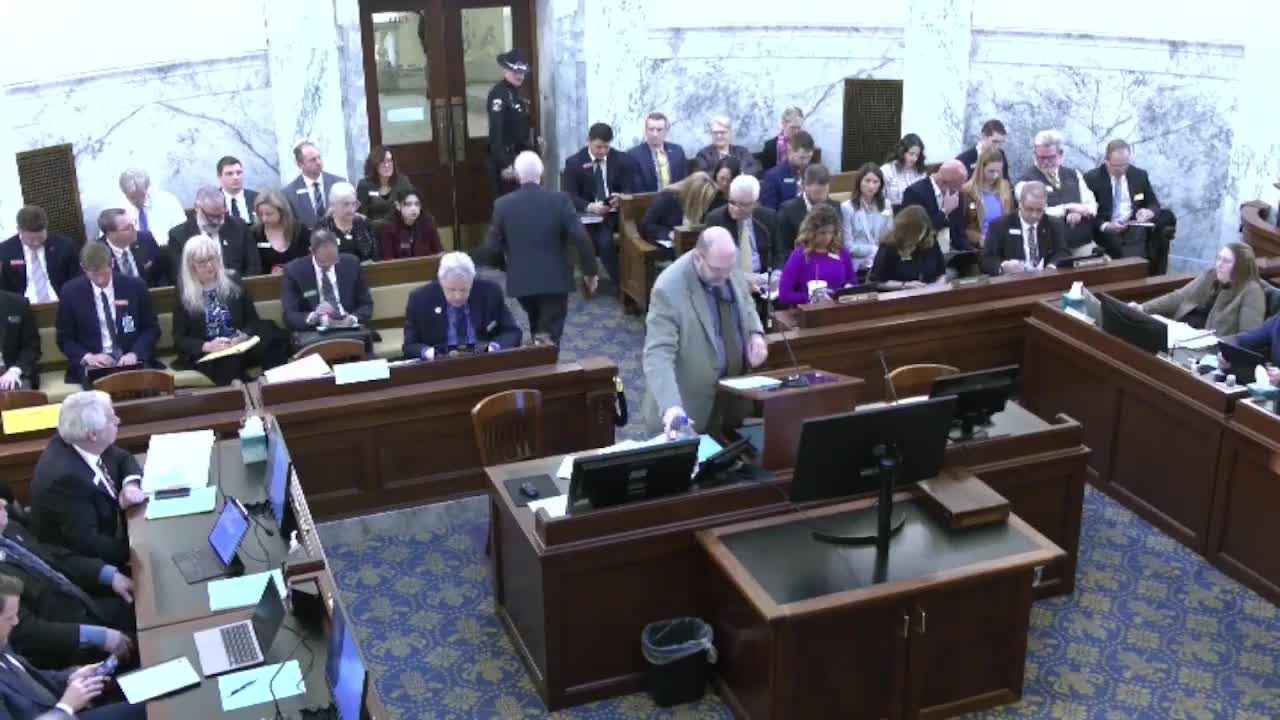
Kevin Campbell, Legislative Services Office budget analyst, presented the University of Idaho’s budget overview to the Joint Finance‑Appropriations Committee on Jan. 27, reporting a base budget near $196.3 million and an enrollment figure the analyst listed at 12,286 students.
Kevin Campbell, Legislative Services Office budget analyst, presented the University of Idaho’s budget overview to the Joint Finance‑Appropriations Committee on Jan. 27, reporting a base budget near $196.3 million and an enrollment figure the analyst listed at 12,286 students.
President C. Scott Green said the university has improved its financial position since he arrived and described a multi‑year effort that included a $26 million base reduction to align spending with revenues. "We took aggressive action ... and improved our financial position steadily," Green said, while acknowledging the university does not yet meet the State Board’s 5% unrestricted reserve benchmark because of a legacy OPEB (other post‑employment benefits) accounting move that shifted liabilities on the balance sheet.
Research and statewide partnerships: Green emphasized the University’s land‑grant research role and a continuing partnership with Idaho National Laboratory (INL). He said new and continuing energy‑related research areas include nuclear materials and fuel cycling, integrated energy systems and secure power engineering, and described recent projects such as additive‑manufacturing parts for molten‑salt reactor research and cyber‑physical system testing for power infrastructure.
Enrollment and student support: The university reported eight consecutive semesters of enrollment growth and said the fall 2024 freshman class was the largest in the institution’s history. President Green and university staff credited LAUNCH with contributing to growth in demand‑area programs and reported 747 new freshmen received LAUNCH support in high‑demand majors.
Student services reorganization: President Green described changes made after a State Board of Education resolution on diversity/equity offices. He said the university closed or reorganized several campus offices (the Office of Equity and Diversity, the Office of Multicultural Affairs, the Black/African American Cultural Center, the LGBTQA office and the Women’s Center) and dissolved the Chief Diversity Officer position; staff from those units were reassigned to other roles—many now serving under the Dean of Students—and some programs were folded into campus‑wide student‑success initiatives such as Vandal Success and a first‑generation student support unit. Green said the transition was made to comply with the board’s directive and that some direct services were eliminated while others were absorbed into broader student‑support structures.
University of Phoenix affiliation and financial questions: Green discussed a pending, non‑exclusive agreement with University of Phoenix sellers that extends a decision deadline and includes a potential breakup fee; the university received $5 million on signing to offset transaction expenses. Green said any affiliation would require legislative consideration and State Board approval and that the sellers may pursue other options through June 10. Committee members asked whether breakup proceeds would appear on the university’s fund balance; Green said they would reduce the reserve where they are held and that any remainder would be deployed toward academic programs tied to workforce needs if available.
Federal grants and pass‑throughs: Committee members asked about federal research awards and subrecipient pass‑throughs. Green said the University is a large research institution that frequently subawards funds to partner universities and other entities; he offered to provide the committee a list of subrecipients and said an internal compliance office oversees distribution.
WWAMI/WAMI medical education and other partnerships: Committee members asked about the WWAMI (Washington, Wyoming, Alaska, Montana, Idaho) medical training partnership and a possible future partnership with the University of Utah. Green said discussions have taken place with multiple potential partners and that any change in the WWAMI arrangement would require approval by the State Board.
No formal action was taken during the hearing. Committee members requested follow‑up materials including detailed job descriptions for reassigned staff, a list of federal subrecipients, and financial details underlying some of the net‑position metrics Green discussed.