Get Full Government Meeting Transcripts, Videos, & Alerts Forever!
Get email alerts on the Department Of Lands Fire Budget topic
No spam. Unsubscribe anytime.
Department of Lands emphasizes fire suppression and staffing needs; governor proposes large transfers to suppression fund
Summary
The Idaho Department of Lands told the Joint Finance‑Appropriations Committee it needs additional staff and funding to sustain firefighting capacity and accelerate forest restoration, while the governor proposed large one‑time transfers to the fire suppression deficiency fund and CEC‑style adjustments for partner firefighters.
The Idaho Department of Lands presented its FY 2026 budget to the Joint Finance-Appropriations Committee with an emphasis on wildfire suppression preparedness, staffing for fire and forestry programs, and continued expansion of the Good Neighbor Authority on federal lands.
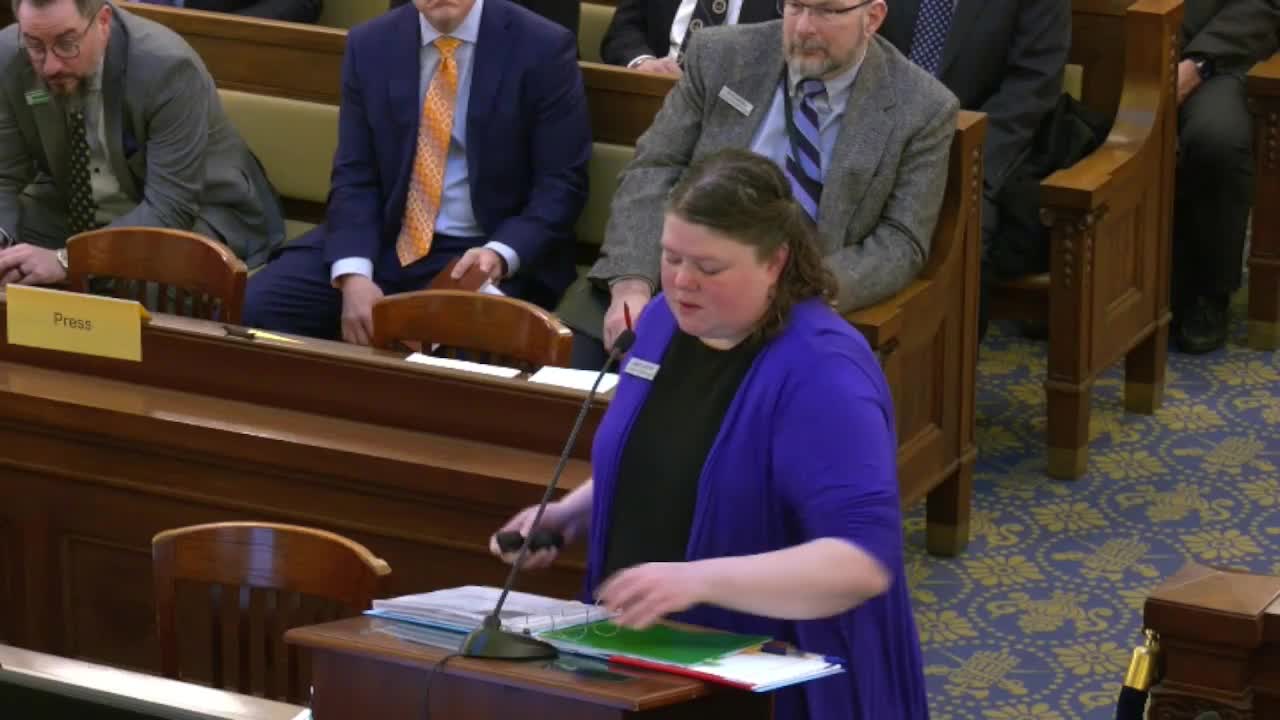
Janet Jessup, Budget and Policy Analyst with the Legislative Services Office, said the Department of Lands operates across six programs and uses many dedicated funds. She explained the fire suppression deficiency warrant fund is continuously appropriated — the agency can spend from it without a legislative appropriation — and that since 2015 the legislature has increasingly prefunded the account in anticipation of wildfire seasons. Jessup noted prior transfers and that the governor recommended transfers to bolster the fund.
The governor’s recommendations included a $60 million supplemental transfer to the fire suppression deficiency fund for FY 2025 and a $40 million transfer from the general fund (as identified in the FY 2026 recommendation). The department and analysts noted that without additional transfers the suppression account could decline substantially: Director Dustin Miller told the committee that, in current projections and absent the governor’s requested funds, the suppression account could fall to about $13,000,000 in FY 2026 once outstanding invoices and partner cost shares are accounted for.
Director Dustin Miller described the department’s operational context and staffing requests. The department’s FY 2026 enhancement package requested several new full‑time positions, including a fire emergency support program manager, a fire aviation section manager, and a statewide forest assessment program manager, plus other district and financial positions. Miller said the requests align with a long‑term modernization effort for the state’s fire program and with the governor’s wildfire roundtable recommendations, emphasizing coordination in the wildland‑urban interface and aviation capacity to contain fires early.
The committee also heard about the Good Neighbor Authority, the state program that allows Idaho to conduct restoration and active management on federal National Forest System lands. Director Miller said GNA has become largely self‑funded through timber receipts: “About $40,000,000 is what’s been generated to date,” he said, and the receipts support personnel, operating costs, payments to the Forest Service, and restoration contracts. Miller outlined an approximate breakdown the department provided: roughly $5,000,000 in personnel costs, about $1,000,000 for operating, roughly $1,000,000 paid to the Forest Service, and about $6,000,000 for restoration contracts.
The hearing also addressed Timber Protective Associations (TPAs), quasi‑governmental organizations that fight fires on certain private forest lands. TPAs are not state employees; the committee was told their staff do similar firefighting work and the TPAs requested CEC‑type adjustments and bonuses. Jessup explained the governor recommended a CEC equivalent for TPAs (a 5% amount tied to the earlier CEC actions for state employees) and the TPAs requested an additional $250,000 to provide bonuses to their firefighters so both Department of Lands and TPA personnel could receive bonuses.
On funding history, Jessup walked the committee through how appropriated and continuously appropriated funds differ in the department’s accounts, how federal funds and Infrastructure Investment and Jobs Act reimbursements have affected recent reversion and expenditure patterns, and how some federal reimbursements have not yet been received which affects the appearance of reversions in the budget documents.
Committee members asked for historical fire expenditure data and for clarity about reimbursement timing from federal partners. Miller said cost accounting is complex, reimbursements from federal agencies can lag, and that the department has invested in an electronic billing system to speed invoicing and reimbursement. He said the department closely monitors costs and that insuring adequate suppression reserves is a key concern.
Committee members also asked about abandoned mines funding. Director Miller said Idaho has nearly 9,000 abandoned mine sites that require closure and remediation; the abandoned mines fund receives a portion of the mine license tax but, Miller said, “the funding coming in just has not been keeping up with the amount of work that needs to be done.”
The committee did not take formal action during this presentation; members asked follow‑up questions and directed staff and the department to provide additional historical expenditure and reimbursement timing information as the budget process continues.