Get Full Government Meeting Transcripts, Videos, & Alerts Forever!
Get email alerts on the Higher Ed Governance topic
No spam. Unsubscribe anytime.
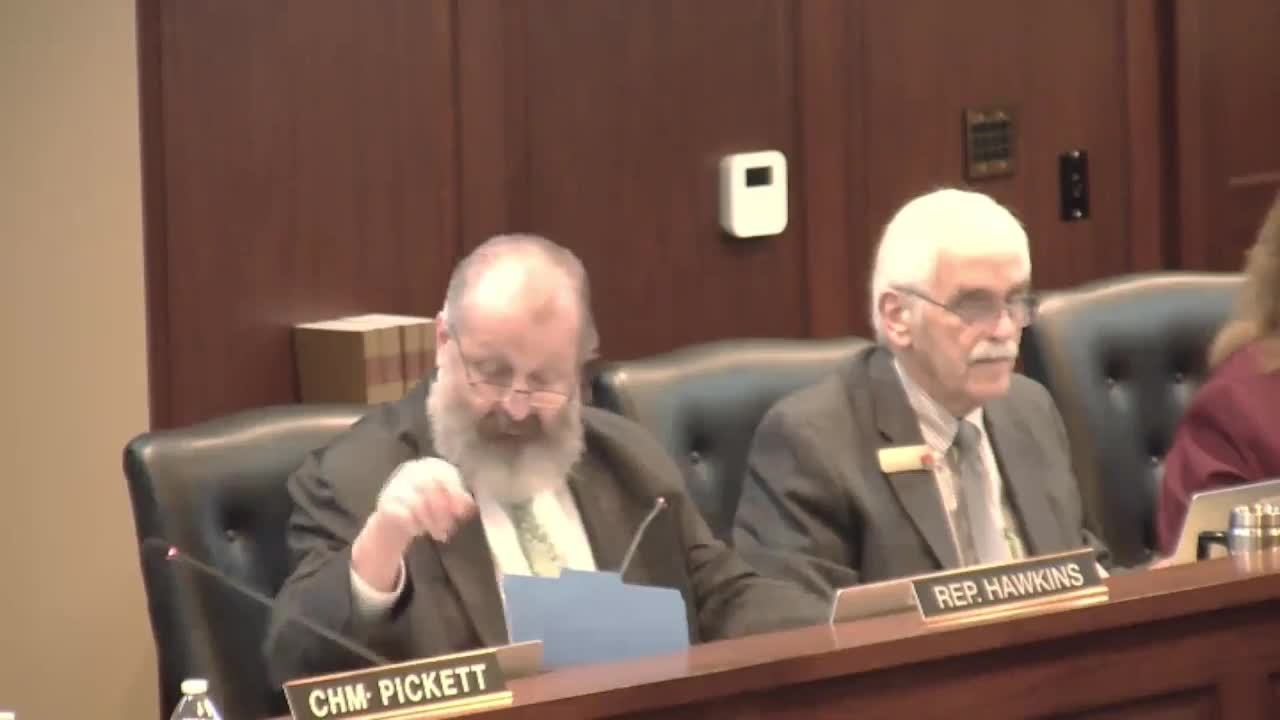
House Education Committee returns proposal to require Senate confirmation of four‑year university presidents to sponsor after lengthy debate
Summary
A proposal to require Senate confirmation hearings for presidents of Idahofour-year public universities drew questions about timing, recruitment and authority before the House Committee on Education voted to return the request to its sponsor for further work.
Representative Doug Pickett, R‑District 27, introduced RS 32,106 on behalf of the sponsor, proposing that presidents of Idahofour-year public institutions receive Senate confirmation hearings so the Legislature could exercise additional oversight.
The measure, as Pickett described it, would apply to the statefour-year public institutions — Boise State University, Idaho State University, the University of Idaho and Lewis‑Clark State College — and would make confirmation by the Senate part of the process for presidents hired after a specified date.
Proponents said the change is intended to increase transparency and accountability. "It is intended to provide greater legislative oversight and accountability for our university presidents," Pickett said, describing the goal as ensuring presidents "align with our state's education objectives and priorities" and receive "a confirmation hearing as any other employee of that nature."
Committee members voiced several concerns during a sustained debate that included a substitute motion to change the bill's applicability date and an alternate motion to return the request to the sponsor. Representative Mathias proposed replacing the phrase "on or before 07/01/2025" with "after 07/01/2025" so the requirement would apply only to presidents hired after that date; Pickett characterized that change as "friendly." Other members raised operational and recruitment concerns.
Representative Nelson asked what would happen if the Senate declined to confirm a president and warned of disruption: "Are they removed? Do they still keep serving?" He said the measure lacked a clear replacement mechanism and worried about a president serving while unconfirmed. Pickett replied that the intent was that the requirement would apply to presidents hired on or after 07/01/2025 and that if a nominee did not receive confirmation "the process would have to be reinitiated."
Representative Ehart, acknowledging support for the bill's intent, said the confirmation process could be disruptive if it required the Senate to act while not in regular session. "If they are hired ... and we wait until January for that confirmation ... if it is decided that the Senate does not want to confirm them, that's incredibly disruptive," Ehart said.
Representative Clow raised timing concerns about recruitment during a short legislative session, asking whether the Legislative Council could conduct confirmations in the interim; Pickett said the bill as drafted would not permit that and that the process would be "the same as any other head of an agency" that requires Senate confirmation. Representative Sauter and others warned the requirement could hurt recruitment by creating uncertainty for candidates who would risk leaving current positions for potentially temporary status.
After debate and a substitute motion discussion, the committee voted on an alternate substitute motion to send RS 32,106 back to the sponsor for further work. The chair called for the ayes, heard "Aye," and later declared "the ayes have it," returning the request to the sponsor.
The vote tally was not specified in the transcript.
Why this matters: The change would move the selection process for some university presidents from an internal board decision to a process that includes a public legislative confirmation, affecting the balance between local board authority and legislative oversight and raising questions about the staterole in higher education hiring and recruitment.
Next steps: Committee members asked the sponsor for follow‑up language and clarification on timing, replacements and fiscal or procedural impacts; the committee returned RS 32,106 to the sponsor for revisions and possible future hearing.