Get Full Government Meeting Transcripts, Videos, & Alerts Forever!
Get email alerts on the Medicaid Budget topic
No spam. Unsubscribe anytime.
Lawmakers hear overview of Medicaid budget as costs, forecasts and supplementals rise
Summary
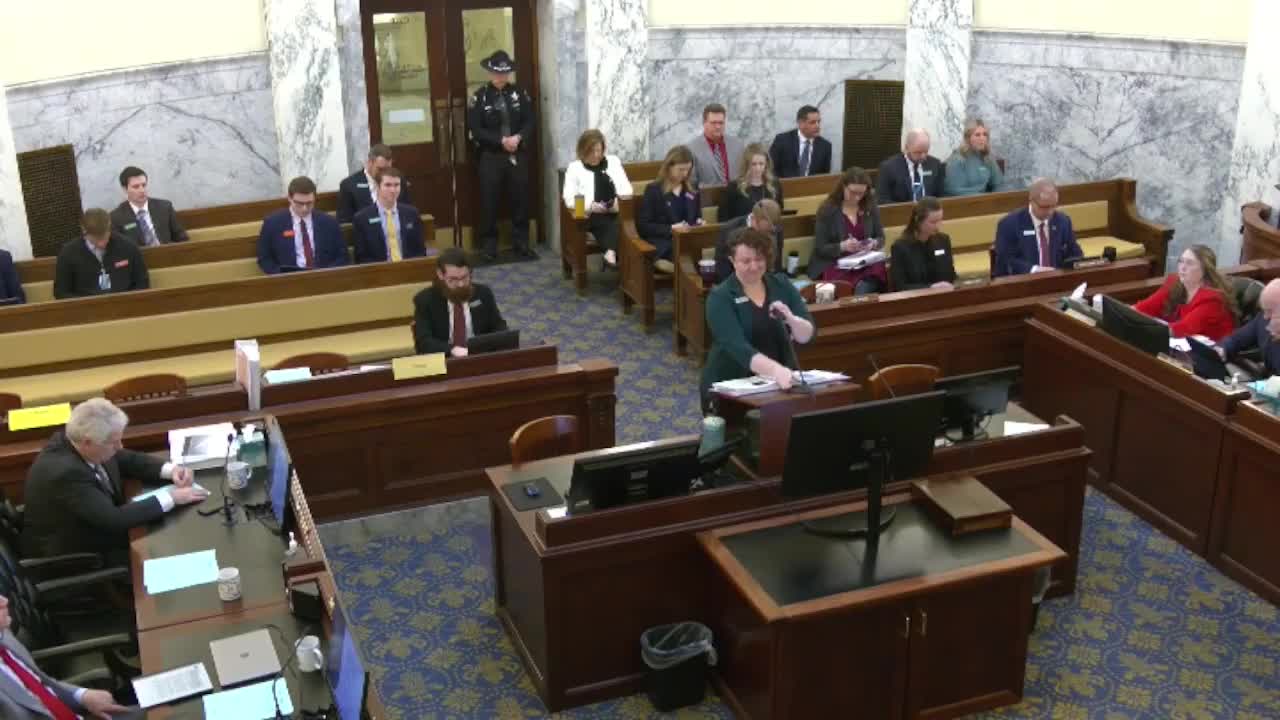
The Joint Finance-Appropriations Committee on Feb. 26 reviewed the Department of Health and Welfare’s requested supplementals and 2026 budget enhancements for the Division of Medicaid as spending pressures persist.
The Joint Finance-Appropriations Committee on Feb. 26 reviewed the Department of Health and Welfare’s requested supplementals and 2026 budget enhancements for the Division of Medicaid as spending pressures persist.
Analyst Alex Williamson of the legislative services office told the committee the division expended about $4.27 billion of the roughly $4.56 billion appropriated in fiscal year 2024 and outlined five Medicaid benefit programs that drive state spending, including the expansion population that went live in January 2020.
Why this matters: Medicaid is an entitlement program with a mix of state and federal financing; changes in caseload, provider rates, federal matching (FMAP) and one‑time adjustments have produced large year‑over‑year swings. Committee members pressed the department on forecast methods and on whether the governor’s recommendation included programmatic cost containment.
Williamson said the expansion population and other factors—chiefly a global pandemic shortly after expansion began and later provider rate increases and upper payment limit methodology changes—help explain why earlier forecasts, including a 2018 Milliman forecast, underestimated current costs. "This will probably feel like information overload," Williamson told the committee as she walked through the budget book and slide packet.
Department of Health and Welfare Director Alex Adams said he submitted "as close to a maintenance budget as I could submit. I didn't ask for any policy adjustments." Adams warned that Medicaid’s status as an entitlement constrains the department’s ability to unilaterally contain costs.
Key figures discussed during the hearing included: about $4.27 billion expended in fiscal 2024; roughly $67 million in personnel and operating costs for Medicaid administration in 2024; 237.5 FTE authorized for the division with 24.5 vacancies as of Feb. 10; and a population forecast adjustment request that would add about $367 million (the request rolls together caseload, pricing and utilization assumptions and includes roughly a $45 million shift from federal to general funds tied to an FMAP change).
Williamson also summarized the supplementals recommended by the governor. Among them: an external quality review (EQR) supplemental to meet CMS requirements (analyst figures in the hearing give the EQR request in the low millions and note a budget book typo indicating a one‑time vs. ongoing label); system configuration and onboarding costs tied to the Idaho behavioral health plan (IBHP); a capitation rate increase for managed care plans (analyst‑reported total capitation increase roughly $108.8 million, split across plans per the budget write‑up); and a $190 million request related to the hospital assessment fund tied to upper payment limit methodology changes (see separate article).
Committee members asked technical and policy questions about forecasting, whether cost containment options were considered, and what would happen if federal matching rates for expansion changed. Adams told the committee the state faces limited options without statutory policy changes and said the department had provided a menu of possible reductions to relevant policy committees, though none are without significant consequences.
The department and analysts told members they will publish more granular, multi‑scenario forecasts and a monthly transparency report to give earlier indicators of when a supplemental may be required. Ms. Williamson and Director Adams said the MMIS replacement remains in year three of a five‑year procurement, funded with a mix of MMIS dedicated funds (state) and federal funds.
The committee did not take any votes in the hearing; the department’s requests will be considered in subsequent budget deliberations and any statutory policy changes would require separate legislation.