Get Full Government Meeting Transcripts, Videos, & Alerts Forever!
Get email alerts on the Occupational Licensing topic
No spam. Unsubscribe anytime.
Committee introduces bill to limit creation of new professional licenses to statute or legislation
Summary
Representative Jeff Ehlers introduced RS32139 to require that new occupational licensure authorizations and fee changes be established through statute or formal legislative rulemaking rather than by administrative policy or director discretion; the committee voted to introduce the request session (RS).
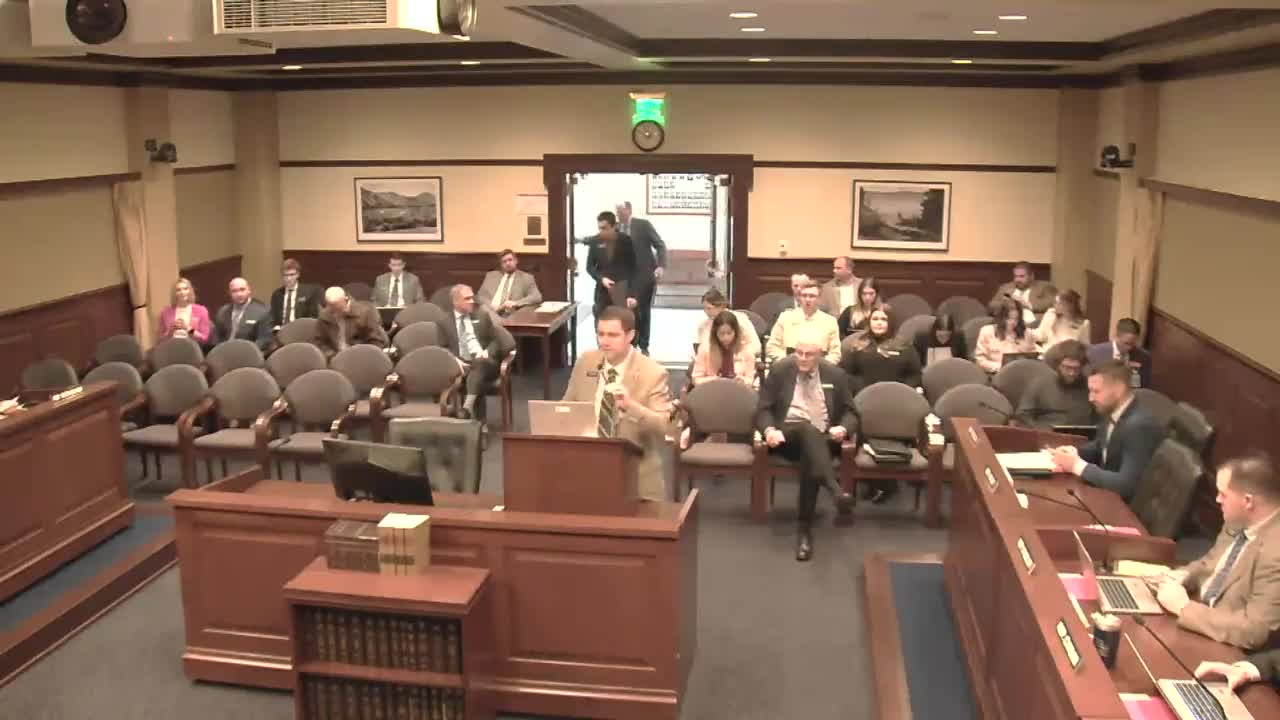
Representative Jeff Ehlers, District 21 of Meridian, told the House Health and Welfare Committee he was introducing RS32139 to constrain how new occupational licensures and licensure fees are created and changed.
Ehlers said the proposal contains three provisions: barring creation of new licensors by administrative rule or policy unless already authorized; requiring that licensure fees be established either in statute or rule; and adding a section he described as a “universal occupational and professional licensing” provision that would allow licensed professionals to perform acts consistent with their education, training and experience.
"No new licensors will be created through administrative rule or policy, unless they already have the authority to do that," Ehlers said, and that fees should not be left solely to departmental discretion.
The measure, Ehlers said, is designed to move new licensing authority and fee-setting through the regular legislative process rather than leave it to agency rulemaking. After brief procedural discussion, Representative Wheeler moved to introduce RS32139, and the committee approved the motion by voice vote. The chairman announced the motion carried and RS32139 was introduced.
The committee did not take further action on the underlying policy; Ehlers said he would be available to answer questions at a full hearing.
The bill is expected to be scheduled for a formal hearing where staff and other members can examine the proposal’s definitions (for example, what the code considers "licensure" versus "registration") and potential technical fixes.
Votes at the meeting were voice votes; no roll-call tallies were recorded in the transcript.