Get Full Government Meeting Transcripts, Videos, & Alerts Forever!
Get email alerts on the Higher Education Community Colleges topic
No spam. Unsubscribe anytime.
College of Western Idaho tells JFAC growth strains classrooms, seeks enrollment workload funding
Summary
College of Western Idaho President Gordon Jones told the Joint Finance-Appropriations Committee the college is seeing double‑digit enrollment growth and capacity constraints in nursing and CTE programs, while the Enrollment Workload Adjustment (EWA) payment to the college is limited by a 3% cap.
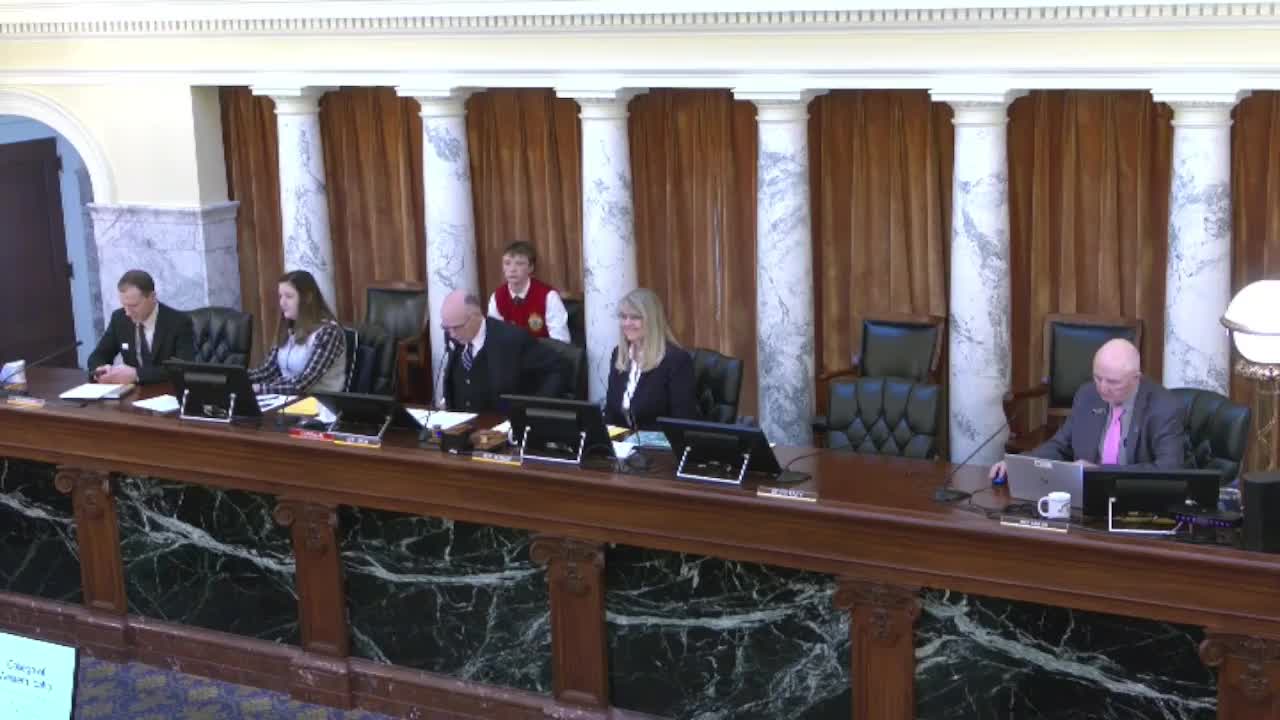
College of Western Idaho President Gordon Jones told the Joint Finance‑Appropriations Committee on the college’s budget day that CWI is experiencing rapid enrollment growth and faces capacity constraints in health and technical programs.
The college asked the committee to consider the FY 2026 base request and explained that a formula‑driven Enrollment Workload Adjustment (EWA) produced a larger entitlement than CWI received because a 3% cap set by the State Board limited the amount the college could apply to its base budget.
Jones told the committee CWI saw roughly 13% academic enrollment growth this year and that the college serves “nearly 22,000 credit students and more than 30,000 students” in the 2023‑24 academic year. He said “we have almost a hundred people on our nursing waiting list” and “a thousand students total on wait lists across all of our programs,” singling out nursing, automotive technology, welding, cybersecurity and ag sciences as high‑demand fields.
Legislative budget analyst Kevin Campbell presented the budget background before Jones’s remarks and noted that the FY 2024 appropriation to CWI was $20,816,700 and that CWI typically spends 100% of its state appropriation. Campbell also identified a recent history of EWA adjustments: combined ongoing additions of $1,500,000 in FY 2021–22 followed by net ongoing reductions related to EWA in later years.
Jones described three sources of capacity constraints: classroom and facility space, instructor/headcount limits imposed by accrediting standards (for example, nursing lab ratios), and student support services such as academic advising. He said accrediting standards for nursing limit student‑to‑instructor ratios and that faculty availability, not student demand, often sets the cap for program enrollment.
On the EWA calculation, Jones said CWI’s formula result would have been about $493,000 for the institution but that the amount shown in the budget book was $265,000 because of a 3% cap imposed by State Board policy. Co‑chairs and legislators asked for comparative analyses across institutions; a committee member requested staff provide a breakdown of capacity constraints (facility, faculty, support services) for CWI.
Committee members also asked about tuition and staff pay. Jones said CWI has not raised tuition in eight years and that “no degree we offer costs more than $10,000” at the two‑year level. He told the committee CWI faculty hold masters or terminal degrees but that community college pay scales are generally $10,000–$20,000 below comparable four‑year positions, and he described academic advisors as key student‑support personnel who remain under market.
A co‑chair asked the college to supply additional detail about how requested EWA and enhancement dollars would be used; Jones pointed to past enhancements that expanded nursing capacity, STEM seats and outreach, and said the FY 2026 request includes an ongoing enrollment workload adjustment addition of $265,000.
The committee did not take formal action on the request during the session. Committee members invited the college and analysts to continue work with the higher education work group and to supply the requested breakdowns to inform budget decisions.
Looking ahead, Jones urged lawmakers to consider structural spending choices across higher education to align state investment with enrollments and workforce needs. He emphasized CWI’s role in affordable postsecondary education and repeated that the college will “make the most of everything that you invest in us.”