Get Full Government Meeting Transcripts, Videos, & Alerts Forever!
Get email alerts on the Parks And Recreation Budget topic
No spam. Unsubscribe anytime.
Idaho Parks and Recreation asks JFAC to raise seasonal pay, consolidate programs and fund marina and maintenance projects
Summary
The Idaho Department of Parks and Recreation told the Joint Finance‑Appropriations Committee it seeks budget authority to raise seasonal wages, merge management and operations programs for accounting simplicity, and advance capital projects including marina replacements at Heyburn State Park.
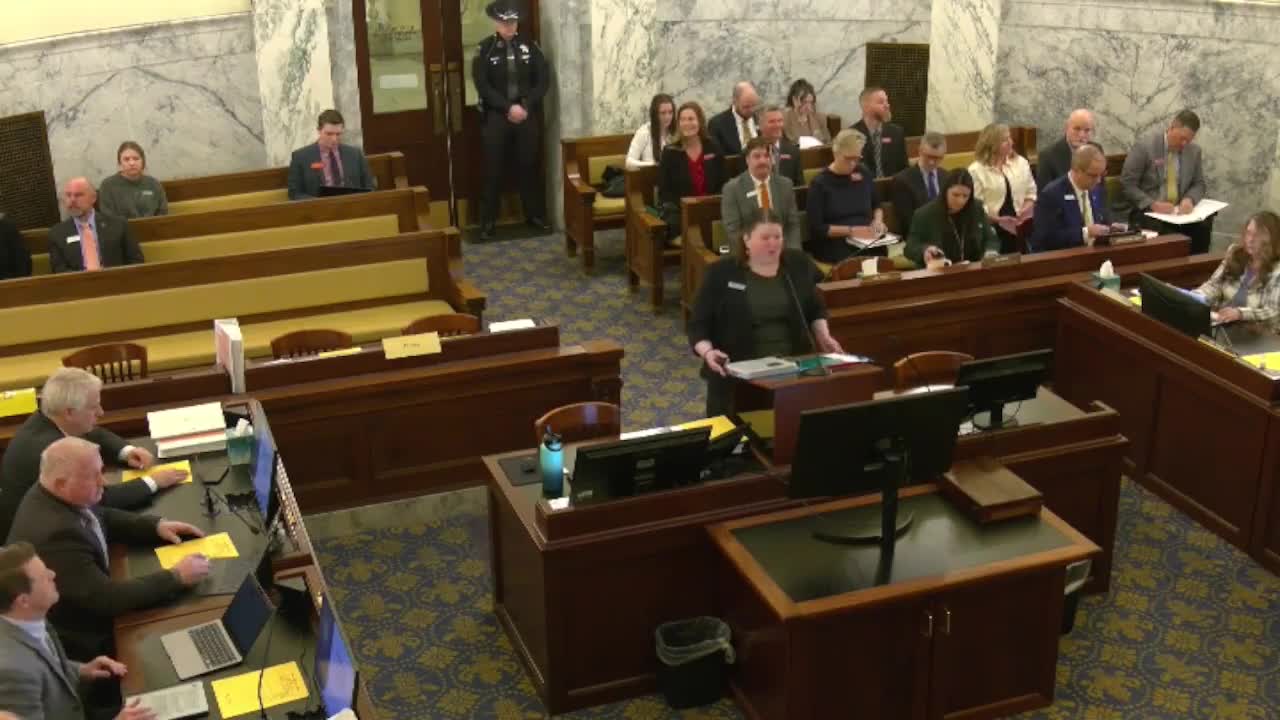
The Idaho Department of Parks and Recreation asked the Joint Finance‑Appropriations Committee on Oct. 24, 2025, to approve budget changes that would raise seasonal wages, consolidate two internal programs and fund capital projects including marina replacements at Heyburn State Park.
Janet Jessup, budget and policy analyst with legislative services, told the committee the department is allocated about 190.8 full‑time positions and that capital development is funded through one‑time appropriations rather than ongoing FTP. She said the department’s expenditures in 2024 were split across categories, noting about 41% of spending that year was capital outlay and roughly 17.5% was trustee and benefit payments to local partners.
Director Susan Buxton, director of the Idaho Department of Parks and Recreation, told the committee the agency wants to merge its management services and park operations budget programs to simplify accounting and management. “It really is a a ministerial request,” Buxton said, explaining the two programs often perform overlapping functions and the consolidation would “make it a lot easier for us to manage across the system.”
Why it matters: The department said the changes are meant to make budgeting and hiring more sustainable as visitor use and operating costs rise. The seasonality and remote locations of many parks have made recruiting and retaining staff difficult, the agency told lawmakers.
Key details from the presentations and questions
- Seasonal pay: The department proposed raising seasonal employee pay from $12 to $15 per hour as a targeted enhancement that has been phased across previous budgets. Legislators asked about cumulative spending and market pressure; Director Buxton and Jennifer Quindell Miller, the department’s human resources officer, said managers currently can pay within a $12–$15 range but increasingly must offer higher wages in resort areas. “We are gonna have to, push that, pay range as we have done the last couple years up again,” Quindell Miller said, adding that in some communities the market requires $17–$18 an hour to recruit sufficient staff. Buxton said the department hires roughly 300 seasonal employees each year and uses more than 500 volunteers to operate parks.
- Pay compression and ranger compensation: Buxton told the committee the department has worked since 2020 to reduce pay compression — the situation where long‑tenured employees are paid similarly to newly hired staff — by making targeted step increases for management and ranger positions. She said seven of the department’s 10 lowest‑paid bureau chiefs are in parks and recreation, prompting the targeted adjustments.
- Program consolidation: The department requested consolidation of the management services and park operations programs into a single budgeted program. Buxton and the department’s administrators said the consolidation nets to zero in total appropriation but simplifies internal tracking of revenues and expenditures.
- Capital and deferred maintenance: Jessup highlighted a significant one‑time increase in appropriations in 2023 related to a general‑fund transfer for deferred maintenance; those projects often span multiple fiscal years, she said. Buxton highlighted capital requests the governor recommended in full, including Bear Lake Fish Haven improvements and work at Lake Cascade. Co‑Chair Harmon asked the department to provide a written, project‑level summary of deferred maintenance and ARPA/surplus funds already allocated and expended; Buxton said that document is in the committee packet and the department will provide additional detail by email on request.
- Heyburn State Park marina replacements: Director Buxton described work at Heyburn State Park on Lake Coeur d’Alene to replace two aging marinas. Buxton said the department has been coordinating with the Coeur d’Alene Tribe, which previously funded early design work and offered up to $1 million toward replacement. The marinas named in the presentation were Rocky Point and Chocolat; Buxton said replacement slips will increase capacity compared with the existing docks.
- Snowmobile equipment purchase: The department requested a compact wheel loader paid for from the snowmobile sticker fund. Troy Elmore, operations administrator, said the department owns groomers and administers a pass‑through program that supports about 27 county snowmobile programs. The new loader will be the department’s third of that model and will be used to clear parking lots at high‑use snowmobile trailheads; Elmore said counties operate the grooming equipment but the department owns major assets.
Where the governor landed and next steps
The governor’s recommendation included the agency’s requested enhancements in full, Buxton said. Committee members asked for additional documentation — notably a detailed list of deferred maintenance projects and expenditures — which the department said it would provide to JFAC members. The department’s requests include a mix of ongoing and predominantly one‑time enhancements and rely on a mixture of dedicated, federal and limited general‑fund authority.
The department offered to take follow‑up questions by email and to provide the requested deferred‑maintenance spreadsheet to committee members.