Get Full Government Meeting Transcripts, Videos, & Alerts Forever!
Get email alerts on the State Budget topic
No spam. Unsubscribe anytime.
Administration presents ‘standstill’ executive budget; teacher pay, scholarships hinge on March 29 amendment
Summary
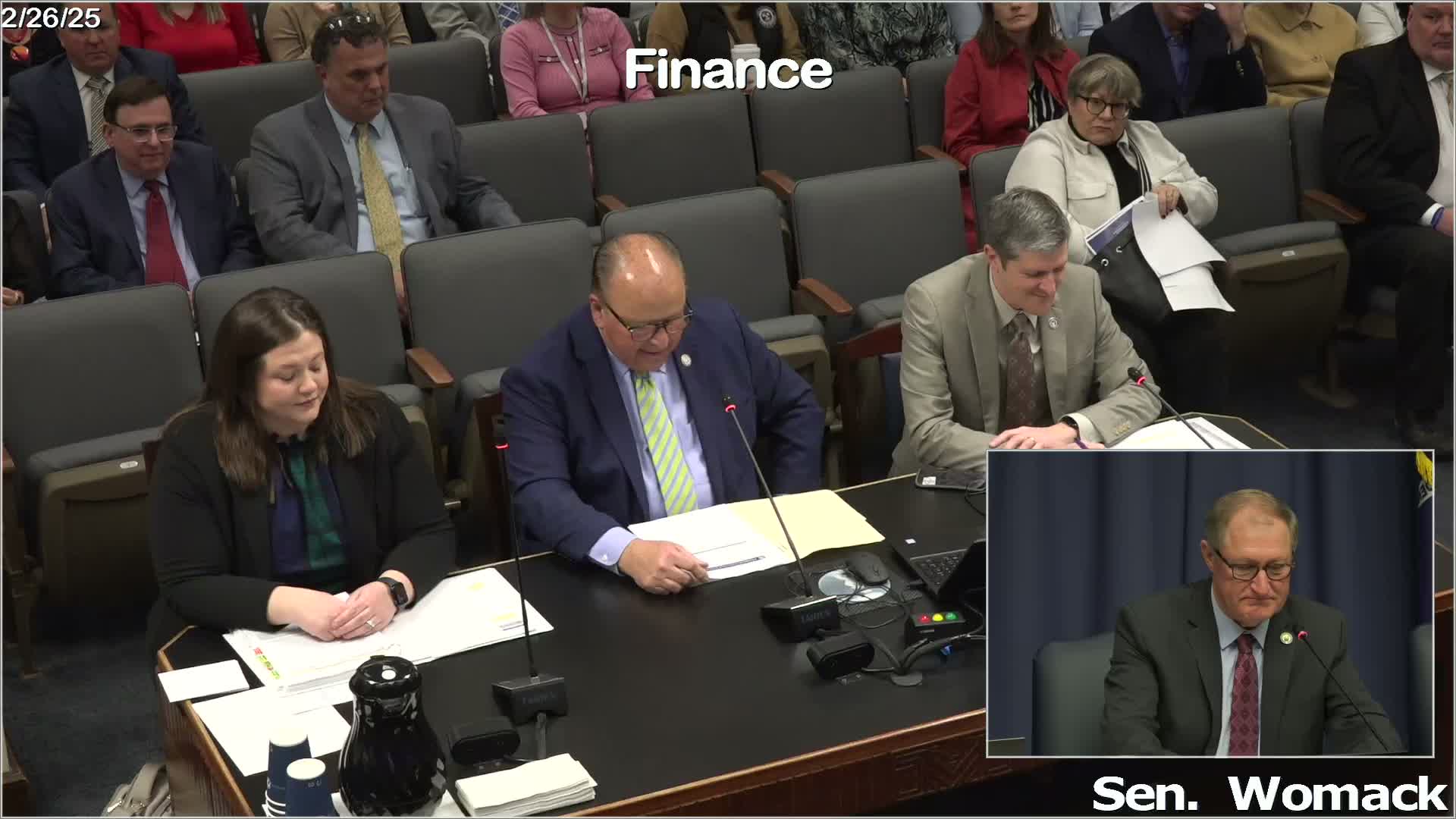
Taylor Barra, commissioner of administration, told the Senate Finance Committee the governor’s executive budget is a “standstill” recommendation that excludes a permanent $198 million teacher pay raise pending a March 29 constitutional amendment.
Taylor Barra, commissioner of administration, told the Senate Finance Committee the governor’s executive budget is intended as a “standstill” recommendation with no additions contingent on a constitutional amendment on the March 29 ballot. Barra said the administration removed prior one‑time items and incorporated agency efficiency directives, but that the budget still has limited flexibility because of constrained REC revenue estimates.
The most visible effect, Barra said, is education funding: the $198,000,000 permanent teacher pay raise is not included because its financing depends on the constitutional amendment and subsequent actuarial work. “That is not funded in this budget as it was a stipend last year,” Barra said. He added that the budget retains last year’s differential pay and high‑dosage tutoring dollars and that the governor has committed to include charter school teachers in any pay raise calculation if the amendment and required steps proceed.
Barra also highlighted scholarship and voucher funding included in the executive plan. The recommendation adds $50,000,000 in new dollars for the Louisiana Gator scholarship program; the Department of Education’s existing voucher program remains funded at about $43,460,000. Barra said the extra $50 million was expected to support roughly 5,300–5,500 additional scholarships based on current application interest.
On state fiscal capacity, Deputy Commissioner Patrick Goldsmith said REC (Revenue Estimating Conference) revenue growth is essentially flat for FY26, limiting new state general fund available for agencies. Barra and Goldsmith told senators the state recognized a fiscal year 2024 surplus; roughly half of that surplus—approximately $297,000,000—is constitutionally available for debt reduction, capital outlay, highway construction (if eligible), or CPRA deposits. The administration also expects about $29,000,000 of current‑year excess available for supplemental needs.
Senators pressed for procedural detail on teacher pay if the amendment passes. Goldsmith said the actuarial valuation would be done immediately to determine amounts to pay down the teacher retirement unfunded accrued liability (UAL), after which local assessments would be adjusted to allow local bodies to meet the intended pay increase. “Actuarials will need to do their work immediately after that happens,” Goldsmith said, describing the multi‑step process.
Why it matters: the standstill approach aims to avoid building contingencies tied to a pending constitutional change, but it leaves high‑profile policy items—most notably permanent teacher pay—dependent on the amendment and later adjustments. The committee signaled it will follow REC estimates closely and expects additional hearings and amendments if the amendment passes or if REC updates change the revenue outlook.
Ending: Committee staff and the administration said they will provide additional technical detail on actuarial timelines, REC assumptions, and the Gator scholarship application counts as the session proceeds.