Get Full Government Meeting Transcripts, Videos, & Alerts Forever!
Get email alerts on the Agricultural Research Extension topic
No spam. Unsubscribe anytime.
University of Idaho details AgResearch and extension budget; dean highlights new facilities and digital‑literacy work
Summary
Legislative Services analyst Kevin Campbell presented the Idaho Agricultural Research and Extension Service FY2026 overview on Feb. 10. Dean Michael Perella summarized research and extension activity, announced his retirement effective June, and described new research facilities and outreach numbers.
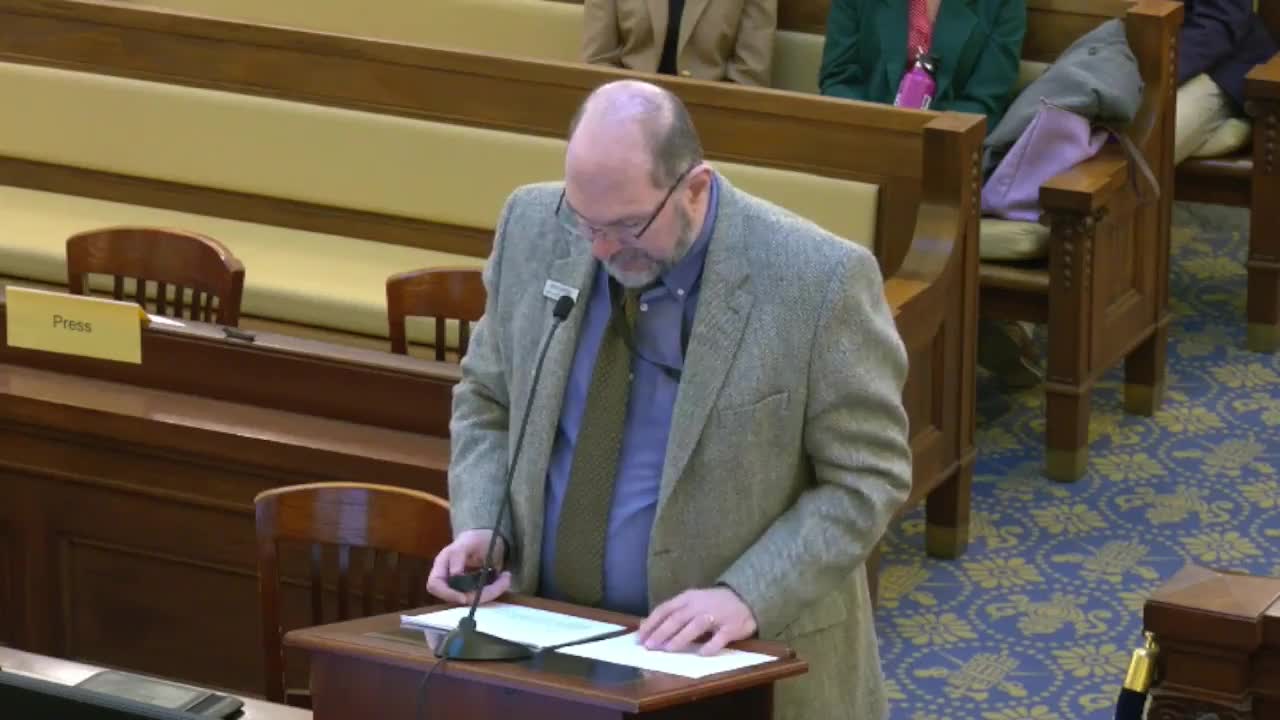
Legislative Services analyst Kevin Campbell presented the Idaho Agricultural Research and Extension Service (AgResearch/Extension) FY2026 base‑budget overview to the Joint Finance‑Appropriations Committee on Feb. 10. Dean Michael Perella then introduced his leadership team, summarized recent investments in research facilities and described extension outreach statewide; Perella also announced his retirement effective June of this year.
Perella opened by thanking the Legislature and governor for support over his nine‑year deanship and noted the college’s statewide footprint — extension staff in 42 of 44 counties and three recognized tribal communities and ten research/extension centers with access to roughly 14,000 acres for research and experimentation.
Why it matters: The University of Idaho’s College of Agricultural and Life Sciences supports crop and livestock research, 4‑H youth development, community outreach and applied research that informs production, food‑safety and rural economic activity across Idaho.
Budget highlights and requests
Campbell reported the service’s FTP at 341.33 (near the five‑year average of about 340.56 FTP) and that roughly 81% of service expenditures are personnel costs, with operating costs near $3.6 million and capital outlay around $3.3 million for research center improvements. From FY2021 to FY2025 the service’s base budget rose about $6.2 million (from roughly $32 million to $38 million), with most increases in compensation and benefits and in enhancements.
FY2024 and FY2025 appropriations noted to committee included: - $394,000 for new faculty in animal and plant sciences and agricultural engineering (FY2024); - $232,000 for maintenance costs tied to a new research laboratory in Parma (FY2025); - $322,200 for two faculty lines in irrigation and forestry and $142,000 in ARPA funds for digital‑literacy work tied to broadband and adult computer literacy; and - $564,200 in additional CEC included in an enhancements bill (as presented).
FY2026 requests presented included $157,900 ongoing for a viticulture and small‑fruits research faculty position (to address disease prevention, water and pest management and post‑harvest storage) and $250,100 for building maintenance at the Idaho Center for Agriculture, Food and the Environment, a facility described as a collaboration with the dairy industry.
Extension and digital‑literacy outreach
Perella said extension recorded more than 450,000 face‑to‑face contacts with Idahoans in the prior year and engaged more than 75,000 youth in 4‑H programming. He described ongoing work to address the digital divide in rural communities: the college applied for — and reported being tentatively awarded in committee testimony — an FCC grant worth about $13 million to support broadband‑related digital‑literacy projects that would supplement earlier ARPA‑funded adult‑computer‑literacy work.
Legislative questions and context
Representative Handy asked whether research has shifted from yield‑only measures to include nutritional quality; Perella affirmed nutrition is a growing research focus on campus, citing the Margaret Ritchie School of Family and Consumer Sciences and an NSF award tied to women’s health and nutrition. Representative Miller asked about crop breeding, irrigation efficiency and alternative crops; Perella cited recent investments in molecular and plant/soil health facilities — specifically the Idaho Center for Plant and Soil Health at Parma — and said the college’s breeding programs have historically supported regional cultivar development.
Committee members also raised budgeting and program questions. One senator noted that ARPA‑funded digital‑literacy work had to be tracked carefully to avoid creating ongoing state obligations from one‑time federal dollars; Perella and staff said the college is seeking complementary federal funding (the FCC grant) to extend that work and that the new Western Center for Digital Workforce Development is coordinating statewide partners including two‑year and four‑year institutions. Perella said extension educators and specialists document course impacts and that extension estimates a total annual savings (from multiple extension interventions) of $47 million for participants in the last reported year and offered to provide the committee with more detailed outcome data.
Personnel, retention and facilities
Campbell and Perella described personnel and retention metrics: the service reported about 341 FTP, and Perella said the change‑in‑employee‑compensation appropriation helped reduce turnover from 14% to 11% in FY2024. Perella thanked the Legislature for funding new facilities that replaced aging labs and noted how upgraded infrastructure supports hiring and competitive grant success.
No formal action
Committee discussion focused on clarification of requests, program outcomes and ongoing federal funding opportunities; senators and representatives asked for additional detail but took no formal votes in the hearing.
Ending
Perella closed by noting the college’s national ranking (No. 13 in agricultural sciences on a recent list presented to the committee), the statewide reach of extension work, and appreciation for legislative support. He reiterated the college’s intent to continue leveraging state investment to attract external funding and to report further details on program outcomes and grant competitions.