Get Full Government Meeting Transcripts, Videos, & Alerts Forever!
Get email alerts on the Public Health Districts Powers topic
No spam. Unsubscribe anytime.
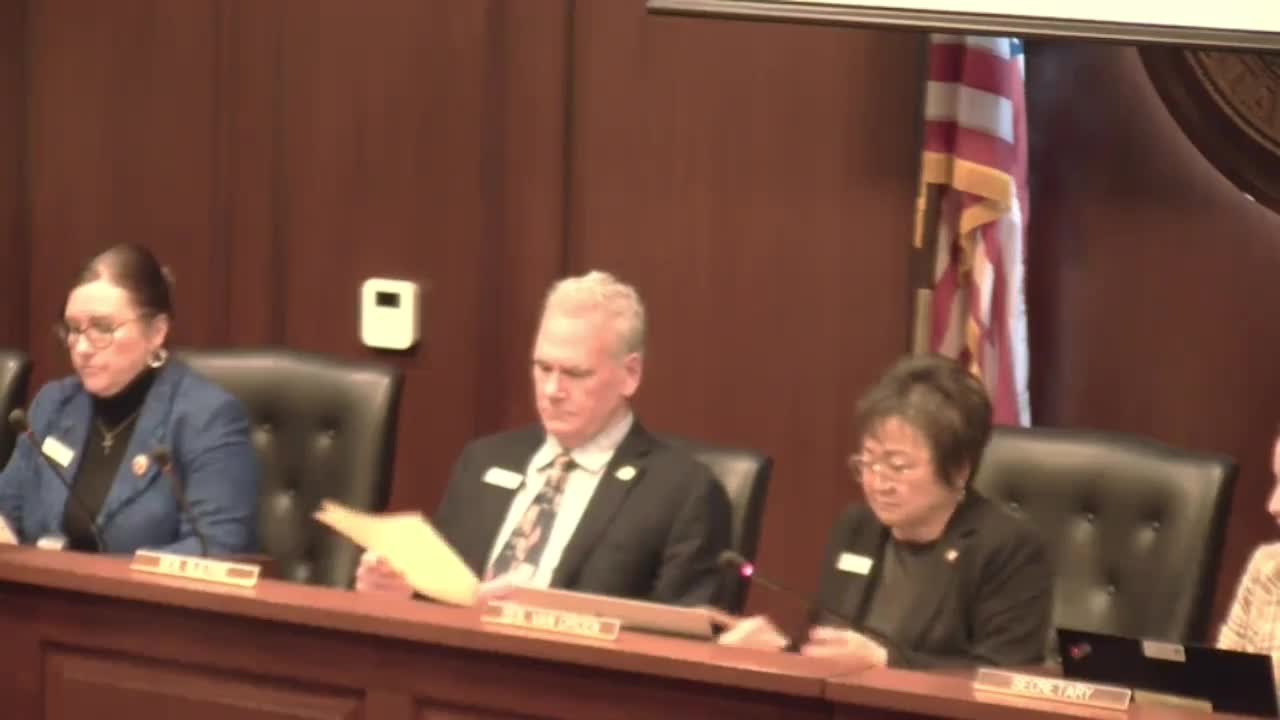
Senate committee sends bill limiting public health districts' powers to 14th order for amendment
Summary
The Idaho Senate Health and Welfare Committee debated legislation that would restrict public health districts to actions explicitly authorized by law and backed by scientific evidence. After extended questioning and public comment, the committee voted to send the bill to the 14th order for possible amendment.
Senate Bill 1031, a proposal to narrow the authority of Idaho public health districts, was discussed at length by the Idaho Senate Health and Welfare Committee and sent to the 14th order for possible amendment by the panel.
The bill’s sponsor, Senator Brian Lenny, Senator for Nampa, Idaho District 13, told the committee the measure would “ensure that any actions our public health districts take are rooted in statute, in science, and in necessity,” and said the language aims to replace a blanket "all things" grant of authority with a requirement that districts take only actions “specifically authorized by state law that are necessary and reasonable.”
Committee members questioned how the bill would affect ordinary preventive work by health districts, the meaning of phrases such as “specifically authorized by state law,” “necessary and reasonable,” and “demonstrated immediate public health risk supported by scientific evidence.” Several senators raised concern that the draft language could unintentionally limit routine services such as vaccination clinics or sanitation programs. Senator Wintrow summarized that she supported the concepts of necessity and scientific grounding but found the phrasing around “state law” and “immediate” confusing in the context of preventive measures.
Senator Lenny said the bill’s intent is to place guardrails on what he described as overreach by some health districts during the COVID-19 pandemic; he offered that he was willing to accept amendments, including sending the bill to the 14th order for language revision. Senator Bierke, Senator Shippey and others expressed support for refining wording to increase the bill’s chance of success.
A member of the public, Misty Karlfeld, identifying herself as leader of Health Freedom Idaho, testified in favor of the bill and cited what she described as Idaho health code "39-414" (as referenced in her testimony) as granting excessive authority to local health boards during the pandemic. She urged the committee to restrict district powers from "all things" to only those actions that are necessary and reasonable for public health.
After discussion, a motion to send the bill to the Senate floor with a "due pass" recommendation was made by Senator Seiderfeld and seconded by Senator Keiser. Senator Harris offered a substitute motion to send the bill to the 14th order for possible amendment; that substitute motion, seconded by Senator Bierke, was adopted by the committee. The committee used a voice vote; members asked to be recorded but no roll-call tally was read into the transcript.
The committee did not adopt final statutory definitions for terms such as "necessary and reasonable," "scientific evidence," or "immediate public health risk" during the hearing; several senators said they preferred sending the bill to the 14th order to allow those definitions and potential clarifications to be drafted and considered.
The committee scheduled its next meeting for the following day and adjourned.