Get Full Government Meeting Transcripts, Videos, & Alerts Forever!
Get email alerts on the Health Workforce topic
No spam. Unsubscribe anytime.
Idaho Dental Education Program seeks one additional seat, says it can fill it
Summary
The Idaho Dental Education Program asked JFAC for $54,000 ongoing to fund an additional dental seat. Program leaders told the committee IDEP has strong applicant pools and high return-to-practice rates for graduates who remain in Idaho.
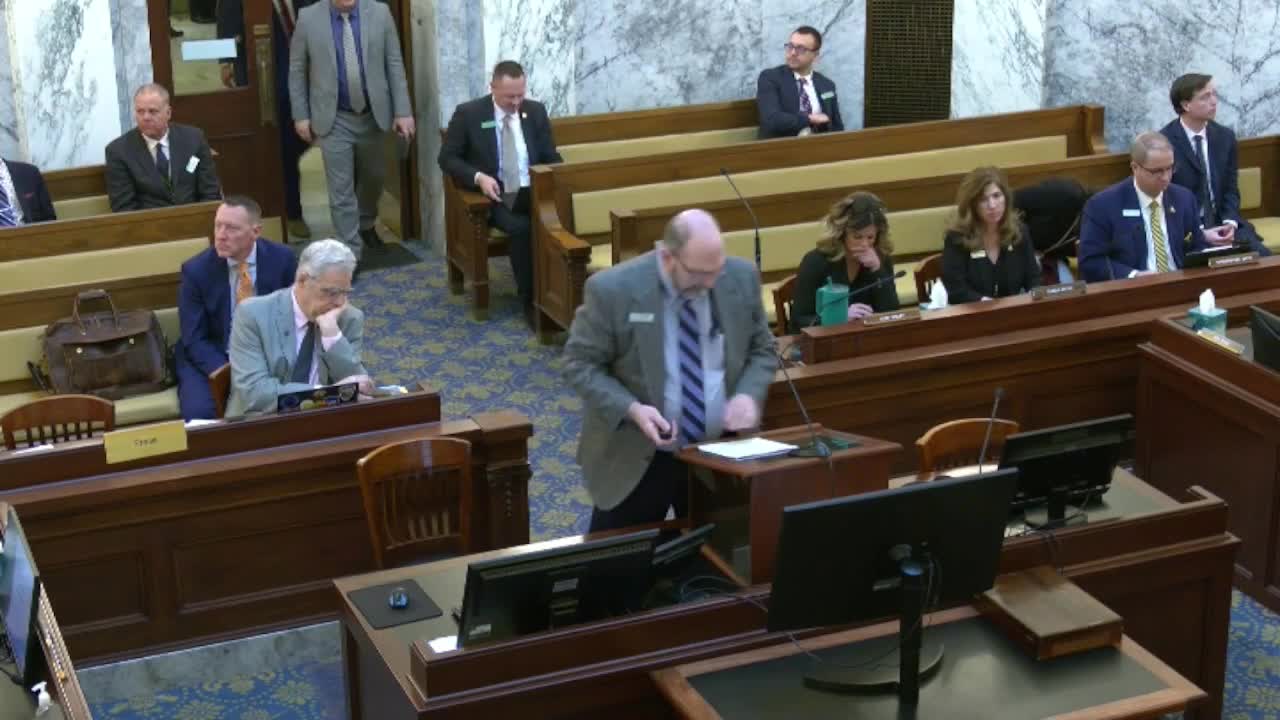
The Idaho Dental Education Program asked the Joint Finance-Appropriations Committee on Thursday for $54,000 in ongoing general-fund support to add one more student seat for fiscal 2026, saying the program can fill the slot and that additional dentists are needed in rural areas.
Kevin Campbell, a budget and policy analyst with the Legislative Services Office, summarized IDEP's structure: students spend the first year at Idaho State University and complete training at Creighton University's School of Dentistry in Omaha, under a contractual arrangement that reserves seats for Idaho residents and reduces tuition for those students.
"IDEP requests $54,000 ongoing from the general fund for one additional seat," Campbell told the committee, noting the program's long-term objective is to expand to 36 seats and that the program receives far more qualified applicants than it can admit.
Jeff Weibargin, director of the Idaho Dental Education Program and an IDEP alumnus, said IDEP is consistently oversubscribed. "We have no shortage whatsoever of highly qualified applicants," Weibargin said, adding that applicants typically have high GPAs and strong admissions-test scores. He said historically IDEP returns roughly 65'70 percent of graduates to Idaho, and that the return rate rises to roughly 80 percent if measured over a longer time window as graduates later come back.
Weibargin and Idaho State University representatives told the committee that students who attend IDEP pay less tuition than out-of-state or private alternatives; graduates who train outside Idaho often accumulate larger debt and are less likely to return to practice in Idaho.
No formal committee action was taken during the presentation. Committee members asked about statewide dentist supply and places that remain underserved; Weibargin said Idaho has roughly one dentist per 2,000 residents and is "middle of the pack" nationally, but with rural and small communities underserved.
Ending: The committee requested no immediate vote; IDEP staff stood ready to answer follow-up questions as the budget cycle proceeds.