Get Full Government Meeting Transcripts, Videos, & Alerts Forever!
Get email alerts on the Public Health Services Budget topic
No spam. Unsubscribe anytime.
JFAC reviews Public Health Services budget restorations, data-modernization and program requests
Summary
Department of Health and Welfare officials told the Joint Finance-Appropriations Committee that the Division of Public Health Services seeks to restore multiple previously ongoing programs, invest in data modernization, and sustain ARPA-funded initiatives while trimming overall base spending compared with last year.
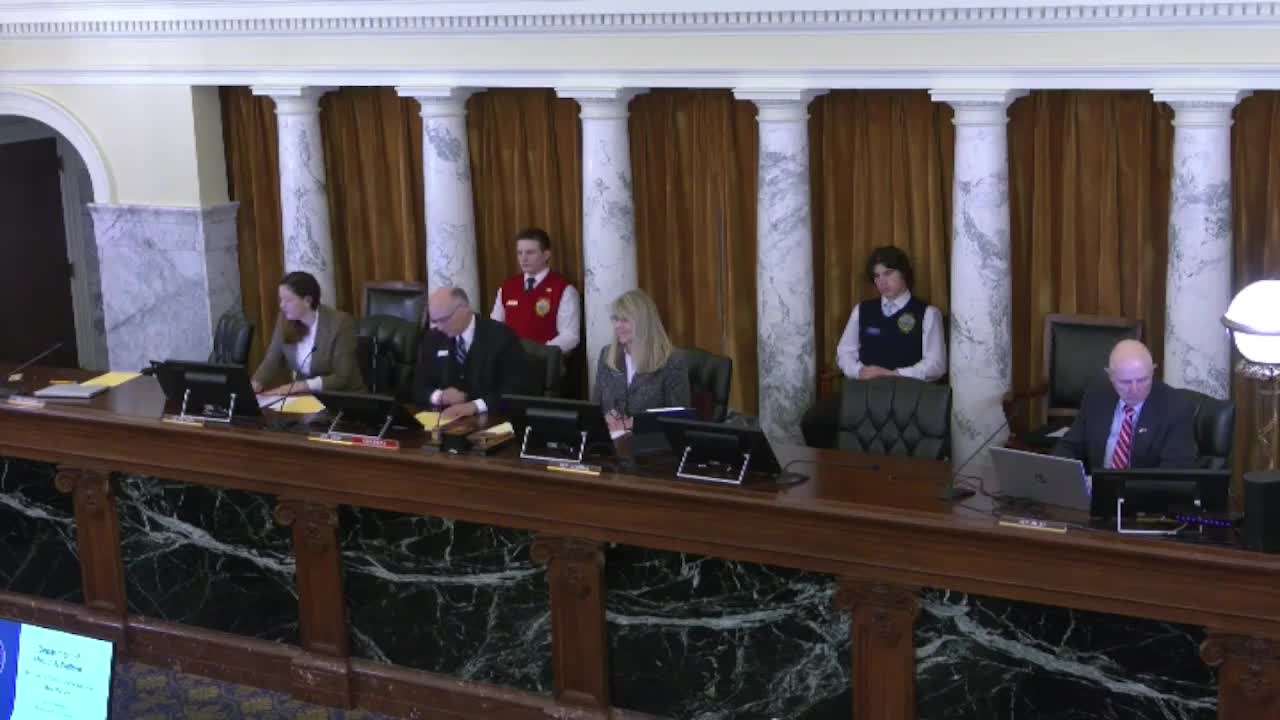
At a Joint Finance-Appropriations Committee hearing in Boise, Department of Health and Welfare leaders outlined the Division of Public Health Services’ 2026 budget request and a set of program restorations and one-time enhancements meant to stabilize services that were shifted from ongoing funding into one-time appropriations.
The Division’s 2025 appropriation was reported as about $164 million, and the governor’s recommendation for 2026 reduces that to about $154 million, a roughly 6% year-over-year decline as officials restructured funding and returned some programs to one-time status. Division funding is spent primarily through trustee and benefit payments, officials said, with personnel and operating costs forming a smaller share of the total.
Why it matters: the Division oversees multiple statewide services — immunizations, laboratory testing, emergency medical services, suicide prevention, vital records, WIC, home visiting and other maternal and child programs — that rely on stable funding and timely data systems. Committee members pressed officials on what was structural change versus program reductions, and on the progress of ARPA-funded technology upgrades.
Division administrator Elke Shaw Tullock and Director Alex Adams described a mix of program restorations and one-time enhancements. Officials said the Department requested restoration of previously ongoing programs for suicide prevention, drug overdose prevention, refugee health screening, Alzheimer’s/dementia coordination, diabetes and HIV programs, oral health workforce initiatives, hepatitis surveillance and others. A partial list of requests and clarifications provided to the committee included:
- Suicide prevention: request for ongoing funding reported as $1,807,700 (general fund) plus $195,000 (federal) to support the program established by the Legislature in 2016.
- Drug overdose prevention: request to restore four full-time-equivalent positions and $2,820,200 ongoing for the program the Division has run since 2017 to reduce overdose morbidity and mortality.
- Refugee health screening: request to restore 1.5 FTE and $991,000 ongoing to ensure newly arriving refugees receive comprehensive medical screenings and follow-up care in Boise and Twin Falls.
- Women, Infant, and Children (WIC) program and related supplemental nutrition: large ongoing restoration requests (numbered in testimony) to support low- and moderate-income women and children under 5, and to coordinate nutrition education and services.
- Immunization assessment/dedicated fund: the Division requested an increase to the immunization assessment fund; testimony cited recent base fund levels and a governor recommendation to add ongoing dedicated funding for the Idaho immunization program to ensure access to free or low-cost vaccines for children under 19.
- Home visiting: request for $725,900 ongoing (federal funds) to expand home visiting services delivered by trained nurses, social workers or early-childhood professionals to at‑risk parents in counties identified by needs assessment.
Committee members also reviewed one-time enhancements totaling about $8.75 million that largely consist of ARPA carryover and epidemiology/laboratory capacity grants for data modernization, WIC system modernization, public health infrastructure grants and a multiyear communicable disease prevention grant. Director Adams and analysts explained that many one-time appropriations are carryover from federal awards and that the Governor recommended funding those requests.
On data modernization and IT systems: senators asked for an accounting of work already completed and results from prior system upgrades before approving more funding. Director Adams offered to provide the committee a brief summary of work completed and noted the department manages dozens of siloed systems. He said the department will circulate a three‑page status memo after the hearing. Senator Cook specifically requested documentation of prior system modernization outputs before approving additional funding.
On accreditation and departmental priorities: Senator Tanner questioned the Office of Accreditation and Planning — a newly formed office within the Division — and raised concerns about references to diversity, equity and inclusion in some accreditation materials. Director Adams responded that accreditation is a voluntary process the department has pursued since 2012 and that the Department uses an internal "One Department" review process that includes an assessment of whether activities comport with Idaho values. The transcript records Adams saying the budget exercise was a "healthy exercise," and he described efforts to align program activities with state priorities. Division administrator Elke Shaw Tullock said the office supports national accreditation and internal performance measurement.
Two other items highlighted to the committee:
- Communicable Disease Prevention grant: testimony noted a year‑4 federal grant request of $2,041,800 one time to support 4.4 limited‑service positions for communicable disease control and surveillance.
- Rural physician incentive interaction: while the rural physician incentive loan‑repayment program was discussed more fully in the residency section of the hearing, the Department clarified the $500,000 governor initiative is meant to repay medical education loans for physicians who practice in federally designated shortage areas. Elke Shaw Tullock reported a high retention rate for participants in loan repayment programs, saying, "Almost 91% of the providers that receive these loan repayments stay in the state and practice in the state."
What the committee asked for next: multiple members said they wanted more detail on (1) what prior data modernization investments produced, (2) which restored programs depend on continuing federal grants, and (3) whether program moves (for example, placing some public‑health functions in other agencies) could increase efficiency. Director Adams encouraged individual follow-up with analysts and staff.
The hearing included multiple questions about organizational fit for programs such as EMS and Project ECHO (continuing medical education). Director Adams said the department is open to discussions about moving specific programs to other agencies if that improves mission fit and efficiency. Senator Wintrow and other committee members emphasized the ongoing public health functions they view as essential: vital records, laboratory services and communicable-disease surveillance were repeatedly cited as high‑priority core services.
Ending: committee staff and department officials agreed to provide follow‑up materials — a data‑modernization status memo and more granular budget worksheets — to inform later decisions on which restorations to approve as ongoing and which to fund as one-time appropriations. Quotes in this article are taken from committee hearing remarks by Director Alex Adams, Division administrator Elke Shaw Tullock and Division manager Keith Bybee recorded in the hearing transcript.