Get Full Government Meeting Transcripts, Videos, & Alerts Forever!
Get email alerts on the Water Resources topic
No spam. Unsubscribe anytime.
Idaho water board outlines $30 million ongoing proposal, five new staff and large recharge push
Summary
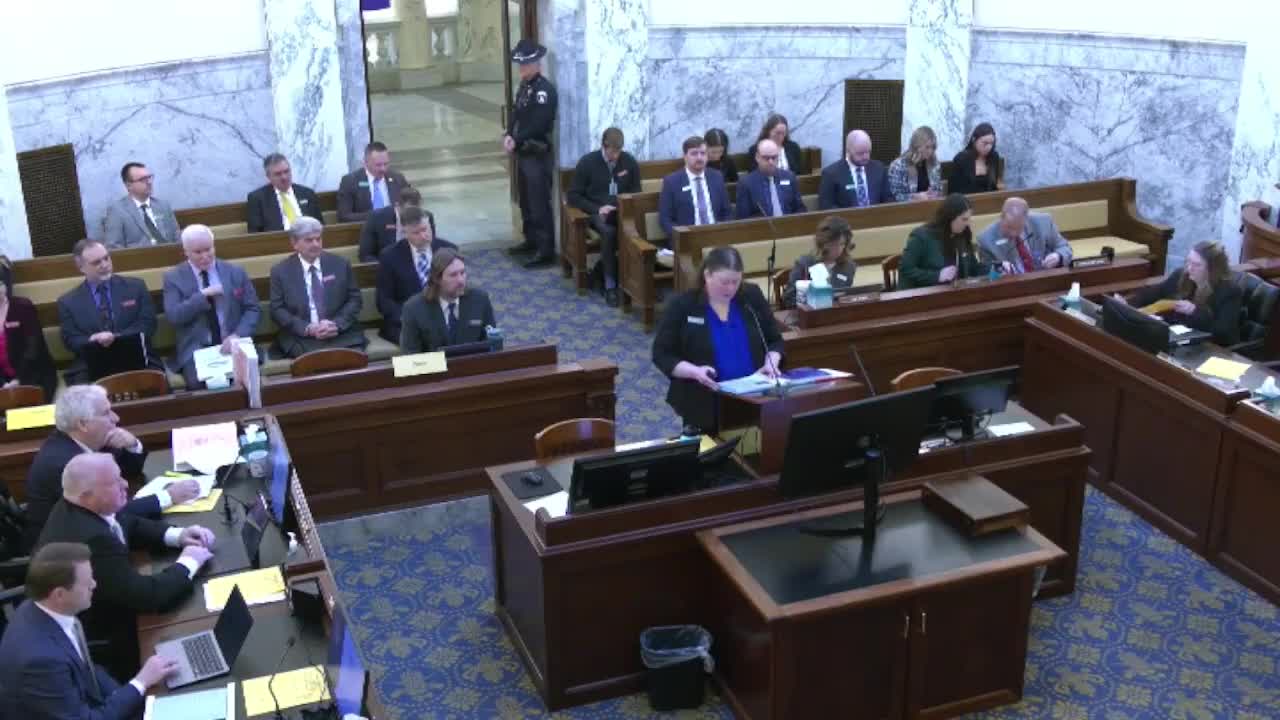
At a March budget hearing, the Idaho Department of Water Resources and Idaho Water Resource Board described a mix of ongoing and one-time funding, major ARPA-funded projects, an emerging suite of recharge projects on the Eastern Snake Plain and a request for five new positions to expand water administration.
The Idaho Department of Water Resources told the Legislative Budget Committee on March budget day that it has committed most of its water-management balances to projects statewide and is seeking $30 million in ongoing general-fund support plus five new full‑time positions to expand water administration.
The department’s budget analyst, Janet Jessup of Legislative Services, told the committee the department received a mix of ongoing and one‑time appropriations that include American Rescue Plan Act (ARPA) state fiscal recovery funds; $50 million was one‑time and $50 million was made ongoing in 2023. Jessup said detailed fund accounting and committed‑project lists are available in the committee SharePoint materials.
Why it matters: The Water Management Fund holds cash for loans, grants and board‑approved projects that affect irrigation districts, municipal supply and large infrastructure projects across Idaho. Committee members pressed the department for specifics about what the fund pays for, how quickly projects spend available cash, and why the agency needs added staff as water districts and recharge projects expand.
Department director Matt Weaver described three broad categories of work funded in recent years: aging infrastructure, water‑sustainability projects and flood management. He and Water Resources Board Chairman Jeff Raybould listed completed and ongoing projects that have been funded from the water management account and related ARPA dollars, including a pipeline to Mountain Home Air Force Base, work at Anderson Ranch (a dam raise and related costs), a pipeline tied to Dworshak Dam for hatcheries, Bear Lake storage adjustments, a Priest Lake project, canal conversion and efficiency projects, groundwater‑to‑surface conversions, the Lewiston Orchards reuse/pumping project and Treasure Valley water‑supply assessment and recharge planning.
Jessup and Weaver gave committee members a fund‑balance snapshot during the hearing: the water management account showed an ending balance (FY2024) of about $293 million; revenue through December was roughly $38 million and expenditures about $11.2 million, leaving a cash balance around $320 million. The board has passed resolutions committing about $290 million to projects, leaving an uncommitted balance of roughly $29 million. Chairman Raybould explained that committed funds are paid out to project proponents as work progresses and that some large projects remain in engineering or preconstruction phases, which accounts for apparent cash sitting in the fund.
On staffing and administration: Weaver asked for five additional FTEs to form a new Water Administration Bureau, including a bureau chief, resource agency liaisons and a technical records specialist. Weaver said demand for creating and supporting statutorily authorized water districts has grown and the department currently lacks capacity to meet requests across multiple basins; the new positions would be paired with roughly 11 existing staff in the water distribution section to form a bureau focused on administration. Weaver said the staffing request is intended to help meet obligations tied to the recent settlement on the Eastern Snake Plain Aquifer (ESPA) and to support water‑district creation and day‑to‑day administration statewide.
Recharge and longer‑term strategy: Committee members repeatedly asked about recharge capacity on the ESPA. Weaver and Raybould described a plan to increase average annual managed recharge targets in the Eastern Snake Plain from 250,000 acre‑feet per year to 350,000 acre‑feet. Weaver said state‑sponsored recharge averaged about 268,000 acre‑feet per year from 2016–2024; private actors averaged about 116,000 acre‑feet per year in recharge activity and private pumping reductions averaged about 212,000 acre‑feet — roughly 600,000 acre‑feet of combined activity over that period. They cautioned that incidental recharge from older surface practices has declined as irrigation efficiency has increased, making active managed recharge and new infrastructure more important.
How projects are funded: Raybould explained the board uses a mix of loans, grants and cost‑share arrangements. Examples include grants capped at one‑third of project cost (up to $2 million) under the aging‑infrastructure program and larger cost‑share decisions for projects that provide statewide benefits (for example, an arrangement to fund 89% of certain federal costs under the WIN Act for the Anderson Ranch work). Loan balances reported in committee discussion were roughly $23 million in the revolving development account and about $20 million in loans out of the water management account.
Committee concerns and follow up: Legislators repeatedly pressed whether an ongoing $30 million appropriation should be added to the agency base without a specific, prescheduled project list. Some members preferred one‑time funding or project‑level approvals. Weaver and Raybould emphasized that many projects are multi‑year, require engineering, and that the board is encouraging proponents to move projects forward to be eligible for disbursements. Jessup said she will follow up with the committee to provide the board’s list of projects that are identified but not yet funded.
Sources and quotes: "We have a balance you referred to — the water management account — and I believe that's in your materials," Director Matt Weaver said while describing the account balances and committed projects. Chairman Jeff Raybould summarized funded projects and loan activity: "It's going in lots of different places, coupled with ARPA funding," he said, and listed specific projects funded or under way.
What’s next: Committee staff will circulate the board’s unfunded‑project list and project detail PDFs stored in SharePoint. No formal appropriation vote was recorded in the hearing transcript; lawmakers asked for follow‑up details before deciding on additional ongoing funding.