Get Full Government Meeting Transcripts, Videos, & Alerts Forever!
Get email alerts on the Pharmacy Compounding topic
No spam. Unsubscribe anytime.
Senate committee approves pharmacy rule rewrite but removes two compounding labeling subsections after stakeholder concerns
Summary
The Senate Health and Welfare Committee approved a comprehensive rewrite of Idaho State Board of Pharmacy rules but voted to strike two labeling subsections after stakeholder outreach raised concerns about compounding and federal guidance.
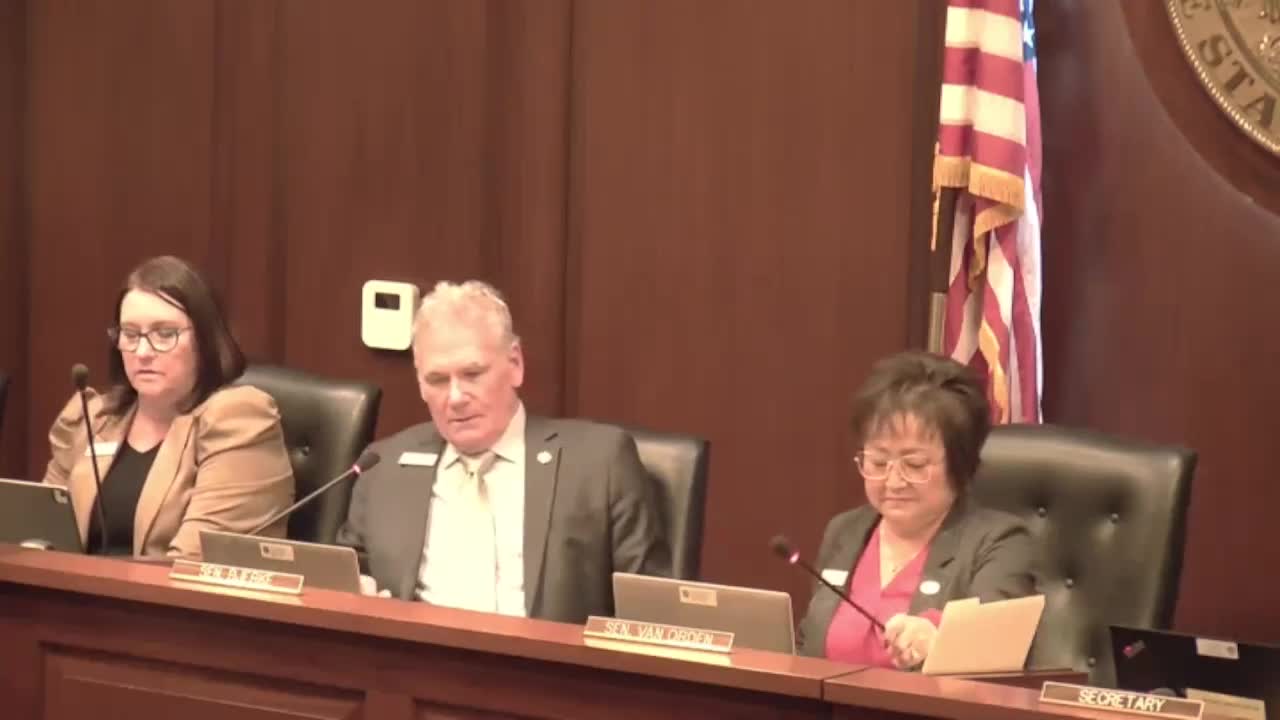
The Idaho Senate Health and Welfare Committee on Jan. 14 approved a rewrite of the Idaho State Board of Pharmacy rules but removed two specific labeling subsections after late stakeholder concerns about compounding and federal guidance.
Nikki Chopsky, bureau chief of health professions at the Division of Occupational and Professional Licenses and executive officer for the Idaho State Board of Pharmacy, told the committee the board conducted five public meetings, two negotiated-rulemaking hearings and one public hearing while drafting the pending rule docket (24-3601-2402). “Representatives from both state pharmacy associations were included in the process,” Chopsky said, and the board made “more than 35 changes” in the chapter to reduce duplication with statute and move toward a standard-of-care regulatory approach.
The committee earlier took no action on a related temporary-rule docket (24-3601-2401). Senator Sandra Harris moved, and Senator Wintrow seconded, a motion to take no action on the temporary docket; the motion carried on voice vote.
Why it matters: the pending rule package reorganizes IDAPA chapter 24.36.01, consolidating definitions, moving certain licensure and fee items into statute or other rules, and changing requirements in areas including controlled-substance reporting, compounding, sterile preparations and pharmacy-prescribing standards. The changes affect pharmacists, technicians, drug outlets, and entities that distribute compounded products in Idaho.
Key details and debate: Chopsky said the board removed duplicative fee language, capped fees "not more than" current legislatively approved rates, struck late fees and added a 30-day criminal-conviction reporting requirement. The board moved prescription drug monitoring program reporting to end-of-business-day and reorganized compounding and sterile-preparation requirements into a standard-of-care framework.
Compounding and labeling drew the most committee scrutiny. Chopsky described two stakeholder groups that, late in the process, flagged concerns about rule 40605 (compounded-product labeling) and questions about whether Idaho was more restrictive than other states. She noted the FDA had issued a draft guidance in June 2023 that remains a draft and is nonbinding. "The board stands committed to working transparently with these stakeholders and others for a workable solution in an environment that is unsettled at this time," Chopsky said.
Senator Lenny pressed whether strict state enforcement could reduce access or raise costs if the federal government is not enforcing similar requirements; Chopsky said there remain "legal pathways in Idaho for compounded products to be labeled and used," including in‑state compounders. Senator Wintrow emphasized public safety and urged caution when rules touch on drugs.
Committee action: Senator Harris moved to approve the pending pharmacy docket as final. Senator Lenny offered a substitute motion to approve the docket while striking subsection 214(e)(i) and 214(e)(ii) (the two labeling subparts that had prompted stakeholder outreach). The substitute motion passed on a roll-call vote (yeas 7, nays 2). The committee therefore adopted the pending pharmacy rule chapter while removing the two contested subsections; the committee earlier allowed the temporary rule docket to expire by taking no action.
What happens next: The docket approved by the committee (with the two subsections removed) moves forward per the committee’s action to be processed for final rule adoption or further legislative review as provided by Idaho rulemaking law.
Ending note: Chopsky said the board will continue stakeholder engagement and watch federal developments; she noted the board has used a standard-of-care approach where appropriate and has sought to clarify and simplify rules for licensees.