Get Full Government Meeting Transcripts, Videos, & Alerts Forever!
Get email alerts on the Aging Services topic
No spam. Unsubscribe anytime.
Commission on Aging details ARPA spending, requests modest ongoing inflation increase
Summary
Legislative Services and the Idaho Commission on Aging reviewed federal ARPA drawdowns, one-time projects, caregiver supports and a small ongoing general-fund request to cover inflation and trust-and-benefit payment increases.
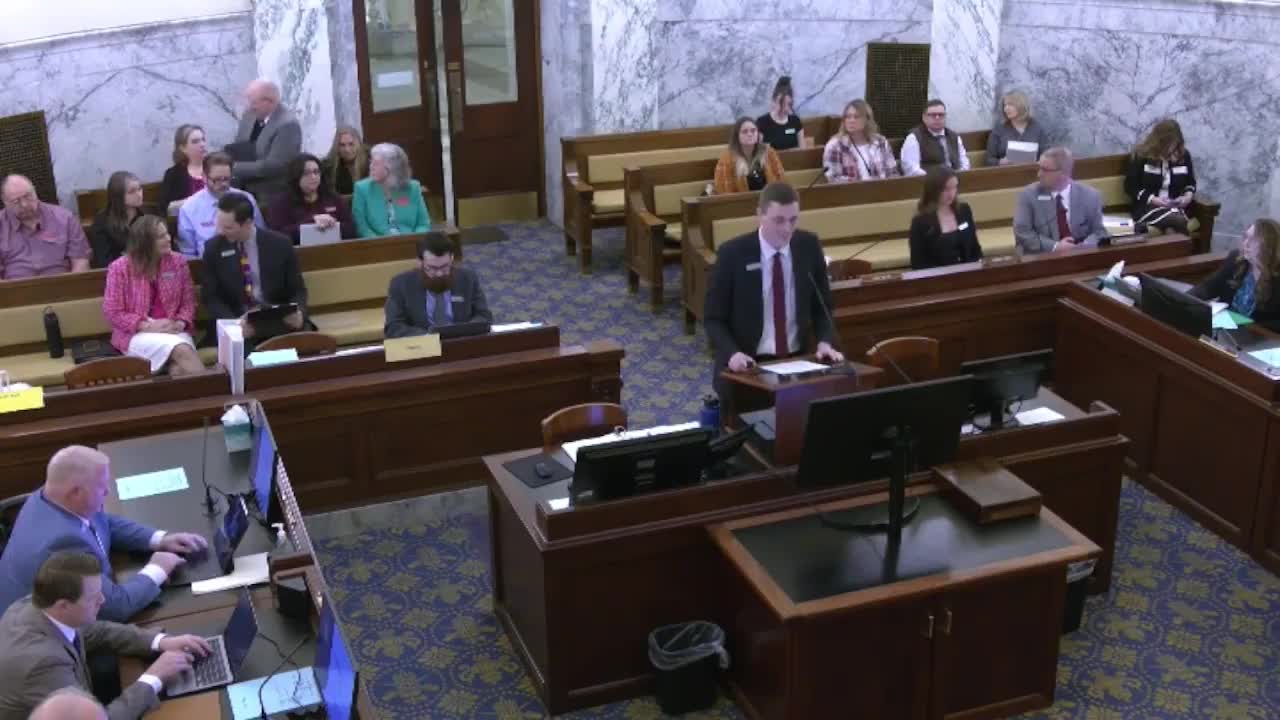
The Joint Finance-Appropriations Committee heard a briefing on the Idaho Commission on Aging’s budget Monday, focusing on how federal American Rescue Plan Act (ARPA) funds were spent and on a small ongoing general-fund request for FY 2026.
Legislative Services budget analyst Colin McGurkin told the committee that “The Commission on Aging implements the Federal Older Americans Act and Idaho Senior Services Act.” He reviewed five years of appropriations and said the agency has relied on a pattern of one-time federal ARPA awards since FY 2022 for modernization projects and service enhancements.
The discussion mattered because federal ARPA drawdowns used for meal services, caregiver support and adult protective services will expire Sept. 30, 2025, and the committee wanted to understand whether those services would continue or require state funding. McGurkin said the commission had requested $1,800,000 one-time in FY 2025 to utilize remaining ARPA balances and that the agency’s FY 2024 expenditures totaled about $16.7 million, with roughly 88% of spending classified as trustee and benefit payments to local Area Agencies on Aging (AAAs).
Director Judy Taylor of the Idaho Commission on Aging told lawmakers the agency followed guidance to spend one-time federal funds on one-time needs. “I have heard from this body and actually from, the governor’s office that one-time money should be spent on one-time need and or enhancements and should not be relied upon for ongoing programming. And you know that, I took that to heart because it just made sense. So we have, followed that guidance to the T,” Taylor said.
Taylor and McGurkin described how ARPA and other federal awards supported a range of enhancements: a pilot to expand the public-health workforce by placing community health workers with AAAs to assist high‑risk caregivers; increased home-delivered and congregate meal capacity; caregiver education and respite; and expanded adult protective services. McGurkin said the commission had drawn down roughly $7.4 million in ARPA-related expenditures through FY 2024 and requested a final one-time federal appropriation of $500,000 to pay outstanding invoices before the ARPA funding expired. He said $450,000 of that request would go to AAAs and $50,000 would cover staff time and operating costs related to closing out contracts and final program work.
Lawmakers pressed for detail on how ARPA-funded positions and services would be handled when one-time money ends. Taylor said some ARPA-supported items will stop or shrink but that the agency had sought to avoid creating permanent obligations funded with one-time awards. She described decisions such as continuing community health workers funded by ARPA for a period and reducing some respite hours rather than eliminating staff: “Those workers will stay. We have enough money to pay for their salaries. We just now will be able we'll have to provide a a few less hours of respite, but the program will continue,” Taylor said.
Committee members also asked about specific programs. Taylor said nutrition services and meal delivery remain a top priority and credited last year’s appropriation with raising meal rates by 25 cents and eliminating the home-delivered meal waitlist. “I am pleased to report to you that as of today we have no waiting lists in Idaho,” she said.
Budget numbers presented by McGurkin included: FY 2024 total expenditures of about $16.7 million; trustee and benefit payments composed roughly of $10.4 million federal and $4.2 million general‑fund distributions to AAAs; and the commission’s base budget rising from about $13.6 million in FY 2021 to $16.7 million going into FY 2026. The agency requested a modest ongoing general‑fund increase of $162,600 for FY 2026 intended mainly to cover inflationary increases (including $155,000 to raise trustee-and-benefit payments and $7,600 for commission operating costs).
Committee members sought follow-up on a few line items, including exact amounts tied specifically to Alzheimer’s and dementia supports, and on what portion of staff time had been billed to ARPA. Taylor asked staff to provide more detailed follow-up where the committee requested specific accounting figures.
The committee did not take a formal vote on the agency’s FY 2026 request during the hearing. Taylor closed by urging support for the commission’s budget and describing its mission: “At the Commission on Aging, we are inspired to improve systems for efficiency and quality… I confidently assure you that all appropriated funds will be used to advance our mission, invested wisely, with outcomes monitored and reported transparently.”
Looking ahead, the agency said it will continue to prioritize nutrition, caregiver support and adult protective services while drawing down one-time federal funds and preparing any needed follow-up information requested by the committee.