Get Full Government Meeting Transcripts, Videos, & Alerts Forever!
Get email alerts on the Health And Human Services topic
No spam. Unsubscribe anytime.
Committee approves Health and Human Services realignment and maintenance totals; one House member objects and a later vote drew additional dissent
Summary
Lawmakers approved the Department of Health and Welfare’s requested reorganization of appropriation units and the FY2026 maintenance package totaling about $5.26 billion in committee, though at least one House member withheld support and a subsequent roll call recorded an additional dissent.
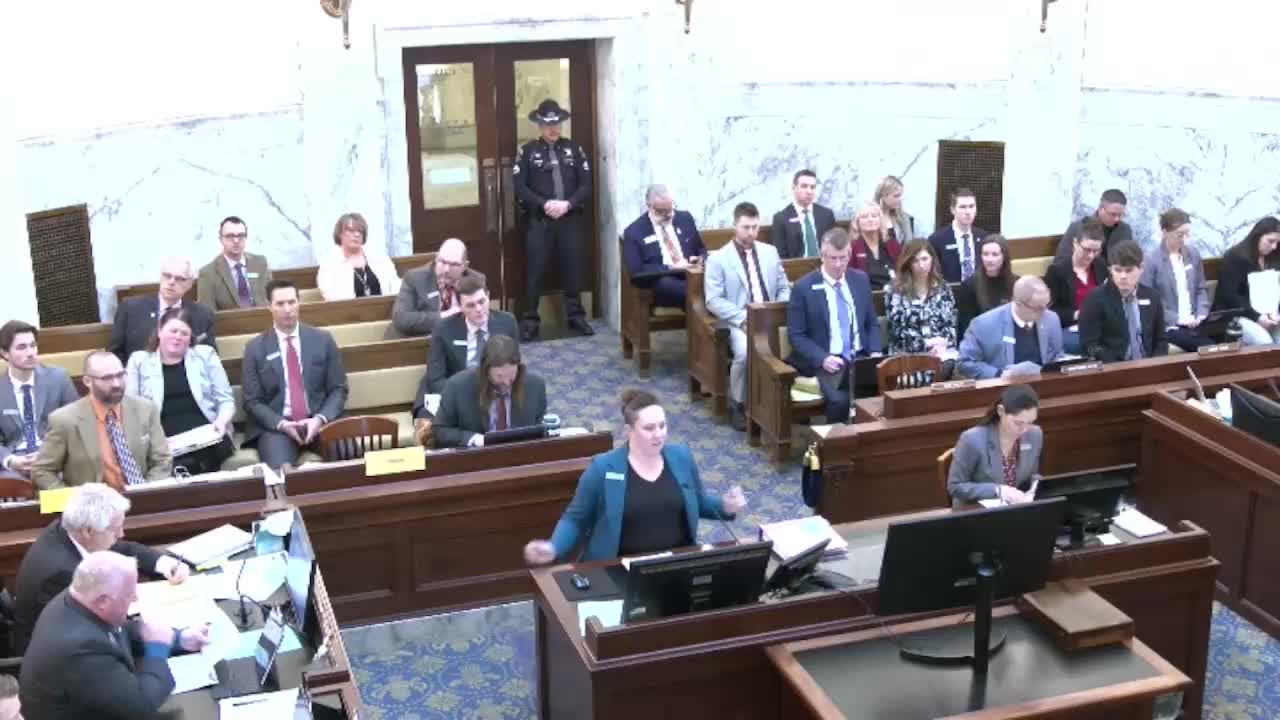
BOISE — The Joint Finance and Appropriations Committee on Jan. 17 approved the Department of Health and Welfare’s request to realign appropriation-unit names, adjust the FY2026 base to match a department reorganization and add a new appropriation unit for the Idaho Child Care Program. The committee also set the department’s FY2026 program maintenance totals, including a general-fund component and federal funding.
The committee action: Representative Tanner moved the realignment and the program maintenance motion. The full maintenance motion set FY2026 totals of $1,135,534,600 from the general fund, $824,851,000 from dedicated funds, and $3,302,688,600 from federal funds — a combined total of $5,263,083,200 — and a cap of 3,008.44 full‑time‑equivalent positions.
Why it matters: The Department of Health and Welfare is the single largest state agency budget by dollars and programs. Realignment moves many appropriation lines and staff authorizations from old appropriation units into new ones; adopting the realigned base in committee ensures the department’s requested structure is the starting point for subsequent policy or enhancement debates this session.
Substantive concerns and recorded dissent
Representative Petzke (House) said she would vote no on the realignment motion because she felt she had not had adequate time to review the changes and because the action reorganized “tens of millions of dollars and dozens of FTPs” while many enhancement requests and replacement items remained outstanding. In the hearing she described her decision to withhold support in these terms: “I might be the the weird guy in the corner over here that's gonna vote no, but I just wanted to explain that before I did so.” (Representative Petzke)
The committee carried the realignment motion with a roll-call result showing the House recorded one no vote and one absent; the overall committee recommendation carried. On the larger FY2026 maintenance motion for Health and Human Services a later roll-call change was recorded when Senator Ziederfeld asked to change her aye vote to a nay; the final committee tally for that maintenance motion was 17 ayes, 2 nays, 1 absent excused.
Language included with the appropriation
The committee adopted multiple clear-language sections that direct program use, reporting and transfers inside the Department of Health and Welfare. Highlights recorded in the bill packet and discussed in the hearing include:
- Monthly Medicaid tracking report comparing appropriation, forecast and month-to-month distributions. - Limits on moving appropriations out of trustee and benefit payments and other specified expense classifications intended to preserve funding for personnel or particular entitlement services. - Specific dedicated‑fund distributions and cash transfer calls in the base (for example, the rural physician incentive fund and smoking-cessation allocations from the Idaho Millennium Income Fund, and a $1,000,000 transfer for hydrological work in Water Resources referenced in other sections where applicable). - Reporting requirements tied to behavioral-health community crisis centers and psychiatric hospitalization programs.
What happens next
Committee staff will draft the bill language reflecting the committee’s motions and bring it back for a review hearing before bills are introduced on the floor. The chair reminded members that decisions on cost-of-living adjustments (CEC) and health-insurance parameters remain unresolved and will be taken up later, either as a stand‑alone multi‑agency bill or in other motions once the committee reaches consensus.
Ending
The committee’s action establishes the appropriated baseline for Health and Human Services this session but drew explicit concern from members who asked for more time to review reorganization transfers and the scope of changes before supporting final action. The committee will review drafted language at a subsequent hearing.