Get Full Government Meeting Transcripts, Videos, & Alerts Forever!
Get email alerts on the Medicaid Budget topic
No spam. Unsubscribe anytime.
Idaho Medicaid budget rises; agency seeks $376M in enhancements, $190M hospital assessment supplemental
Summary
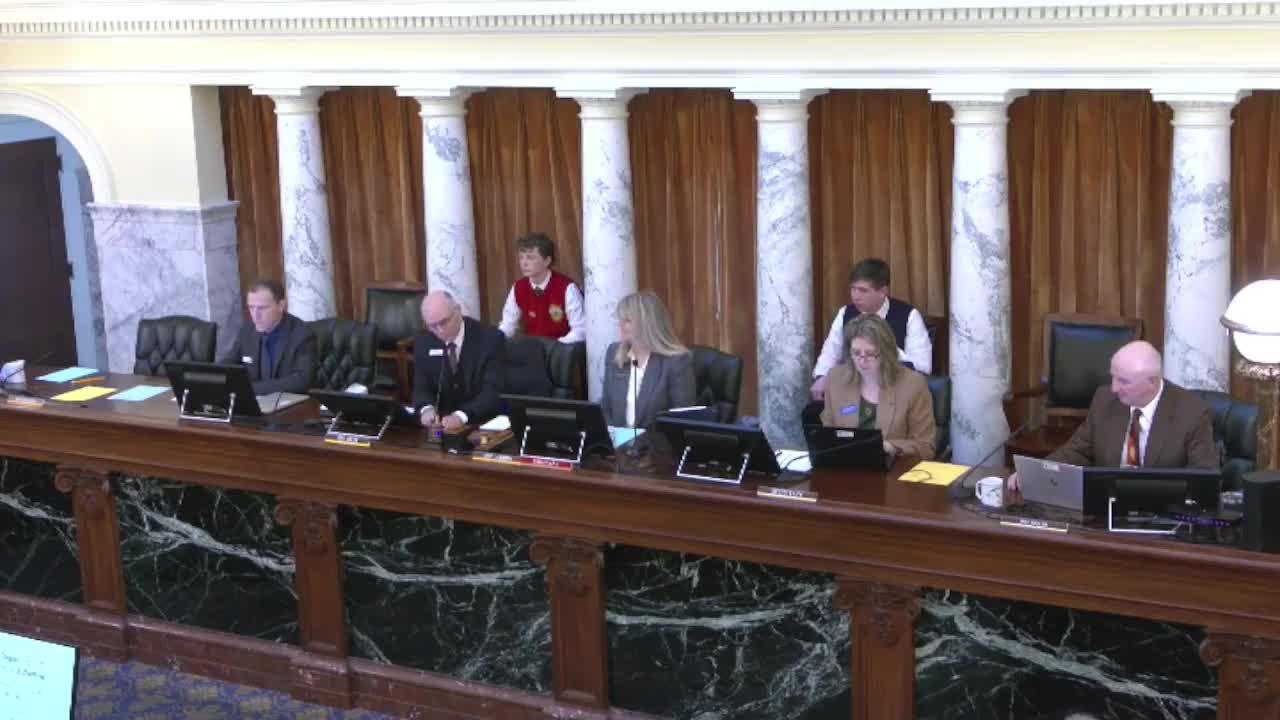
Boise — The Division of Medicaid told Idaho lawmakers on Feb. 26 that state Medicaid costs have continued to rise and the Department of Health and Welfare (DHW) is seeking multiple supplemental and ongoing budget increases to cover recent program changes, federal requirements and implementation costs.
Boise — The Division of Medicaid told Idaho lawmakers on Feb. 26 that state Medicaid costs have continued to rise and the Department of Health and Welfare (DHW) is seeking multiple supplemental and ongoing budget increases to cover recent program changes, federal requirements and implementation costs.
Alex Williamson, budget and policy analyst with Legislative Services, told the Joint Finance‑Appropriations Committee that Medicaid remains large and complex and that recent cost drivers include implementation of Medicaid expansion, provider rate increases approved by the Legislature, changes to how the state calculates upper payment limits for hospitals and nursing facilities, and growth in utilization following the COVID‑19 public health emergency. “This will probably feel like information overload,” Williamson told the committee as she opened the Division of Medicaid briefing.
The governors’ recommended requests presented to JFAC include several supplementals for fiscal 2025 and a package of 2026 enhancements. Among the line items described:
- A supplemental for an external quality review (EQR) for managed care plans: $1,300,000 one‑time (page 2‑47 of the budget book). Williamson said that Idaho currently has four plans requiring EQRs, including behavioral health and two Medicare‑Medicaid dual plans.
- One‑time system configuration and go‑live costs tied to onboarding the new Idaho Behavioral Health Plan (IBHP) vendor: Williamson gave a one‑time figure of $695,500 to complete system configuration and testing and also referenced an associated increase in estimated federal benefit payments of about $113,800,000 (one‑time) tied to forecast changes.
- A capitation rate increase for managed care plans that Williamson said would add roughly $108,800,000 one‑time from federal funds, allocated across plans (she cited approximately $33,000,000 to the expansion plan, $1,900,000 to the coordinated plan, $14,800,000 to the enhanced plan and $58,000,000 to the basic plan).
- A supplemental related to the hospital assessment fund of $190,000,000 (page 2‑49). Williamson said about $77,000,000 of that request would be funded by the hospital assessment (a dedicated fund) and the remaining $113,000,000 by federal funds. She tied the request to changes made in Senate Bill 1350 (2022) affecting the upper payment limit methodology.
For fiscal 2026, the packet included a state share for the Medicaid Management Information System (MMIS) procurement of $11,700,000 and a federal portion of about $105,000,000; population forecast adjustments totaling about $367,000,000 (which Williamson said include a roughly $45,000,000 shift from federal funds to the state general fund tied to FMAP changes); and other ongoing items such as CAHPS survey costs ($67,600 ongoing), actuary contract additions ($1,100,000 ongoing), and ongoing costs tied to the external quality review contract (noted in the budget book and by Williamson as ongoing rather than one‑time).
Director Alex Adams and DHW deputies told lawmakers they viewed many of the requests as required to meet federal rules or court orders. “I submitted as close to a maintenance budget as I could submit,” Adams said. “I didn’t ask to expand any benefits. I didn’t ask to adjust any provider rates.” He and Deputy Director Juliette Sharon said some items are federal requirements — for example, managed care external quality review and the CAHPS surveys — or are tied to a federal‑court settlement in the KW case (DHW is negotiating a new resource‑allocation tool and cited related attorney‑fee obligations).
The department also described implementation issues tied to the July 1 IBHP contract with Magellan. Lawmakers and DHW staff said some providers experienced payment delays after the transition; Juliette Sharon, deputy director, said Magellan has addressed many issues, the department has imposed liquidated damages “over $100,000” and Magellan is on corrective action for identified problems. “They are back in compliance with timeliness requirements,” Sharon told the committee, while acknowledging some provider‑specific problems persisted and DHW continues monitoring.
Lawmakers pressed DHW on cost drivers and policy levers. Senator Hart and several members asked about forecasting and the effect of the original Milliman projections used when expansion was enacted. Williamson said the Milliman report (2018) was a best‑available forecast at the time and did not anticipate the pandemic’s timing or later provider rate changes. Representative Tanner and others argued for stronger cost containment and for reclaiming “levers” to control costs; Adams replied that Medicaid is an entitlement program with federal eligibility and benefit rules and that policy changes would have to come from the Legislature.
On federal‑state cost sharing, Adams said the expansion population has been paid on a “90/10” federal‑state split; other Medicaid populations vary with the state’s FMAP. He said Idaho’s regular FMAP recently shifted in round numbers from about 69% federal to about 68% federal, which his office estimated would shift roughly $45,000,000 from federal to state funds in the forecast. He added that if the 90/10 expansion match were tapered to the traditional match, the state could face an additional shift of well over $200,000,000.
Officials also provided administrative context: the division of Medicaid was shown in the packet with roughly 237.5 full‑time positions and, as of Feb. 10, about 24.5 vacancies that the analyst said were actively being recruited. Williamson said total fiscal‑year 2024 appropriations for Medicaid were about $4.56 billion, of which roughly $4.27 billion had been expended; she also noted trustee/benefit payments represented over 98% of recent expenditures while personnel and operating expenses were comparatively small.
Lawmakers asked for follow‑up details on several items, including breakdowns of postpartum coverage changes, the status and timeline for KW settlement work and the department’s provider audit and cost‑survey follow‑up to determine whether legislative rate increases are reaching direct‑care staff. Deputy Director Sharon said DHW has done provider audit work and a follow‑up cost survey and is evaluating whether stronger guidance is needed to ensure rate increases reach direct‑care wages while weighing impacts on small provider businesses.
The department signaled it will provide more detailed forecasts and transparency materials on a monthly basis; Adams said DHW will publish monthly Medicaid reports to give lawmakers earlier warning about whether supplemental requests will be needed.
Ending notes: the requests presented to JFAC represent agency forecasts and funding requests; formal appropriation decisions remain with the Legislature. Several lawmakers said they want stronger policy options for cost control and asked DHW to return with additional data and documentation to support any future policy changes and appropriations.