Get Full Government Meeting Transcripts, Videos, & Alerts Forever!
Get email alerts on the Administrative Law Boards topic
No spam. Unsubscribe anytime.
Board of Tax Appeals seeks per‑diem hike from $300 to $400; change would require statutory amendment
Summary
The Board of Tax Appeals asked JFAC for a $29,200 ongoing increase to raise member per diem from $300 to $400 per day, saying the change reflects training and workload; staff and legislators questioned prep time, caseloads and why the increase is requested amid recent reversions.
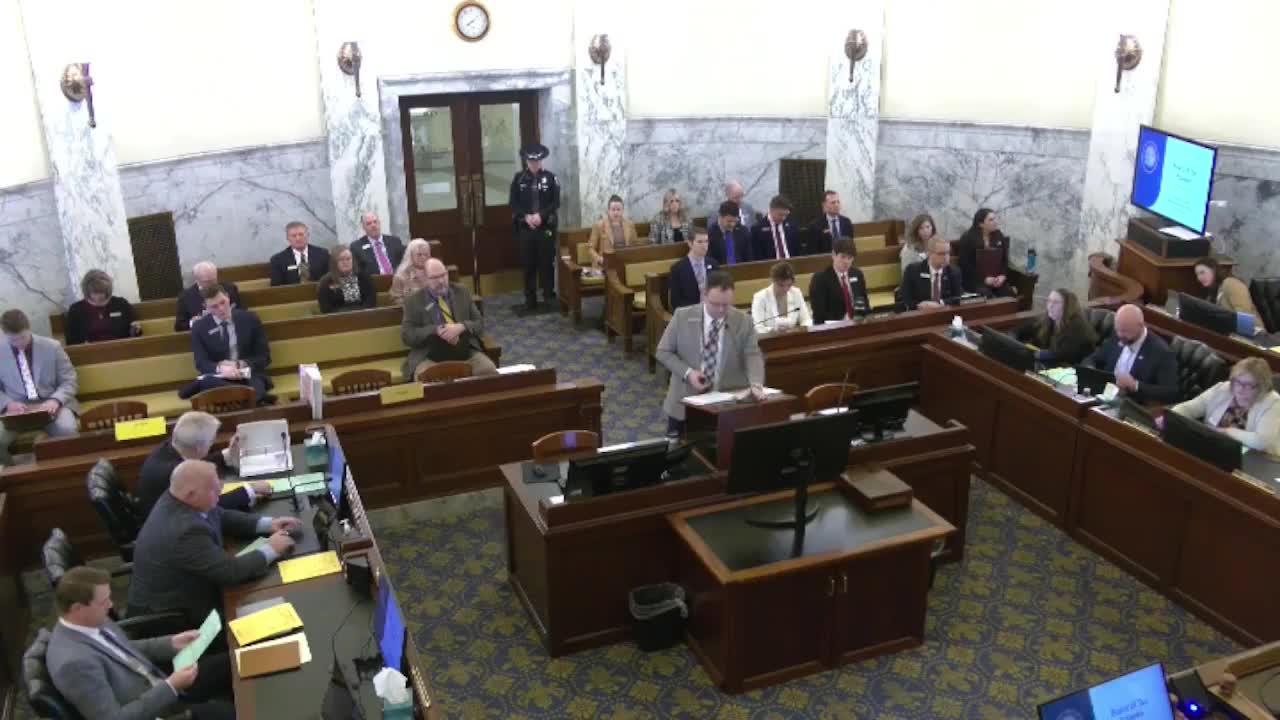
The Board of Tax Appeals told the Joint Finance-Appropriations Committee it seeks an ongoing $29,200 appropriation to raise the per diem for its three members from $300 to $400 per day, and said the increase would require legislative action to amend Idaho Code section 63‑3804.
Christopher LaHoset, a budget and policy analyst with the Legislative Service Office, summarized the agency’s FY2026 enhancement request: $29,200 in ongoing general fund to increase the board member per diem to $400, which the agency equated to about $50 per hour based on an 80‑day work model. LaHoset noted the per diem increase would require legislation to change section 63‑3804 of Idaho code.
Cindy Pollock, director of the Board of Tax Appeals, described the board’s workload and the rationale for the change. Pollock said the board is funded for and limited to 80 work days per year, but that members perform preparation and decision work that extends beyond hearing hours. “The board is only allowed to work 80 days. They're funded for 80 days. So for our board to get all their work done, they have come up with a model themselves…where when they have a hearing or a board meeting, it's usually a full day's work,” Pollock said. She added the board schedules many hearings across the state, typically allows 90 minutes per case unless larger, and that some hearings can last multiple days.
Pollock and analysts told the committee the agency typically handles about 300 appeals per year on average, though caseloads can spike (the agency cited an instance of several hundred appeals after a county catastrophe). She said roughly 39% of appellants in a 10‑year average saw a modification or a decision in their favor.
Committee members asked how the requested increase aligns with recent budget reversions: Representative Tanner noted the agency reverted roughly $80,600 in FY2024 across personnel, operating and capital accounts and asked whether the per‑diem increase could be absorbed without new funds. Pollock said the agency often reverts unused funds when cases settle, and the requested increase is for the per‑diem rate itself; if fewer days are used, the appropriation would revert accordingly.
Pollock described training requirements for prospective board members, including about a year of training and a two‑week course at the National Judicial College in Reno before hearing cases. The Board has four full‑time positions on staff (FTP authorized at 4) and reported it typically fills about 89% of its FTP authorization over a five‑year average.
The agency identified its statutory authorization at Idaho Code section 63‑3801. The committee did not take a formal vote on the enhancement request during the hearing; staff and legislators said they will consider the request as part of the budget review process.