Get Full Government Meeting Transcripts, Videos, & Alerts Forever!
Get email alerts on the Cei Cte Capacity Request topic
No spam. Unsubscribe anytime.
College of Eastern Idaho urges $2M of the governor’s CTE funding to relieve capacity limits and fill waitlists
Summary
College of Eastern Idaho President Lori Barber told JFAC the college faces severe capacity constraints — about 465 CTE students were unplaced in fall 2024 — and asked that at least $2 million of a proposed community‑college CTE fund be allocated to CEI.
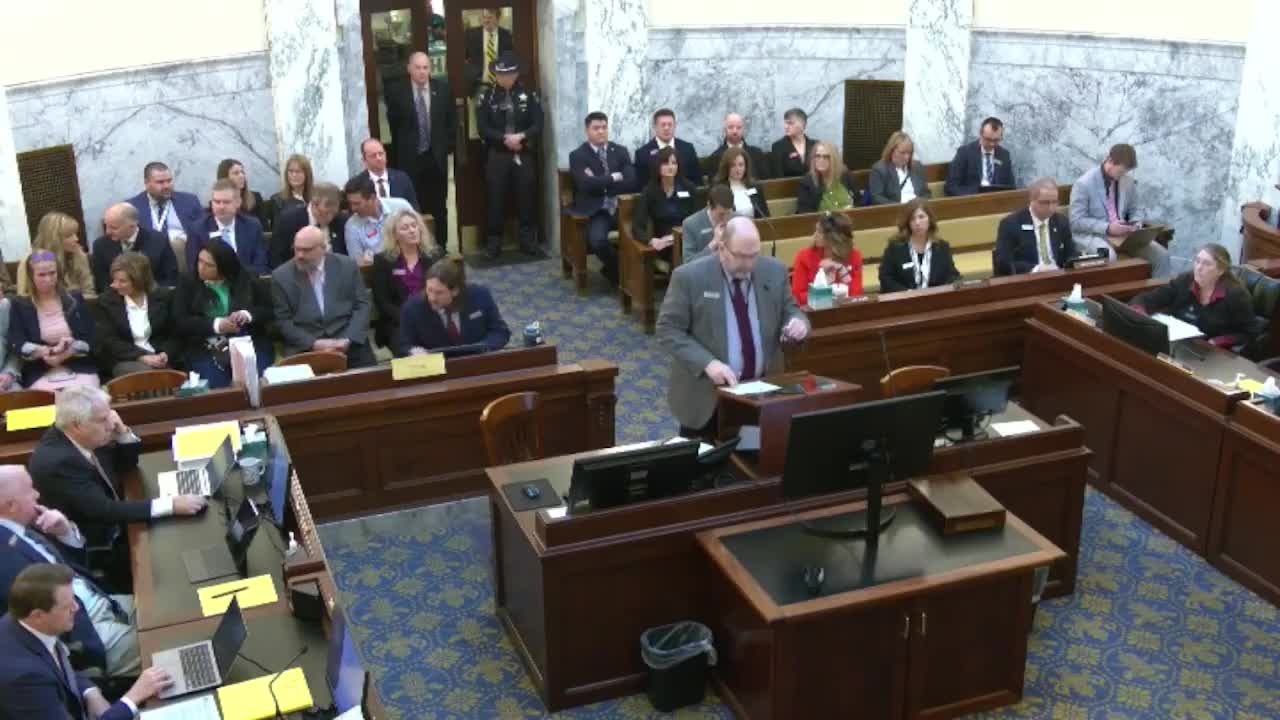
Lori Barber, president of the College of Eastern Idaho, told the Joint Finance‑Appropriations Committee that rapid regional growth and employer demand have left CEI operating at, and in some cases over, physical and instructional capacity.
Barber told the committee CEI grew from roughly 700 students when it was Eastern Idaho Technical College to about 3,600 degree‑seeking students and more than 14,000 workforce‑training students. She said the college’s credit headcount rose roughly 273% since 2017 and that the campus built in 2007 now serves nearly four times the credit headcount it did at that time on the same physical footprint.
Why it matters: Barber said CEI is the state’s largest workforce training provider and that regional employers including National Laboratory and local hospitals are expanding, creating sustained demand for technicians and other two‑year graduates. She told the committee CEI turned away roughly 465 students seeking seats in CTE programs in fall 2024 because the college lacked instructors, modern equipment and student‑support capacity.
Funding request and use: Barber asked JFAC to support the governor’s proposed $25 million for postsecondary institutions, and she recommended that “an increase in our general fund allocation from that $10,000,000 … of at least $2,000,000 ongoing would be absolutely transformational.” She described specific program uses for CTE funds: updated welding and fabrication equipment, mechatronics upgrades, additional nursing clinical instruction capacity, and hiring of science and math faculty to deliver prerequisite coursework for health‑care programs.
Partnerships and workforce connections: Barber described employer partnerships that expand instructional capacity without immediate state dollars — for example, INL provided cybersecurity instructors that allowed CEI to nearly double cybersecurity enrollment; local employers such as Teton Toyota collaborated on apprenticeship‑style micro‑credentials. Despite those partnerships, Barber said, CEI needs more state support to match the pace of regional job growth.
Concluding remarks: Barber framed CEI’s needs as a workforce investment: “An increase … of at least $2,000,000 ongoing would be absolutely transformational,” she said. Committee members asked for clarity on how EWA and the governor’s targeted CTE funds would be allocated among institutions; staff (DFM and LSO) agreed to provide a cross‑college analysis of EWA calculations and allocations.