Get Full Government Meeting Transcripts, Videos, & Alerts Forever!
Get email alerts on the Virtual Inspections topic
No spam. Unsubscribe anytime.
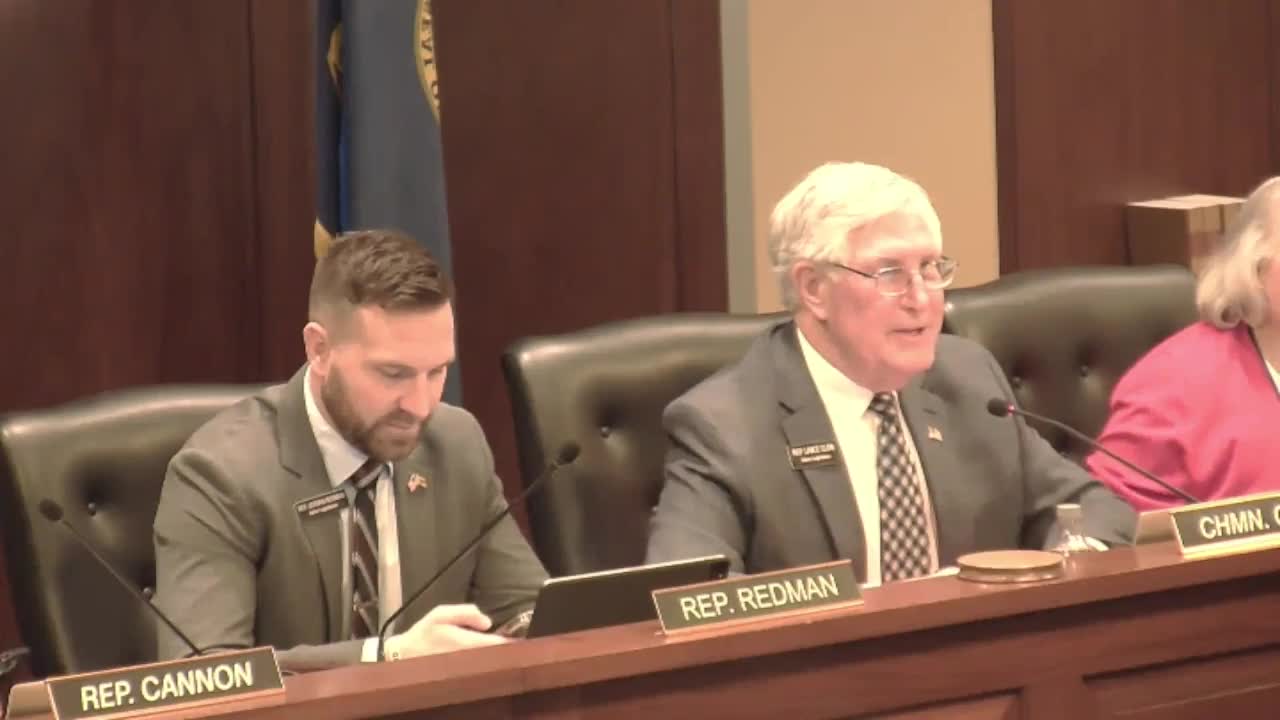
House Business Committee approves introduction of bill allowing local governments to authorize virtual building inspections
Summary
The House Business Committee voted to introduce RS32162, a proposal that would allow local governments to perform certain building inspections virtually while excluding structural inspections on buildings taller than three stories. Committee members raised liability and safety concerns during discussion.
The House Business Committee voted Wednesday to introduce RS32162, a request statute (RS) that would give local governments authority to permit virtual building inspections for some permits while preserving limits on structural reviews.
The measure, presented for the record by Representative Raybould, would allow local jurisdictions to establish protocols for remote visual inspections and require steps to confirm the inspection’s physical location. The RS specifically bars virtual structural inspections for buildings more than three stories tall, according to Raybould.
Committee members said the change aims to reduce delays that occur when inspectors cannot return quickly to job sites, delaying subcontractors and increasing costs. “The intention of this … is to facilitate any inspection so long as it didn’t involve a structural inspection of a building over three stories,” Raybould said.
Several members voiced concerns about safety and liability. Representative Crane said he was troubled that virtual-only inspections could mean no inspector ever physically visits some jobsites for rough, cover or final inspections. He said public assurance of building safety is a core purpose of inspections and said he may withhold support unless changes are made when the bill returns for hearing.
Raybould said the bill leaves implementation to local governments and that jurisdictions could limit which inspection types may be done virtually. Representative Palmer moved the motion to introduce the RS; the motion carried by voice vote.
The committee recorded questions about whether Idaho had reviewed other states’ implementations; Representative Harris asked whether Washington’s experience had been consulted. Raybould said conversations occurred with the state inspectors association and industry groups but could not detail conversations with outside state agencies. The RS will proceed to a future hearing if the sponsor advances it.