Get Full Government Meeting Transcripts, Videos, & Alerts Forever!
Get email alerts on the Parks Recreation topic
No spam. Unsubscribe anytime.
Idaho parks seek consolidation, higher seasonal pay and capital work as maintenance backlog eases
Summary
At a Joint Finance Committee hearing, Idaho Department of Parks and Recreation officials outlined a FY2026 request that would consolidate programs, raise seasonal wages from $12 to $15 an hour, target ranger pay compression and fund several one‑time capital projects funded largely from dedicated and federal sources.
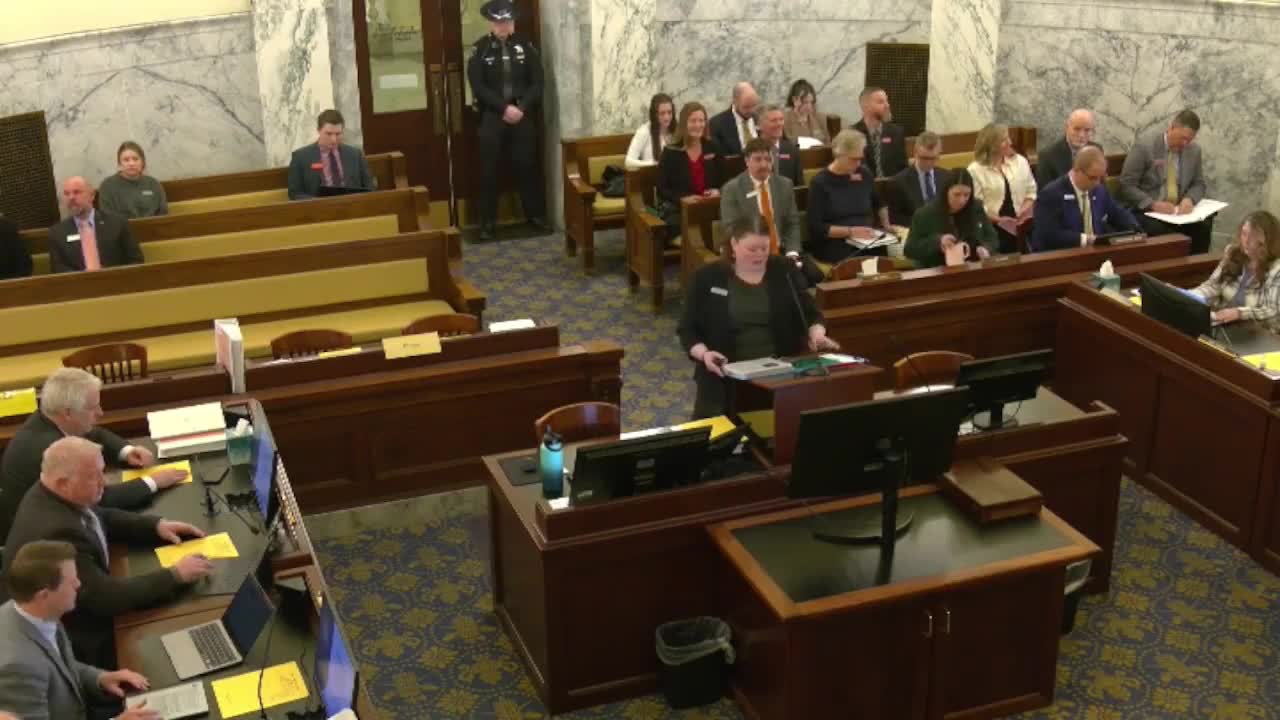
Susan Buxton, director of the Idaho Department of Parks and Recreation, told the Joint Finance Corporation Committee that the agency’s FY2026 request centers on operational consolidation, targeted pay adjustments and continuing work on deferred maintenance funded largely through dedicated and federal sources.
The changes matter because the department manages Idaho’s 30 state parks, employs roughly 190.8 full‑time equivalents and relies heavily on fees, registrations and federal grants with statutory limits on how those dollars may be spent. Agency leaders said several requested items are one‑time capital projects while some are ongoing compensation adjustments intended to address internal pay compression.
Janet Jessup, a budget and policy analyst with legislative services, reviewed the department’s budget and fund structure. She said capital development is budgeted as a zero‑FTP program because those line items are for one‑time outlays such as construction and land acquisition. Jessup noted an uptick in appropriations in fiscal 2023 tied to a general‑fund transfer and federal grants for deferred maintenance; those dollars were available for multiyear projects and therefore appear as a hump in appropriations and subsequent reversion patterns.
Buxton and staff described the principal FY2026 requests as: - Program consolidation: merging management services and park operations into a single budgeted program. The agency described the proposal as administrative and said it would “net to zero” in total dollars while simplifying internal tracking of revenues and expenditures. - Seasonal pay increase: raising the typical seasonal rate from $12 to $15 per hour. Buxton and Human Resources Officer Jennifer Quindell Miller said the department hires roughly 300 seasonal employees each year and that market pressures in resort and remote locations have pushed wages higher in some communities; managers currently have authority to hire seasonals at variable rates and the department expects to need to move the stated floor up again in places where labor costs exceed $15 per hour. - Targeted ranger and management pay adjustments: money from dedicated funds to address compression and implement a tiered ranger compensation program so long‑serving staff are no longer paid the same or less than newly hired employees with similar duties. - Capital requests and deferred maintenance: a number of one‑time capital outlays were included; Jessup highlighted requests for improvements at Bear Lake/Fish Haven and Lake Cascade. The governor’s recommendation, she said, included the agency’s full capital submission.
Committee members asked about several specifics. Troy Elmore, operations administrator, said a compact wheel loader, to be bought from the snowmobile sticker fund, will be the third such piece of equipment purchased for snowmobile program parking‑lot clearing; counties operate the grooming programs and the department owns the groomers. Elmore said the purchase would cover roughly a third of snowmobile‑grooming parking lots across about 27 county programs.
Representative Mitchell and others asked about work at Heyburn State Park on Lake Coeur d’Alene, where Buxton said two large marinas need replacement due to deferred maintenance. Buxton said the Coeur d’Alene Tribe has participated in earlier planning and had indicated fiscal support for the replacement; the project would replace docks and increase the number of slips at the two marinas mentioned in the presentation. The director said federal and previously appropriated funds are being used for the work.
On staffing, Buxton described long‑running compression in pay where market increases for new hires narrowed the step differences for tenured employees. She told the committee that several bureau‑level managers rank among the lowest paid bureau chiefs statewide, and the requested adjustments aim to restore a clearer step structure and preserve recruitment and retention.
Jessup emphasized that many of the department’s revenues are dedicated by statute to particular activities (for example, registrations and permit fees for boats, OHVs, snowmobiles and similar activities) and are not freely interchangeable across programs. The department’s FY2026 requests therefore reflect a mix of one‑time capital proposals and ongoing pay adjustments funded from dedicated or federal sources.
Buxton closed by thanking the committee for prior and continuing support and standing by to answer follow‑up questions by email or in future hearings.
Less critical details: the agency said it currently has no FTP in capital development (capital projects are handled separately), that trustee and benefit payments (grants to local entities) comprised a material portion of prior expenditures, and that many recent appropriations were one‑time federal or dedicated funds tied to multi‑year projects.