Get Full Government Meeting Transcripts, Videos, & Alerts Forever!
Get email alerts on the Public Works Capital Projects topic
No spam. Unsubscribe anytime.
Committee reviews Permanent Building Fund projects, hears concerns about project timing and cost
Summary
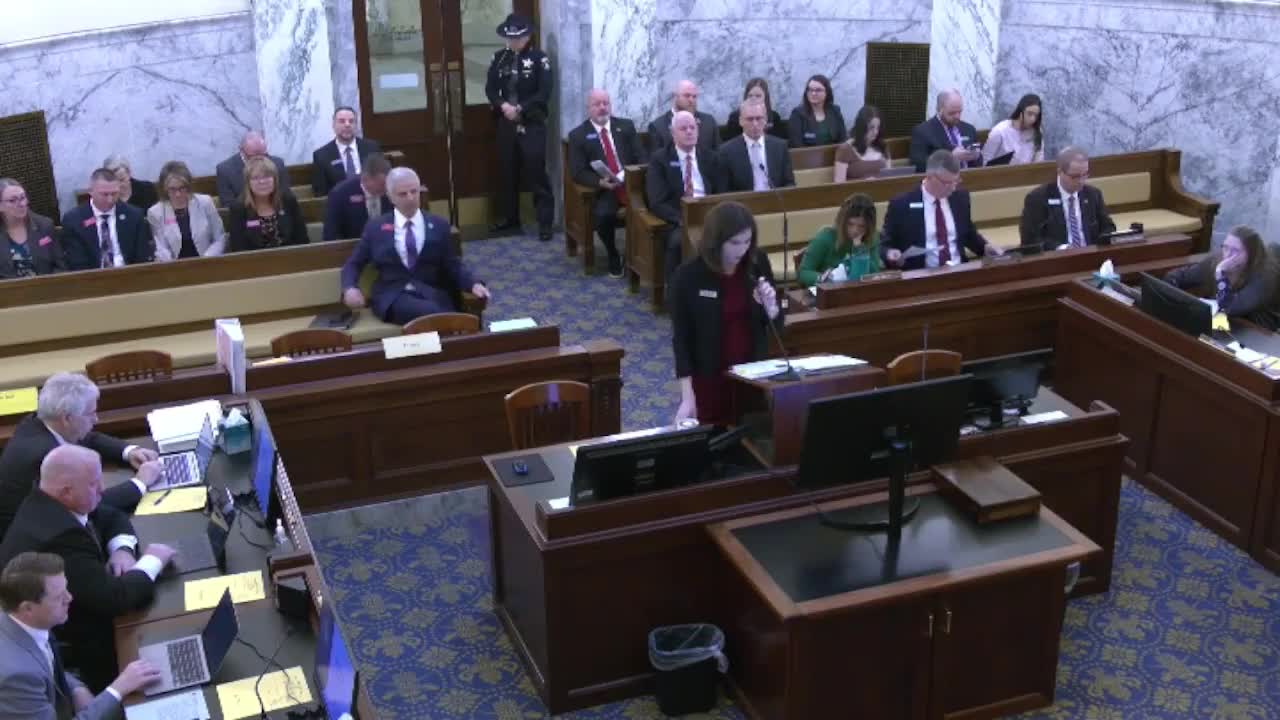
Legislative Services analyst Frances Lippitt told the Joint Finance-Appropriations Committee that the Permanent Building Fund is structured to accommodate multi-year capital projects and that projects receive appropriations that become continuously appropriated if unexpended at fiscal year end.
Legislative Services analyst Frances Lippitt told the Joint Finance-Appropriations Committee that the Permanent Building Fund is structured to accommodate multi-year capital projects and that projects receive appropriations that become continuously appropriated if unexpended at fiscal year end. ‘‘The total value of active public works projects is 1,900,000,000.0, which includes agency funds as well as funding from the permanent building fund,’’ Lippitt said, and she added that about 42% of funding for capital projects has been committed.
Why it matters: the permanent building fund supports capital and maintenance projects across state agencies and higher-education institutions. Committee members questioned staff about project timelines, deferred maintenance backlogs and whether projects are advancing after earlier appropriations. Analysts noted that capital projects are multi-year and that the division typically expends 50–70 percent of an appropriation in the first year but that appropriations and accounting methods changed following the state’s transition to LUMA.
Notable FY2026 requests and status
Lippitt summarized the Division of Public Works’ fiscal 2026 capital recommendations, which the analyst said total $122,861,900 and include six capital projects plus funding for alterations, repairs and maintenance. Projects highlighted in the presentation included:
- A $6.5 million expansion of the Department of Lands’ Ponderosa office to add restrooms/showers and ‘‘improved security’’ for staff; Deputy Kelly Berard told the committee the existing Ponderosa entrance allows direct public access to staff work area and the expansion would add separation for staff safety.
- $5.56 million for utility connections for a future Idaho National Guard readiness center in Bonneville County; the readiness center is expected to support up to 350 personnel at peak occupancy.
- $5.525 million for the Idaho State Police Lewiston District 2 facility. Administrator Dale Reynolds said the permanent building fund previously appropriated $9.975 million to purchase and retrofit an existing building; the owner later raised price expectations and DPW was unable to identify a viable building purchase, so the recommendation added funds to purchase land and construct a new facility.
- $2.5 million to add additional labs at Boise State’s Micron Center for Materials Research; to date the legislature has appropriated $7.8 million to build out the center and this request would fund additional completed lab space.
- $14 million toward a new life-sciences complex at Idaho State University; Lippitt said the project’s total estimated cost is $127.77 million, funded with a mix of the permanent building fund, agency funds and bonding (Lippitt listed $35.77 million in agency funds and $78 million in bonding).
Lippitt also reviewed a $544 million statewide deferred-maintenance appropriation that is managed by an external contractor and noted that large multi-year projects and previously transferred general-fund investments have increased the fund’s interest earnings and cash balances in recent years.
Project timing, bottlenecks and contractor concerns
Administrator Dale Reynolds, Division of Public Works, told the committee that project timelines vary by delivery method and scope. ‘‘If we’re given a budget, we’ll put that out for design … once we get design done, then we’ll go back in through the RFQ, RFP process and get that … under contract,’’ Reynolds said. He said a multi-year schedule is typical and the time between appropriation and completion depends on design, delivery method and whether a project is under construction. Reynolds estimated that a large construction project under contract can require roughly two to three years to complete once construction begins.
Committee members asked for a list of projects that had not advanced after prior appropriations and that had been idle for several years. Lippitt told the committee she can provide a list of projects that have not met the committee’s reporting requirement (language enacted last year requires progress or the funds become eligible for reappropriation).
Security and staffing concerns
On staffing and turnover, Reynolds and Director Bailey said the division has experienced turnover and is recruiting project managers; Reynolds said the division was actively hiring and expected recently offered positions to be filled. Deputy Kelly Berard said the Ponderosa office’s security and layout concerns were driven by cramped space that leaves staff in close proximity to public entrances.
Ending
Analysts and DPW staff told the committee that the detailed capital-status report the division provided to JFAC in November is available to members on SharePoint and that staff will supply requested follow-up information on project timelines, projects that have not advanced within the committee’s reporting window, and project-specific details requested by members.