Get Full Government Meeting Transcripts, Videos, & Alerts Forever!
Get email alerts on the Public Access Trespass topic
No spam. Unsubscribe anytime.
Committee clears bill clarifying trespass rules for conditioned access to public and private land
Summary
Senate Bill 10‑86 clarifies that when a landowner or government entity allows recreational access with conditions, violating those conditions can be charged as criminal trespass; the committee moved the bill to the floor with some members requesting more time to review the state trespass statutes.
The Senate Natural Resources Committee voted to advance Senate Bill 10‑86 to the Senate floor after testimony from recreation representatives seeking clarity on enforcement and from committee members who asked for more time to review existing trespass law.
Senator Mark Harris explained the bill as a clarification: when an owner — public or private — allows access for recreation but imposes terms or limitations and provides notice of those conditions, someone who violates those specific terms can be charged with criminal trespass. The sponsor said the change is intended to address a gap some sheriffs and prosecutors have identified when someone is given permission to enter but then violates limits (for example, by leaving a designated trail) and causes damage.
David Claiborne, attorney for the Idaho Recreation Council and Idaho State ATV Association, said the measure responds to disagreement among local law enforcement about whether existing statute allows a trespass citation in cases where the landowner granted access with conditions. He described examples such as landowners permitting access across private land to reach public land but asking visitors to stay on a trail; if visitors leave the trail and create new ruts or damage, current practice in some counties has been inconsistent.
Committee members sought clarification about whether the bill applies to public lands, private lands, or both. Claiborne and the sponsor confirmed that the bill is intended to apply to both public and private lands and includes a definition distinguishing a government entity that manages land and a landowner. Several senators asked whether posting or other notice is required; the sponsor and counsel confirmed notice or posting is a condition for criminal enforcement under the bill.
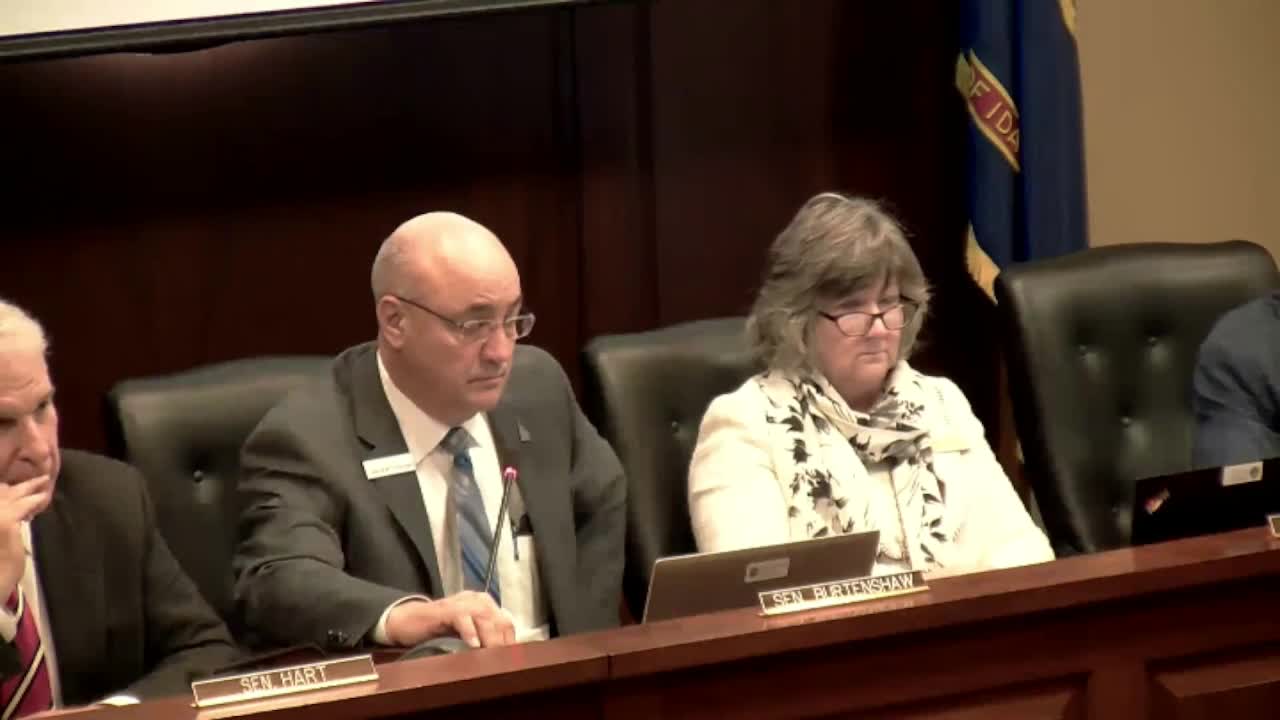
Senator Cook moved to send SB 10‑86 to the floor with a do‑pass recommendation and Senator Taylor seconded. The committee approved the motion by voice vote. A few senators requested time to review the existing trespass statutes before floor consideration, and one senator recorded an initial “no” vote in committee while reserving further consideration on the floor. The transcript shows the committee advanced the measure to the floor with some members asking follow‑up outside the hearing record.
Supporters argued the bill protects remaining motorized trail opportunities by providing clear enforcement tools against parties who damage trails or ignore posted seasonal closures; opponents and some committee members asked for clearer linkage to existing statute language and for assurances about prosecutorial discretion and notice requirements.
The bill was advanced to the full Senate for additional consideration.